
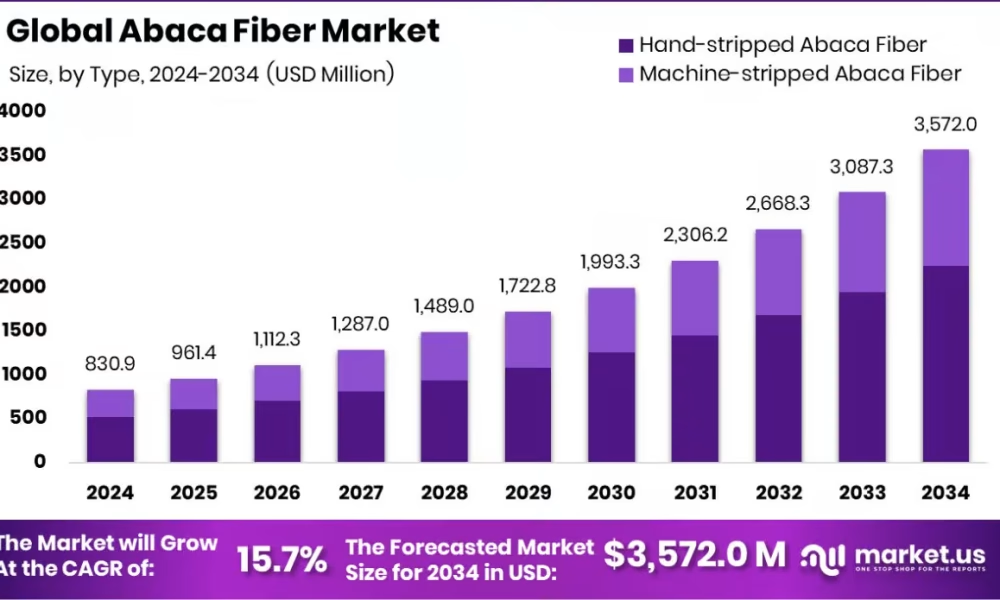
According to Market.us, The Global Abaca Fiber Market is projected to reach approximately USD 3,572.0 million by 2034, rising sharply from USD 830.9 million in 2024, with an anticipated CAGR of 15.7% between 2025 and 2034. This robust expansion can be attributed to the growing shift toward eco-friendly and renewable fiber materials across diverse end-use sectors such as paper manufacturing, textiles, automotive, and sustainable packaging.
Derived from the leaf sheaths of the Musa textilis plant, abaca fiber is highly regarded for its exceptional tensile strength, biodegradability, and resistance to saltwater corrosion, making it well-suited for both industrial and environmental applications.
Stricter environmental standards and global initiatives aimed at reducing plastic waste have fueled the substitution of synthetic fibers with natural alternatives like abaca. The specialty paper industry—particularly for applications such as currency notes, tea bags, and filtration paper—remains a major consumer of abaca, while the automotive industry is increasingly integrating natural fibers into vehicle components to enhance sustainability.
As the Philippines continues to lead global abaca output, efforts are being intensified to boost production efficiency and fiber quality through advanced farming practices and government support. With the global push for greener supply chains and circular material flows, the abaca fiber market is poised for accelerated long-term growth.
Key Takeaways
- The Global Abaca Fiber Market is expected to be worth around USD 3,572.0 million by 2034, up from USD 830.9 million in 2024, and grow at a CAGR of 15.7% from 2025 to 2034.
- Hand-stripped abaca fiber dominates the market, contributing 63.40% to global abaca fiber production.
- Fine abaca fiber leads product types, accounting for 57.50% of the abaca fiber market.
- Paper and pulp industry is the largest consumer, utilizing 47.30% of the abaca fiber supply.
- Strong production base and rising demand supported Asia-Pacific’s USD 302.4 million market position.
Access a Complimentary Sample of This Premium Report: https://market.us/report/abaca-fiber-market/request-sample/
Factors Affecting the Growth of the Abaca Fiber Market
Rising Demand for Sustainable Materials: Growing global emphasis on sustainability and environmental protection is driving industries to replace synthetic fibers with biodegradable alternatives like abaca. This shift is particularly evident in packaging, textiles, and automotive sectors, where natural fibers are being adopted to reduce environmental impact.
Expansion in Specialty Paper Applications: Abaca fiber is extensively used in manufacturing high-strength, specialty papers such as currency notes, tea bags, and filter paper. The continued demand from these niche but high-value segments remains a consistent growth driver for the market.
Government Support in Producing Countries: In abaca-producing nations such as the Philippines, government initiatives focused on agricultural improvement, fiber quality enhancement, and farmer support are boosting overall production capacity and global competitiveness.
Technological Advancements in Fiber Processing: Innovations in extraction and processing techniques are improving fiber yield, quality, and usability across industries. These advancements are making abaca more accessible and efficient for industrial applications, particularly in composite materials and technical textiles.
Fluctuations in Global Supply Chains: The market is sensitive to changes in weather conditions, labor availability, and export logistics in major growing regions. Any disruption in the supply chain, such as typhoons or logistical delays, can impact global availability and pricing of abaca fiber, influencing overall market dynamics.
Key Market Segmentation
By Type Analysis
In 2024, Hand-stripped Abaca Fiber accounted for 63.40% of the global Abaca Fiber Market by type, maintaining a dominant position due to its superior quality and high tensile strength. This type is widely used in premium applications such as specialty papers, handicrafts, and high-end textiles. Despite being labor-intensive, hand-stripping preserves the fiber’s natural luster and integrity, enhancing its appeal in both domestic and international markets.
Continued demand is driven by niche applications prioritizing strength and aesthetics, while government initiatives supporting traditional techniques and rural livelihoods further bolster this segment. The rising global demand for biodegradable fibers is expected to sustain its market leadership.
By Product Type Analysis
In 2024, Fine Abaca Fiber dominated the By-Product Type segment of the Abaca Fiber Market with a 57.50% share. This dominance is driven by strong demand for high-grade fibers in specialized applications such as currency notes, premium paper, and high-end fashion.
Known for its soft texture, lightweight, and excellent tensile strength, fine abaca fiber is preferred in luxury packaging, decorative items, and furnishings. The segment’s growth is further supported by global interest in sustainable materials, with producers enhancing harvesting and sorting techniques to meet fine-grade quality standards and increase market value.
By End-use Analysis
In 2024, the Paper and Pulp segment led the Abaca Fiber Market by end-use, holding a 47.30% share. This dominance is attributed to abaca’s high strength, porosity, and durability, making it ideal for specialty paper products like currency paper, tea bags, and medical filters. Its natural whiteness and compatibility with other pulp types further enhance its appeal in high-performance applications.
While other segments such as textiles, handicrafts, and composites are growing, they remain secondary in volume. Despite rising demand from the automotive and construction sectors, their combined usage did not exceed that of the paper and pulp industry in 2024.
Key Market Segments
By Type
- Hand-stripped Abaca Fiber
- Machine-stripped Abaca Fiber
By Product Type
- Fine Abaca Fiber
- Rough Abaca Fiber
By End-use
- Paper and Pulp
- Tea and Coffee Bags
- Meat and Sausages Paper
- Paper Money
- Cigarettes Papers
- Vacuum Cleaners Bags
- Others
- Fishing
- Ships Ropes
- Fishing Lines
- Fishing Nets
- Others
- Automotive
- Agriculture
- Construction
- Others
Growth Opportunity
The Abaca Fiber Market is witnessing significant growth opportunities in the automotive composite material industry, driven by rising demand for lightweight, strong, and sustainable materials. Abaca fiber’s natural strength, flexibility, and low weight make it ideal for use in car interiors, panels, and other non-structural components.
Its application contributes to reducing vehicle weight, thereby enhancing fuel efficiency and lowering emissions, both critical objectives for modern automakers. As the automotive industry increasingly focuses on eco-friendly sourcing, abaca’s role is expanding. Advancements in processing technologies are expected to further integrate abaca composites into future sustainable vehicle designs globally.
Latest Trends
A notable trend in the Abaca Fiber Market is the blending of abaca with other natural, sustainable fibers such as jute, hemp, and cotton. This strategy aims to enhance material performance, lower production costs, and develop tailored solutions for various applications. Blended fibers leverage abaca’s strength alongside the softness or flexibility of other materials, making them ideal for use in textiles, eco-friendly packaging, and composite products. Manufacturers are increasingly experimenting with such combinations to meet the rising demand for durable and sustainable materials.
Top Key Players in the Market
- Chandra Prakash and CO
- Ching Bee Trading Corporation
- Dragon Vision Trading
- Erin Rope Corporation
- Hartmannforbes Inc
- Hermin Textile
- Pulp Specialties Philippines Inc
- Simor Abaca Products
- Specialty Pulp Manufacturing, Inc. (SPMI)
- Terranova Papers
- Yzen Handicraft
Get in Touch with Us:
Market.us (Powered By Prudour Pvt. Ltd.)
Address: 420 Lexington Avenue, Suite 300 New York City, NY 10170, United States
Send Email: [email protected]
Refer More Related Reports:



