
On June 24, Apple (AAPL) plans to use TSMC’s (TSM) next-generation 2nm process technology in the iPhone 18 series to be launched in 2026, combined with advanced WMCM packaging methods.
TSMC builds a 2nm dedicated production line for Apple
WMCM packaging technology excels in multi-chip integration, and can tightly integrate complex systems such as CPU, GPU, DRAM, and other custom accelerators (such as AI/ML chips) in one package, providing greater flexibility, allowing different types of chips to be stacked vertically or placed side by side in the package, and optimizing communication between them.
As the world’s leading pure wafer foundry, TSMC has established a dedicated production line for Apple. TSMC plans to start producing 2nm chips at the end of 2025, and Apple is expected to become the first company to obtain chips based on this new process.
AI computing power competition is heating up
With the launch of DeepSeek applications in the first half of this year, especially after AI computing power is adapted to DeepSeek, the global computing power base is changing. DeepSeek has achieved excellent performance in a low computing power environment through breakthroughs in reinforcement learning (RL) and model distillation technology. This progress not only expands the application scenarios of AI models, but also creates new market opportunities for GPU cloud platforms.
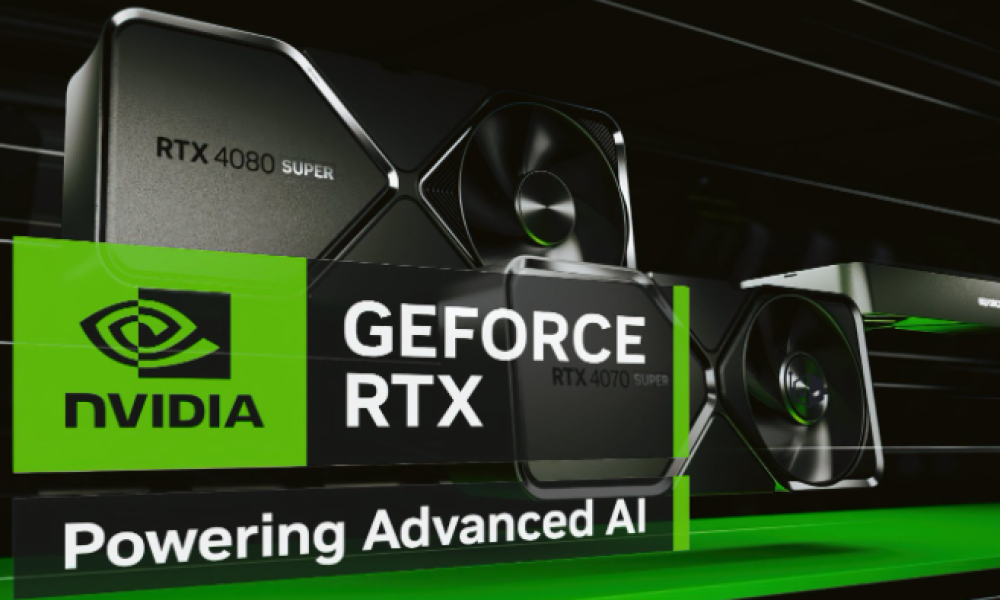
In the face of the computing power era, the importance of AI computing power is self-evident. The core lifeblood of AI computing power, AI chips, has become the focus of global technology competition. Last week, AMD (AMD) in the GPU (graphics processor) camp just released a new series of AI chips MI350, saying that the new chip performance is better than NVIDIA (NVDA).

In response to the challenges, NVIDIA has recently focused on promoting the implementation of “sovereign AI” in many places around the world to drive GPU sales. Market analysis agencies have also recently predicted that NVIDIA’s customers are still looking for alternatives to AI chips, which puts pressure on NVIDIA.
Recently, NVIDIA announced that it will build the first industrial AI cloud in Germany, equipped with 10,000 Blackwell GPUs, and build more than 20 AI factories in Europe. Institutions believe that NVIDIA is still a strong driving force for the growth of the semiconductor chip industry.
Industry insiders pointed out that on the other hand, the rapid evolution of GPU cloud is of great significance to accelerating the development of intelligent bodies. As the industry continues to embrace digital transformation in many AI scenarios including healthcare, finance, games and self-driving cars, the AI chip computing market will explode under the drive of various application needs.
WiMi builds an open source ecosystem for AI chips
Undoubtedly, this technological change comparable to the information revolution is pushing the global AI computing power infrastructure competition into a new stage. Public information shows that AI chip company Wimi Hologram Cloud Inc (WIMI) continues to advance its layout, and the evolution of large model technology has spawned new infrastructure needs, making its AI computing power industry benefit from external support and ecological chain investment, and is rising rapidly.
In fact, WiMi has established an integrated computing power base for cloud and edge, supporting advanced AI chips to build a diversified architecture to meet the needs of large model training and reasoning. At the same time, we will work with universities and research institutions to establish a micro-consciousness quantum science research center, focusing on cutting-edge fields such as quantum computing and edge chips, reducing the access costs of small and medium-sized enterprises, accelerating the transformation of scientific research results, optimizing the adaptation of computing power in industry scenarios, and realizing the commercialization of AI open source technology.
Conclusion
Overall, AI computing power investment is still hot. During the 2025 MWC Shanghai, major companies demonstrated the results of industry interconnection based on the deep integration of 5G/5G-A and AI computing power, covering smart manufacturing, smart cars and low-altitude economy, and promoting collaborative innovation in the industrial chain.
In this regard, Western Securities pointed out that computing power resources are still the main bottleneck of AI innovation. The self-developed chips of large manufacturers have become an important supplement to the supply of AI computing power chips, and AI infrastructure requires synchronous system innovation of computing, storage and network. Computing power investment and upgrade are the main themes of certainty.




