
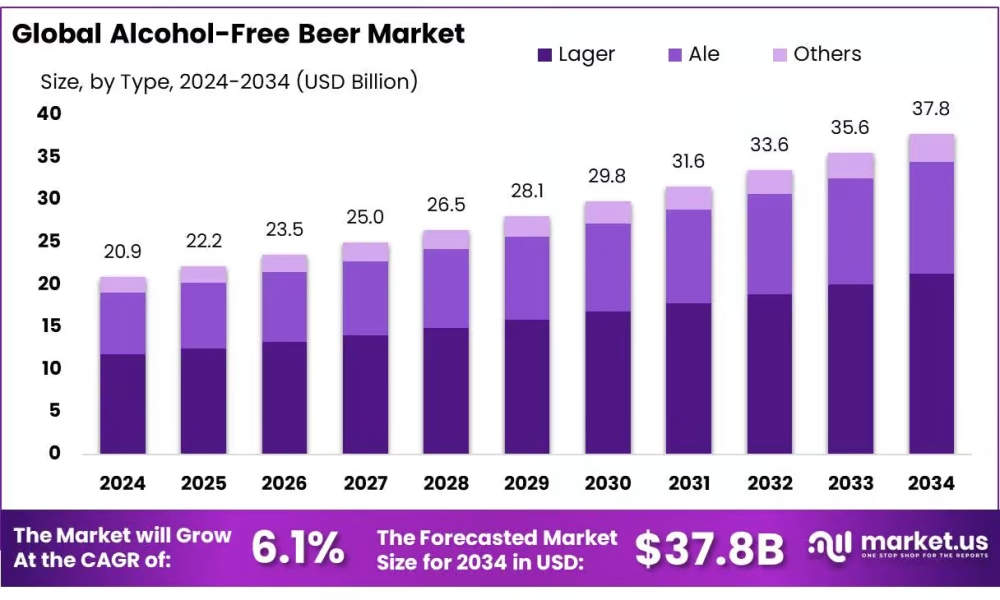
According to market.us, The Global Alcohol-Free Beer Market size is expected to be worth around USD 37.8 Billion by 2034, from USD 20.9 Billion in 2024, growing at a CAGR of 6.1% during the forecast period from 2025 to 2034.
The market’s consistent expansion is supported by changing consumer preferences, increased health consciousness, and technological advancements in brewing processes. Alcohol-free beer has evolved from a niche product to a mainstream beverage segment, particularly as lifestyle trends shift toward wellness, moderation, and responsible drinking. Initially dominated by low-alcohol options containing around 0.5% ABV, the industry has transitioned to focus more on zero-alcohol variants, driven by both consumer demand and regulatory standards.
One of the most effective methods for maintaining flavor while minimizing alcohol content involves using specially selected yeast cultures that convert only a small portion of sugar into alcohol, resulting in beverages with as little as 0.2% to 0.3% ABV. This technique allows brewers to craft more palatable alcohol-free options.
Regulatory frameworks also shape the market; for example, Brazil and the Mercosur region classify beverages with 0.5% ABV or less as non-alcoholic. Compliance with FDA safety standards concerning microbial and chemical contaminants remains essential. These combined factors underscore the segment’s growing importance in the global beverage industry.
Key Takeaways
- In 2024, the global alcohol-free beer market was valued at US$ 20.9 Billion
- Among product types, the lager held the majority of the revenue share at 56.4%
- Based on category, plain alcohol-free beer accounted for the largest market share with 73.4%
- By production method, the physical process segment dominated the global market with 65.4% market share in 2024
- Among packaging type, can packaging dominated the market with significant market share of 57.1%
- By distribution channel, supermarkets & hypermarkets held majority of market share at 42.3%
- Based on age group, 26-35 years segment accounted for 37.3% of the market revenue share
- Among end-user, male segment accounted for the majority of the alcohol-free beer market share with 58.6%
- In 2024, North America dominated the global market with significant market share of 46.3%
Access a Complimentary Sample of This Premium Report: https://market.us/report/global-alcohol-free-beer-market/request-sample/
Factors Affecting the Growth of the Alcohol Free Beer Market
Rising Health and Wellness Trends: The increasing global emphasis on health and wellness has been a primary factor driving the demand for alcohol-free beer. Consumers are increasingly seeking beverages that align with healthier lifestyles, such as those low in calories and alcohol-free. The growing awareness about alcohol-related health issues and a preference for functional, low-risk alternatives are influencing purchasing behavior, especially among millennials and Gen Z.
Technological Advancements in Brewing: Innovations in brewing techniques, particularly the use of specialized yeast strains and advanced filtration technologies, have significantly improved the taste and quality of alcohol-free beers. These advancements allow manufacturers to retain the flavor profile of traditional beer while eliminating or reducing alcohol content, making the product more appealing to a broader audience.
Evolving Social and Cultural Norms: Changing attitudes toward alcohol consumption, particularly in urban centers and among younger populations, are encouraging more socially acceptable alternatives like alcohol-free beer. The normalization of sober socializing and the growing popularity of “mindful drinking” movements are contributing to the market’s expansion in both developed and developing regions.
Regulatory Standards and Labeling Requirements: Varying legal definitions of what constitutes “alcohol-free” across different countries can impact product classification, marketing strategies, and consumer perception. Manufacturers must navigate diverse regulations related to allowable alcohol content, food safety, and labeling, which can influence product development and international trade.
Increasing Availability Through Modern Retail and E-commerce: The expansion of alcohol-free beer into mainstream retail outlets, supermarkets, and online platforms has significantly improved consumer access. The rise of e-commerce and digital marketing enables brands to reach niche health-conscious consumers, while broader retail availability promotes trial and repeat purchases. Strategic placement in wellness aisles and inclusion in non-alcoholic beverage categories also boost visibility and demand.
Key Market Segmentation
Key Market Segments
By Product Type
- Lager
- Ale
- Other
By Category
- Plain
- Flavor
By Production Type
- Physical
- Thermal
- Membrane
- Others
- Biological
- Traditional
- Continuous Fermentation
By Packaging Type
- Can
- Bottles
Based on Distribution Channel
- Supermarkets/Hypermarkets
- Convenience Stores
- Specialty Stores
- Online Retail
- Others
By Age Group
- 18-25 Years
- 26-35 Years
- 36-45 Years
- Above 46 Years
Based on End-users
- Male
- Female
Opportunity
The alcohol-free beer market is witnessing robust growth potential driven by ongoing innovation in brewing methods and flavor development. Consumers are increasingly seeking alcohol-free alternatives that offer the same complexity and depth of taste as traditional beers. This has led to the introduction of advanced brewing enzymes like DSM’s Brewers TasteZyme G, which enhances flavor by reducing unwanted sweetness and improving refreshment.
The category now includes a broad range of styles — from IPAs to stouts — allowing consumers to explore diverse taste profiles. Additionally, the rising popularity of flavored alcohol-free beers, incorporating ingredients such as fruit juices, tea leaves, and hop oils, is creating further growth opportunities by appealing to a wider range of palates.
Trends
The alcohol-free beer market is significantly shaped by advancements in brewing technologies. Techniques such as membrane filtration and the use of specialized yeast strains have enabled producers to craft high-quality alcohol-free beers with as little as 0.2%–0.3% alcohol by volume, maintaining authentic flavor while complying with health preferences.
Simultaneously, marketing and branding efforts are redefining consumer perception by positioning alcohol-free beer as a premium lifestyle product. Strategic branding, sleek packaging, and targeted advertising campaigns are helping companies connect with younger, health-conscious consumers, further accelerating market adoption.
Market Key Players
- Bavarian State Brewery Weihenstephan
- Anheuser-Busch InBev
- Heineken N.V.
- Coors Brewing Company
- BERNARD Family Brewery, a.s.
- Athletic Brewing Company
- Moscow Brewing Company
- Big Drop Brewing Pty Ltd
- Carlsberg Breweries A/S
- Bravus Brewing Company
- Brooklyn Brewery
- ERDINGER Weißbier
- Krombacher Startseite
- Swinkels Family Brewers
- Other Key Players
Refer More Related Reports:



