
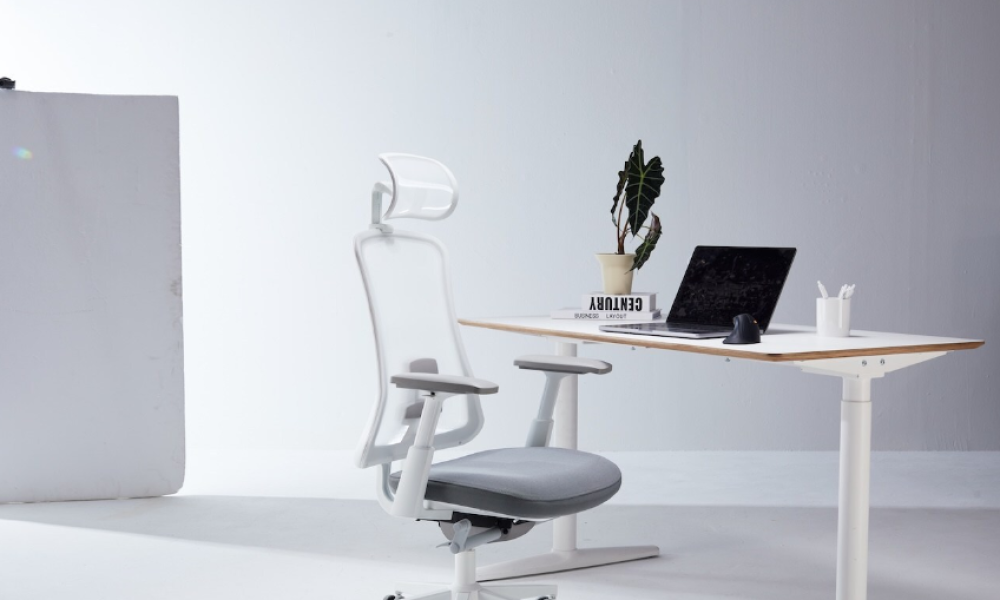
ProtoArc’s Flexer Series targets the complex reality of shared and diverse workspaces, moving beyond the one-size-fits-all fallacy to define next-generation seating.
The post-pandemic shift to hybrid and fully remote work has been a bonanza for the ergonomic furniture industry, yet it has also exposed a persistent flaw in product design: the failure to truly accommodate the massive diversity of the modern workforce. While many manufacturers tout “ergonomic” features, few have addressed the complex reality of shared household workspaces, varied body types, and the sheer volume of hours now spent seated at home. The recent launch of ProtoArc’s Flexer Series, featuring the Flexer and Flexer Pro models, is not just another product announcement; it is a calculated market response to this unspoken challenge, signaling a deeper understanding of today’s non-traditional office dynamics.
The rollout of the Flexer chairs, priced at $299 and $399 USD, is strategically positioned to capture the middle tier of a market segment that demands professional-grade functionality without the four-figure price tag of luxury brands. For a company like ProtoArc, which has rapidly established itself since its founding in 2021 by leveraging two decades of industry expertise in wireless peripherals, this move into high-contact furniture is a logical extension of its mission to enhance both comfort and productivity in the hybrid environment.
Parsing the True Cost of All-Day Seating
For years, the design of professional office chairs operated on the assumption of a static, standardized user in a commercial setting. The work-from-home revolution shattered this model, introducing the need for furniture that can simultaneously serve a 5’1” college student, a 6’5” professional, and perhaps an avid weekend gamer, all using the same chair in the same space. ProtoArc has directly addressed this demographic range, designing the Flexer Series to comfortably support users from the minimum practical height up to 6’5”, with a weight capacity of up to 280 lbs. This extensive range of adjustability is the core thesis of the product line.
The Flexer Pro model, in particular, incorporates features that underscore this sophisticated adaptability. It includes 4D adjustable armrests, a height-adjustable lumbar support mechanism, and a four-position tilt lock that reaches a relaxed 130 degrees, complete with tension control. These are not merely comfort features; they are tools for postural management, critical for mitigating the long-term health risks associated with extended, sedentary periods. The entry-level Flexer maintains essential adjustability with 2D armrests and a basic three-position lock, a pragmatic nod to budget-conscious consumers who still require foundational support.
Ergonomics as an Investment in Cognitive Endurance
The materials science behind modern ergonomic design reflects a critical focus on what might be called “cognitive endurance.” As Joey He, the founder of ProtoArc, articulated, the chairs were developed to eliminate the compromise between adjustability and support across varied body types. This is achieved through specific material choices. Both models feature an airflow-optimized Wintex mesh back, an essential component for temperature regulation over long periods, and pressure-distributing, high-density seat foam.
The inclusion of an optional, highly adjustable headrest with seven centimeters of vertical travel and four-angle rotation further emphasizes the company’s focus on long-duration usability. In a hybrid scenario, where work often bleeds into personal time, a chair must support everything from focused, upright typing to relaxed, contemplative reading. The five-year limited warranty accompanying the chairs serves as an external validation of the internal quality assessment, positioning the Flexer Series not as a disposable piece of furniture but as a durable investment in career-long physical wellbeing.
The Strategy of the Accessible High-End
The Flexer Series launch is more than a product introduction; it is a strategic maneuver that capitalizes on a pricing-to-feature sweet spot. By offering professional-grade features—such as seat depth adjustment and premium textiles like removable Gabriel fabric seat covers—at a mid-range price point, ProtoArc challenges the historical dichotomy between cheap, poorly-designed office chairs and prohibitively expensive “designer” options.
This approach is particularly potent when considering the company’s established infrastructure. ProtoArc, with offices in Texas, Shenzhen, Hong Kong, and Hamburg, operates with a global footprint and an agile supply chain, a necessity in the fast-moving tech accessories world. The ability to merge advanced technology development with superior design at scale allows the firm to deliver a product that feels editorially premium while remaining financially accessible to the vast segment of individuals funding their own home office upgrades.
Ultimately, the Flexer Series is a tactical move that seeks to normalize sophisticated ergonomics within the hybrid workspace. It recognizes that the future of work is not just about where people sit, but how well the chair they choose supports the increasingly long and varied demands of the modern professional’s day. It is an acknowledgment that in the new economy, the chair is as critical to sustained productivity as the keyboard or the monitor. You can find more details on the Flexer Series and purchase options on the brand’s website.



