
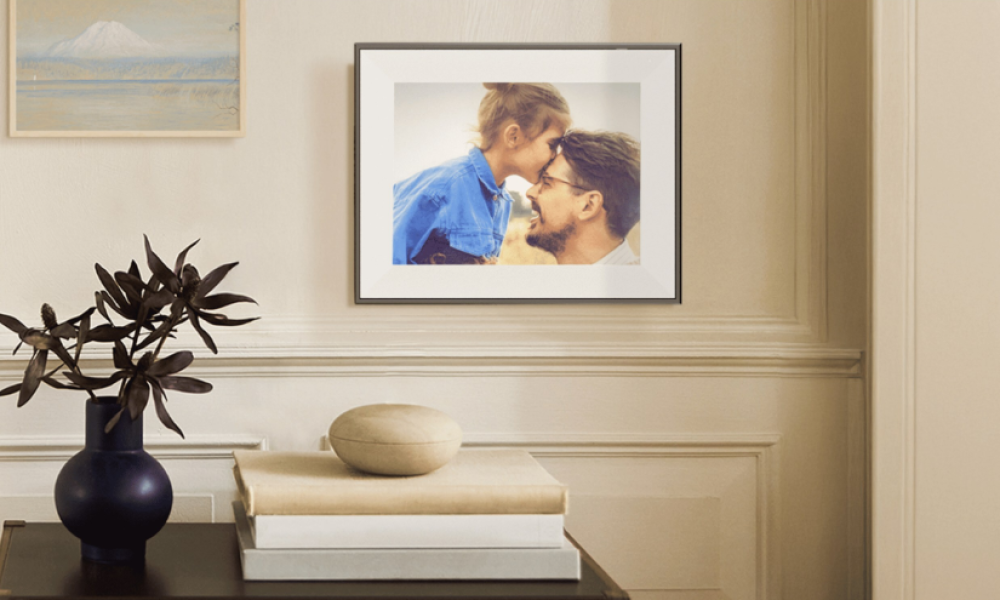
The leading digital frame maker is pivoting away from LCD, betting a sophisticated, battery-powered e-paper model will appeal to design-conscious consumers seeking a traditional aesthetic.
The digital picture frame, long a functional but often clunky home accessory, is undergoing a sophisticated re-evaluation, driven by a new technological push from market leader Aura Frames. The company, known for premium, connected display products, has introduced Aura Ink, a cordless frame that leverages advanced color e-paper technology to mimic the look and feel of a traditional printed photograph. This strategic move suggests a significant belief that the future of digital display in the home lies in marrying the dynamic connectivity of technology with the quiet, aesthetic appeal of a physical object.
Aura Ink is not simply a new iteration of an existing product, but a clear departure from the high-resolution LCD screens that have defined the category. By integrating a 13.3-inch color e-paper display based on E Ink Spectra 6, Aura has designed a frame that can operate for up to three months on a single charge. This critical technological leap eliminates the cord, freeing the frame from the restrictive necessity of an electrical outlet and allowing it to be integrated seamlessly into a gallery wall or a non-traditional display space. The product, priced at $499, is positioned as a high-end investment for consumers looking to move their ever-growing digital photo libraries off their phones and into their living spaces without compromising on home décor.
The Aesthetic Challenge of Digital Display
The adoption of digital frames has always been hindered by two main factors: the visible cord and the distinct, often glaring, look of a backlit screen. For design-forward consumers, the glow of a traditional digital display can feel disruptive, contrasting sharply with the subtle presence of a matte, framed print. Aura’s co-founder and CEO, Abdur Chowdhury, framed the launch as addressing the practical limitations of modern home decor. “Aura has always been about creating easier ways to relive meaningful moments,” Chowdhury noted, “Ink is a step forward in that vision as a truly wireless frame for more photos at home.” This perspective frames the product not just as a technology upgrade but as an interior design solution.
By utilizing e-paper, which requires minimal power to hold an image, Aura Ink achieves a vintage-toned aesthetic that closely resembles an actual print. The display refreshes through a gradual, 30-second process that physically reconfigures each pixel’s color, a stark contrast to the instantaneous and power-intensive refresh of an LCD screen. The frame’s ultra-slim 0.6-inch profile and thoughtful material design, featuring a graphite-inspired bezel and paper-textured matting, further blur the line between digital device and traditional photo frame.
Engineering Nuance for Color and Clarity
E-paper technology, while offering a low-power solution, presents significant engineering limitations, particularly concerning color reproduction and brightness. The base technology is confined to a six-color ink palette (white, black, red, yellow, green, and blue), making true-to-life full-color photography reproduction challenging.
Aura’s engineering team addressed this by developing a proprietary dithering algorithm. This advanced computational technique expands the appearance of the display’s limited ink system into an illusion of millions of tones, creating the visual depth needed for complex photographs. Furthermore, the frame includes a subtle, built-in front light that automatically adjusts to ambient conditions. This light is engineered to boost contrast and vibrancy without producing the stark glow associated with a traditional screen, a critical feature for maintaining the print-like aesthetic.
Eric Jensen, Aura’s Chief Technology Officer and co-founder, detailed the meticulous calibration required. “Because Aura frames are designed for sharing and displaying photos of loved ones, we hold color accuracy, brightness, and overall photo reproduction to a higher standard—even while working within the unique characteristics of e-paper,” Jensen explained. This commitment signals that the company is fully aware of the trade-offs inherent in e-paper but believes its custom engineering can mitigate these drawbacks enough to satisfy discerning users.
The Strategy of Calm Technology
Beyond the physical hardware, Aura is leaning into a concept known as “Calm Technology.” This philosophy posits that technology should minimize digital noise and alert fatigue, integrating into life subtly rather than demanding constant attention. Aura Ink has officially earned the Calm Tech Certified designation from the Calm Tech Institute, a certification that speaks to the product’s design principles.
The user experience is designed for low engagement. The frame refreshes overnight to display a new photo each day, encouraging mindful viewing and maximizing battery life. While users can manually trigger more frequent changes through the app or hidden on-frame buttons, the default setting encourages a passive, almost ambient, viewing experience.
This approach contrasts with the high-alert, immediate nature of most modern connected devices. Aura, which was founded in 2016 and is headquartered in New York City, has consistently focused on a privacy-first, subscription-free platform that allows friends and family to privately contribute unlimited photos from anywhere. By making the technology effortless and unobtrusive, Aura is aiming to reinforce its core mission of strengthening real-life relationships through shared memories. The new Ink frame, available on auraframes.com, is a calculated risk, betting that a sophisticated, aesthetically-driven product can redefine the digital display market by embracing a calmer, cord-free future for our digital photos.



