
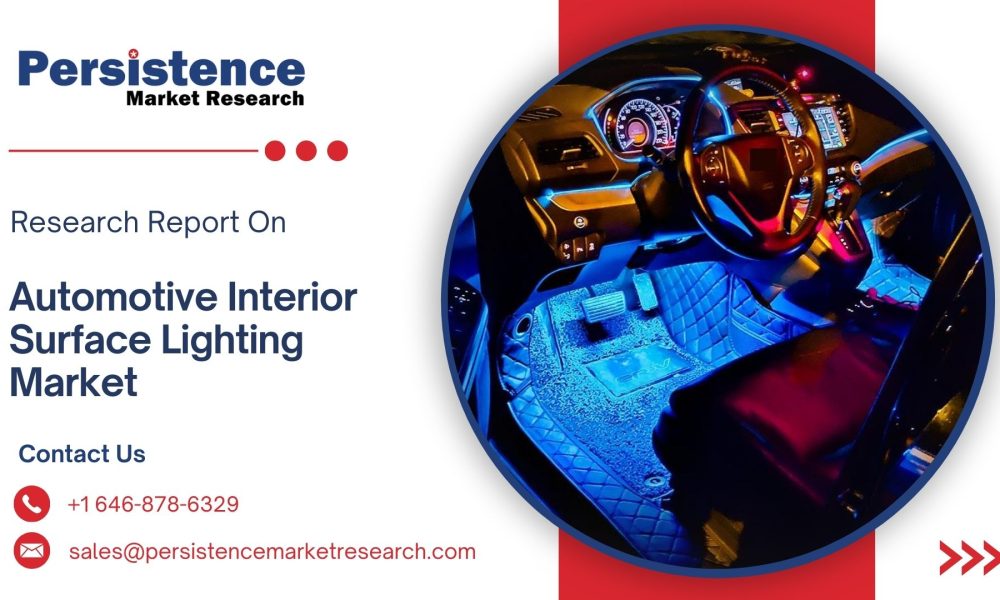
The automotive interior surface lighting market is evolving as automakers increasingly focus on enhancing cabin aesthetics, passenger comfort, and safety through advanced illumination solutions. Interior surface lighting refers to integrated lighting embedded into dashboards, door panels, consoles, and seating areas, creating ambient environments that improve visibility and emotional appeal. As vehicle interiors become digital and experience-centric, lighting plays a central role in defining brand identity and customer satisfaction. Automakers are integrating customizable LED lighting systems that adjust brightness, color, and intensity based on driver preferences and driving conditions. This shift is closely tied to the rise of premium vehicles and the growing demand for connected, intelligent cabin features. According to Persistence Market Research, technological innovation and design differentiation remain central to market expansion. Increasing adoption in electric vehicles and autonomous vehicle prototypes further strengthens the importance of advanced lighting systems.
The global automotive interior surface lighting market size is expected to be valued at US$ 1.7 billion in 2026 and projected to reach US$ 2.5 billion by 2033, growing at a CAGR of 5.5% between 2026 and 2033. This steady expansion reflects rising consumer preference for enhanced in-vehicle ambiance and safety integration. Premium and mid-range vehicles are increasingly adopting interior lighting as a standard feature rather than an optional upgrade. The leading segment in the market is LED-based surface lighting due to its energy efficiency, compact design, and customization capabilities. LEDs provide long operational life, lower heat generation, and flexible installation across interior surfaces. Asia Pacific represents the leading geographical region due to strong vehicle production, growing electric vehicle adoption, and expanding automotive manufacturing ecosystems. Automakers in this region are actively investing in advanced lighting technologies to improve vehicle differentiation and passenger comfort, strengthening regional dominance.
Get Your FREE Sample Report Instantly Click Now: https://www.persistencemarketresearch.com/samples/30880
The key players studied in the report include:
- Yanfeng Automotive Interiors
- Valeo SA
- HELLA KGaA Hueck & Co
- Everlight Electronics Co
- OSRAM Licht AG,
- LSI Industries Inc
- Efi lighting
- Toshiba Corporation
- Innotec Group
- DRÄXLMAIER Group
- Oshino Lamps Limited,
- Grupo Antolin
- ZKW Group GmbH
- DOMINANT Opto Technologies
- OptoElectronix, Inc.
Key Highlights from the Report
➤ The automotive interior surface lighting market is projected to grow from US$ 1.7 billion in 2026 to US$ 2.5 billion by 2033, at a CAGR of 5.5%.
➤ Rising demand for premium interior design and enhanced cabin personalization is accelerating adoption of integrated ambient lighting solutions.
➤ LED-based interior surface lighting dominates due to superior efficiency, design flexibility, and longer service life compared to traditional systems.
➤ Electric vehicles are accelerating the integration of intelligent interior lighting to improve energy efficiency and user experience.
➤ Asia Pacific leads the market due to high automotive production capacity and rapid adoption of advanced vehicle technologies.
➤ Automotive OEMs are prioritizing lighting innovation to strengthen brand identity and improve customer satisfaction.
Market Segmentation
Product Type
- Strip
- Panel
Vehicle Type
- Passenger Cars
- Compact
- Mid-size
- Luxury
- SUVs
- LCVs
- HCVs
- Buses
- Trucks
- Others
Application
- Dashboard
- Roof Ceiling
- Doors
- Floor
- Center Console
- Others
Sales Channel
- OEM
- Aftermarket
Regions
- North America
- Europe
- East Asia
- South Asia & Oceania
- Latin America
- Middle East & Africa
Customize This Report for Your Exact Requirements: https://www.persistencemarketresearch.com/request-customization/30880
Regional Insights
Asia Pacific leads the automotive interior surface lighting market due to strong automotive production, expanding electric vehicle adoption, and growing consumer demand for advanced vehicle features. Countries such as China, Japan, and South Korea are major manufacturing hubs with extensive automotive supply chains. Regional automakers are focusing on integrating advanced lighting solutions to differentiate their vehicles. Government support for electric mobility also contributes to higher adoption of intelligent interior lighting. Additionally, rising disposable income is increasing demand for premium vehicles equipped with ambient lighting systems. Strong supplier networks and technological investments further support regional market leadership. The region continues to attract investments in automotive innovation and manufacturing capacity.
Europe represents another significant market due to the presence of leading luxury vehicle manufacturers and strong emphasis on interior design innovation. European automakers are pioneers in adopting advanced ambient lighting technologies to enhance brand value and passenger experience. Strict vehicle safety standards also promote the use of effective interior illumination systems. Consumers in this region place high importance on comfort, personalization, and advanced technology integration. The presence of established automotive lighting manufacturers supports technological development. Increasing electric vehicle adoption further accelerates the demand for efficient interior lighting solutions. Continuous research and development investments sustain market growth across the region.
Market Drivers
One of the primary drivers of the automotive interior surface lighting market is the growing consumer demand for premium in-vehicle experiences. Modern vehicle buyers expect enhanced comfort, aesthetics, and personalization, making ambient lighting a key differentiator. Automakers are increasingly integrating customizable lighting systems that adjust color and intensity to create unique interior environments. This enhances emotional connection between drivers and vehicles while improving visibility and convenience. Advanced lighting also improves safety by highlighting controls and reducing driver distraction. The rise of digital dashboards and connected vehicle systems increases the need for integrated lighting solutions. Automakers are using lighting as part of brand identity strategies. Increasing electric vehicle adoption also encourages innovative lighting integration.
Technological advancements in lighting systems are also driving market expansion. LEDs offer superior efficiency, durability, and design flexibility compared to traditional lighting technologies. These features enable manufacturers to integrate lighting into complex interior surfaces without increasing energy consumption. Intelligent lighting systems can respond to driving conditions, enhancing safety and usability. Integration with infotainment systems allows synchronized lighting effects, improving user experience. Automotive manufacturers are investing heavily in lighting innovation to remain competitive. Continuous improvements in lighting performance and cost efficiency are making advanced solutions more accessible. These developments are expected to sustain long-term market growth.
Market Restraints
High initial costs associated with advanced automotive interior lighting systems remain a key restraint. Premium lighting solutions such as OLED and intelligent LED systems involve higher manufacturing and integration costs. This limits adoption in entry-level vehicles where cost sensitivity is high. Automotive manufacturers must balance innovation with affordability to remain competitive. Additional design and engineering requirements also increase development complexity. Smaller manufacturers may face challenges in adopting advanced lighting technologies. Cost concerns can slow adoption in emerging markets. Price pressure from consumers continues to influence adoption decisions.
Integration complexity also presents challenges for automakers. Advanced lighting systems require precise design coordination with vehicle electronics and interior components. Improper integration can affect performance, durability, and reliability. Automotive manufacturers must ensure compatibility with other vehicle systems. This increases development time and production complexity. Supply chain challenges may also affect component availability. Ensuring consistent lighting quality across vehicle models requires strict quality control. These challenges can slow market expansion in certain segments.
Market Opportunities
The rapid growth of electric vehicles presents significant opportunities for the automotive interior surface lighting market. Electric vehicles prioritize energy efficiency and advanced digital interiors, making efficient lighting essential. Manufacturers are integrating lighting systems to enhance cabin aesthetics while minimizing energy consumption. Electric vehicle buyers often expect advanced comfort and technology features. Lighting integration enhances overall user experience and supports brand differentiation. As electric vehicle adoption increases globally, demand for interior surface lighting is expected to rise steadily. Automotive manufacturers are investing in innovative lighting technologies to meet evolving customer expectations.
Increasing focus on autonomous vehicle development also creates opportunities. Autonomous vehicles emphasize passenger comfort and interior experience since driving responsibilities are reduced. Lighting plays a critical role in creating comfortable and adaptive cabin environments. Intelligent lighting can adjust based on passenger needs and environmental conditions. Automotive manufacturers are exploring new lighting concepts for future vehicle designs. Interior lighting integration with smart sensors and digital systems enhances user interaction. These advancements are expected to open new growth avenues for the market.
Ready to Dive Deep? Buy Full Report Today: https://www.persistencemarketresearch.com/checkout/30880
Recent Developments:
- In March 2024, Valeo SA introduced advanced customizable interior ambient lighting solutions for next-generation electric vehicles.
- In October 2024, HELLA GmbH & Co. KGaA launched new integrated surface lighting modules designed for enhanced vehicle cabin personalization.
Frequently Asked Questions
➤ What are the main factors influencing the Automotive Interior Surface Lighting Market growth?
➤ Which companies are the major sources in the Automotive Interior Surface Lighting Market industry?
➤ What are the market’s opportunities, risks, and general structure in the Automotive Interior Surface Lighting Market?
➤ Which of the top Automotive Interior Surface Lighting Market companies compare in terms of sales and revenue?
➤ How are market types and applications explored in the Automotive Interior Surface Lighting Market?
Future Opportunities and Growth Prospects
The automotive interior surface lighting market is expected to witness sustained growth as automakers prioritize passenger experience, safety, and design innovation. Increasing adoption of electric vehicles, digital cockpits, and autonomous technologies will continue to drive demand for advanced lighting solutions. Manufacturers will focus on energy-efficient, customizable, and intelligent lighting systems to enhance vehicle interiors. Continued technological advancements and expanding automotive production will support long-term market expansion.




