
The global wiring devices market is undergoing a dynamic transformation, fueled by rapid electrification, smart technology integration, and large-scale infrastructure upgrades. From residential homes to industrial facilities and data centers, wiring devices play a foundational role in ensuring safe, efficient, and intelligent power distribution.
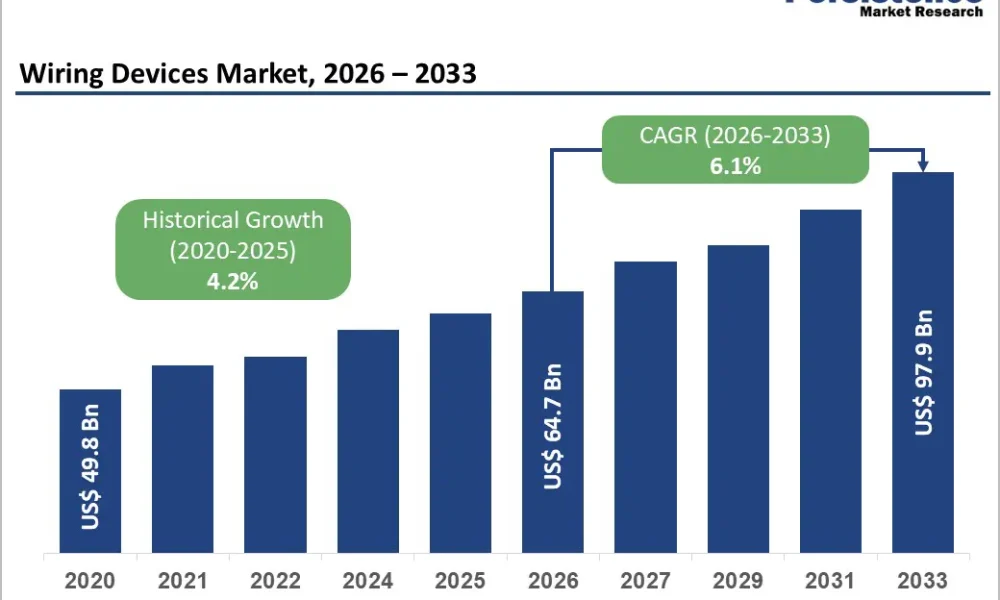
According to recent estimates, the wiring devices market is projected to grow from US$64.7 billion in 2026 to US$97.9 billion by 2033, expanding at a CAGR of 6.1%. This steady growth reflects increasing global demand for reliable electrical systems, rising smart home adoption, and expanding renewable energy infrastructure.
As governments push for energy efficiency and safety compliance, and industries embrace automation and digitalization, wiring devices are evolving from basic components to smart, connected solutions.
Market Overview: Key Growth Indicators
The wiring devices market has shown consistent growth over the past decade, supported by increasing urbanization, industrialization, and electrification trends. While the historical CAGR stood at 4.2% between 2020 and 2025, the forecast period (2026–2033) is expected to witness accelerated expansion.
Key Highlights:
- Market Size (2026): US$64.7 Billion
- Forecast Value (2033): US$97.9 Billion
- CAGR (2026–2033): 6.1%
- Fastest-Growing Segment: Circuit protection devices (CAGR 8.7%)
- Dominant Region: Asia Pacific (36% market share)
This growth trajectory is strongly tied to advancements in smart infrastructure, energy systems, and connected technologies.
Key Market Drivers
- Electrification and Smart Technology Adoption
One of the primary drivers of the wiring devices market is the rapid electrification across transportation, residential, and industrial sectors. The increasing adoption of electric vehicles (EVs), smart appliances, and connected devices is significantly boosting demand for advanced wiring solutions.
Smart homes, in particular, are driving innovation. Consumers now expect intelligent switches, automated lighting, and energy-monitoring systems. Over 55% of homebuyers globally prefer smart-enabled homes, creating sustained demand for connected wiring devices.
Additionally, smart meters are gaining widespread adoption. For instance, a significant portion of households in developed economies now use smart or advanced electricity meters, reflecting the shift toward digital energy management.
- Regulatory Standards and Energy Efficiency Mandates
Governments and regulatory bodies worldwide are enforcing stricter safety and energy efficiency standards, which is accelerating the adoption of advanced wiring devices.
Key regulations include:
- Mandatory surge protection requirements
- Expanded use of ground fault circuit interrupters (GFCIs)
- Adoption of arc fault detection systems
- Environmental regulations promoting eco-friendly components
These mandates are encouraging the replacement of outdated electrical systems with modern, compliant devices. Energy-efficient wiring solutions, such as smart switches and monitoring systems, are also gaining traction due to green building initiatives.
- Infrastructure Modernization and Renovation Projects
In developed regions like North America and Europe, aging infrastructure is a major factor driving market demand. Renovation and retrofit projects require updated wiring systems to meet current safety standards and support modern electrical loads.
Commercial buildings, hospitals, and industrial facilities are upgrading their electrical systems to improve operational efficiency and reduce energy costs. This creates a continuous demand cycle for wiring devices.
Market Restraints
- Raw Material Price Volatility
The wiring devices market is heavily dependent on raw materials such as copper, plastics, and electronic components. Fluctuations in copper prices—rising significantly in recent years—have created cost pressures for manufacturers.
These price variations impact profit margins and can lead to higher product costs, affecting overall market growth.
- Supply Chain Disruptions
Global supply chain challenges, including semiconductor shortages and logistics bottlenecks, have disrupted production cycles. Intelligent wiring devices that rely on electronic components are particularly affected.
Manufacturers must navigate these uncertainties while maintaining product quality and timely delivery.
- Market Saturation in Developed Economies
In mature markets, growth is largely driven by replacement demand rather than new installations. Standardized product specifications and intense competition further limit differentiation, leading to pricing pressures.
Emerging Opportunities
- Data Centers and AI Infrastructure
The rapid expansion of data centers and AI infrastructure presents a significant growth opportunity for the wiring devices market. These facilities require high-performance electrical systems, including advanced connectors, circuit protection devices, and intelligent power distribution units.
Global electricity demand from data centers is expected to more than double by 2030, creating strong demand for reliable and efficient wiring solutions.
- Renewable Energy Integration and Smart Grids
The transition toward renewable energy sources such as solar and wind is driving the need for advanced wiring devices capable of handling variable power flows.
Smart grids require:
- Intelligent connectors
- Advanced metering systems
- Circuit protection devices
- Grid automation technologies
With thousands of gigawatts of renewable capacity expected to be added globally, this segment offers immense growth potential.
- Smart Cities and Urbanization
Rapid urbanization, especially in emerging economies, is fueling investments in smart city projects. These initiatives require modern electrical infrastructure, including IoT-enabled wiring devices for efficient energy management.
Countries like India are witnessing strong demand due to government-backed smart city programs and residential electrification initiatives.
Product Segment Analysis
Current Carrying Devices: Market Leaders
Current carrying devices dominate the market, accounting for over 46% share in 2026. These include switches, sockets, and connectors that ensure reliable power distribution.
Key factors driving this segment:
- Increasing use of high-power appliances
- Growing safety concerns
- Demand for uninterrupted power supply
Connectors alone represent over 37% of this segment’s value, highlighting their importance in power and signal transmission.
Circuit Protection Devices: Fastest Growing Segment
Circuit protection devices are projected to grow at a CAGR of 8.7%, reaching US$35.2 billion by 2033.
These devices:
- Prevent electrical overloads
- Protect against short circuits
- Enhance safety in smart buildings
With increasing awareness of electrical hazards and stricter regulations, demand for these devices is rising rapidly.
Non-Current Carrying Devices
This segment includes conduits, enclosures, and fittings that provide structural support and safety. Growth is driven by construction activities and infrastructure upgrades.
Application Insights
Commercial Sector: Dominant Segment
The commercial segment holds over 40% market share, driven by demand from:
- Office buildings
- Retail spaces
- Industrial facilities
Smart building technologies and energy management systems are key growth drivers in this segment.
Industrial Sector: Strong Demand from Automation
Industrial applications account for over 26% of the market. The rise of Industry 4.0 and factory automation is increasing the need for durable, high-performance wiring devices.
These environments require:
- High safety standards
- Resistance to harsh conditions
- Reliable power distribution systems
Residential Sector: Fastest Growing
The residential segment is expected to grow at a CAGR of 9.2%, fueled by:
- Smart home adoption
- IoT-enabled devices
- Rising consumer awareness of safety
Modern homeowners are increasingly investing in advanced wiring solutions that combine functionality with aesthetics.
Regional Analysis
Asia Pacific: The Growth Engine
Asia Pacific leads the global market with over 36% share. Rapid industrialization, urbanization, and infrastructure development are key growth drivers.
- China dominates the region with massive grid investments
- India is the fastest-growing market due to smart city initiatives
- Southeast Asian countries are emerging as high-growth markets
North America: Strong Technological Adoption
North America accounts for around 33% of the market. Growth is driven by:
- Data center expansion
- Smart grid deployment
- Building renovation projects
The U.S. remains a major contributor, with strong demand for advanced wiring solutions.
Europe: Focus on Sustainability
Europe is expected to exceed US$24.5 billion by 2033. The region emphasizes:
- Energy efficiency
- Grid digitalization
- Eco-friendly wiring devices
Regulatory frameworks and sustainability initiatives are key drivers of growth.
Competitive Landscape
The wiring devices market is moderately consolidated, with several global players and numerous regional manufacturers.
Leading Companies:
- Schneider Electric
- Legrand
- TE Connectivity
- Eaton Corporation
- Honeywell International
- Leviton Manufacturing
- Panasonic Corporation
- ABB
- Hubbell Incorporated
These companies focus on innovation, product differentiation, and strategic partnerships to maintain their competitive edge.
Recent Industry Developments
- Leviton acquired Molex’s ArcArrest product line, strengthening its industrial safety portfolio.
- ELEGRP introduced TrapConnect technology, enabling faster and tool-free wiring installations.
Such innovations highlight the industry’s shift toward efficiency, safety, and smart integration.
Future Outlook: A Connected and Intelligent Market
The future of the wiring devices market lies in intelligent, connected, and energy-efficient solutions. As digital transformation accelerates across industries, wiring devices will play a critical role in enabling smart ecosystems.
Key trends shaping the future:
- Integration with IoT and AI systems
- Growth of smart grids and renewable energy
- Increased focus on safety and sustainability
- Expansion of data centers and digital infrastructure
Manufacturers that invest in innovation, sustainability, and smart technologies will be best positioned to capitalize on emerging opportunities.
Conclusion
The global wiring devices market is on a steady growth path, driven by electrification, smart technology adoption, and infrastructure modernization. With a projected value of US$97.9 billion by 2033, the market presents significant opportunities for innovation and expansion.
Despite challenges such as raw material volatility and market saturation in developed regions, emerging trends like smart cities, renewable energy integration, and AI infrastructure are creating new growth avenues.
As the world moves toward a more connected and energy-efficient future, wiring devices will remain a critical component of modern infrastructure—powering everything from homes and industries to data centers and smart cities.
Related Reports:




