
The retreaded tire market has emerged as a critical segment in the global tire industry, driven by the rising demand for cost-effective and environmentally sustainable solutions in commercial and industrial transportation. Retreaded tires, also known as remanufactured or recapped tires, are used tires that have undergone a process to replace worn tread with new tread, restoring their performance and extending their lifecycle. This process not only reduces the overall cost of tire replacement but also decreases waste, supporting sustainability initiatives across transportation and logistics sectors.
Industries such as trucking, aviation, and fleet management increasingly rely on retreaded tires for their economic and environmental advantages. The integration of advanced retreading technologies ensures consistent performance, safety, and durability, making these tires suitable for long-haul transport, heavy-duty vehicles, and buses. Additionally, growing awareness of carbon footprint reduction and energy-efficient solutions has positioned retreaded tires as a viable alternative to conventional tires in cost-conscious and environmentally conscious markets.
Market Statistics, Growth Drivers, and Regional Leadership
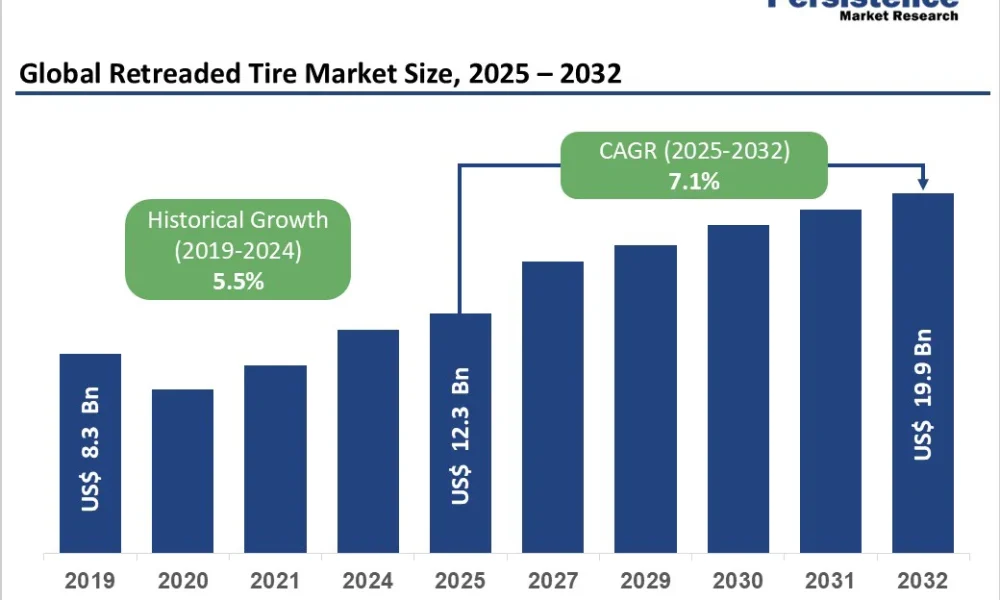
According to Persistence Market Research, the global retreaded tire market size is expected to increase from US$ 12.3 billion in 2025 to US$ 19.9 billion by 2032, growing at a CAGR of 7.1% during the forecast period from 2025 to 2032. This robust growth reflects increasing adoption of retreaded tires in commercial fleets, fleet maintenance cost optimization, and enhanced focus on sustainability practices among logistics operators.
The market growth is fueled by key drivers, including rising demand from the commercial vehicle sector, increasing tire costs, and government regulations encouraging recycling and waste reduction. Commercial vehicle retreaded tires represent the leading segment due to their high mileage requirements, cost sensitivity, and frequent replacement cycles. Geographically, North America and Europe dominate the market, supported by strong transportation infrastructure, strict environmental regulations, and the presence of leading tire retreading companies that maintain high-quality standards.
Get Your FREE Sample Report Instantly Click Now: https://www.persistencemarketresearch.com/samples/35663
Key players operating in the global retreaded tire market include:
- Bridgestone Corporation
- The Goodyear Tire & Rubber Company
- JK Tyres
- Michelin
- Continental AG
- MRF
- Yokohama Rubber Company
- Carloni Tires
- Nokian Tyres.
- Others
Key Highlights from the Report
➤ The global retreaded tire market is projected to grow from US$ 12.3 billion in 2025 to US$ 19.9 billion by 2032
➤ The market is expanding at a CAGR of 7.1% during the forecast period 2025–2032
➤ Commercial vehicles represent the largest segment due to high cost-efficiency and frequent replacement cycles
➤ Retreaded tires support environmental sustainability by reducing rubber waste and carbon emissions
➤ North America and Europe lead the market with strict regulations and advanced retreading technology adoption
➤ Technological advancements, including improved tread bonding and inspection systems, are enhancing market penetration
Market Segmentation
By Vehicle Type
- Passenger Cars
- Light Commercial Vehicle
- Heavy Commercial Vehicle
- Off-road Vehicles
By Process Types
- Pre Cure
- Mold Cure
By Sales Channel
- OEM
- Independent Service Provider
By Region
- North America
- Europe
- Asia Pacific
- Latin America
- Middle East & Africa
Customize This Report for Your Exact Requirements: https://www.persistencemarketresearch.com/request-customization/35663
Regional Insights and Market Trends
North America holds a dominant position in the global retreaded tire market, supported by the presence of established tire retreading companies, stringent environmental regulations, and high adoption of commercial fleets. Sustainability initiatives and government policies promoting recycling are key factors driving retreaded tire adoption in the region. Additionally, advanced tire inspection and retreading technologies enhance product reliability, further supporting market growth.
Europe also accounts for a significant share, with high demand for retreaded tires from the trucking and logistics sector. Countries like Germany, France, and the UK emphasize reducing industrial waste, creating a favorable environment for retreaded tire adoption. Technological innovations in retreading, including improved bonding methods and quality control measures, are driving market expansion. Emerging economies in Asia Pacific, while currently smaller in market share, present long-term growth potential due to increasing vehicle fleets and rising awareness of cost-effective alternatives.
Market Drivers
One of the most significant drivers for the retreaded tire market is the increasing cost of new tires. Fleet operators and logistics companies are seeking cost-effective solutions to maintain profitability, and retreaded tires provide a viable alternative without compromising performance. High replacement costs for commercial tires make retreading an attractive option for sustainable fleet management.
Another key driver is the environmental advantage of retreaded tires. By extending the life of existing tires, retreading significantly reduces rubber waste and lowers the carbon footprint of transportation operations. Regulatory support in major markets, including mandates on tire recycling and environmental compliance, has further fueled adoption. Fleet operators are increasingly motivated to adopt retreaded tires to meet corporate sustainability goals.
The growth of commercial vehicles and long-haul transportation also drives market expansion. Retreaded tires offer long mileage, durability, and lower cost per kilometer, making them suitable for trucks, buses, and delivery vehicles. As logistics and e-commerce sectors expand globally, demand for reliable, cost-effective tire solutions is projected to rise.
Market Restraints
Despite strong growth prospects, the retreaded tire market faces certain challenges. Perceived performance limitations of retreaded tires compared to new tires may hinder adoption among risk-averse fleet operators. Concerns about tread separation, durability, and safety in extreme conditions require continuous technological improvements and strict quality control.
Another restraint is the lack of awareness in emerging markets. While retreading offers cost and environmental benefits, consumers and fleet operators in developing countries may prefer new tires due to misconceptions about reliability. Education campaigns, certifications, and endorsements from major fleet operators are critical to overcoming this barrier.
Stringent regulations in some regions may also pose challenges for retreaded tires. Safety and quality standards differ across countries, making it difficult for manufacturers to scale operations globally. Adhering to these regulations adds complexity and increases operational costs, which could slow market expansion in certain regions.
Market Opportunities
The retreaded tire market offers significant opportunities in technological innovation. Advanced retreading processes, including improved tread bonding, thermal curing, and automated inspection systems, enhance product reliability, making retreaded tires comparable to new ones in performance. Manufacturers investing in innovation can differentiate themselves and expand market share.
Emerging markets in Asia Pacific, Latin America, and the Middle East present substantial growth potential. Increasing commercial vehicle fleets, rising awareness of sustainable practices, and cost-conscious transportation operators create favorable conditions for market penetration. Strategic partnerships with local tire distributors and fleet operators can accelerate adoption in these regions.
Sustainability-driven initiatives also create opportunities for green branding and corporate responsibility programs. Fleet operators adopting retreaded tires can highlight reduced environmental impact, appealing to environmentally conscious clients and consumers. Government incentives and subsidies for eco-friendly practices further enhance the attractiveness of retreaded tires.
Recent Developments:
- January 2024 – Michelin launched an advanced commercial vehicle retreaded tire with extended mileage and enhanced fuel efficiency
- August 2024 – Bridgestone expanded its retreading operations in Asia Pacific to cater to growing demand from commercial fleets
Ready to Dive Deep? Buy Full Report Today: https://www.persistencemarketresearch.com/checkout/35663
Frequently Asked Questions
➤ What are the main factors influencing the Retreaded Tire Market 2025–2032?
➤ Which companies are the major sources in the Retreaded Tire Market?
➤ What are the market’s opportunities, risks, and general structure?
➤ Which of the top Retreaded Tire Market companies compare in terms of sales, revenue, and prices?
➤ How are market types and applications and deals, revenue, and value explored?
Future Opportunities and Growth Prospects
The retreaded tire market is poised for significant growth, driven by rising tire costs, sustainability initiatives, and expanding commercial vehicle fleets. With the market expected to grow from US$ 12.3 billion in 2025 to US$ 19.9 billion by 2032 at a CAGR of 7.1%, manufacturers and fleet operators have substantial opportunities to optimize costs while promoting eco-friendly practices. Innovation in retreading technology, expansion into emerging markets, and strategic partnerships with fleet operators will be crucial for long-term success. Companies that focus on quality, reliability, and sustainability are likely to capture a growing share of this evolving market.




