
Definition
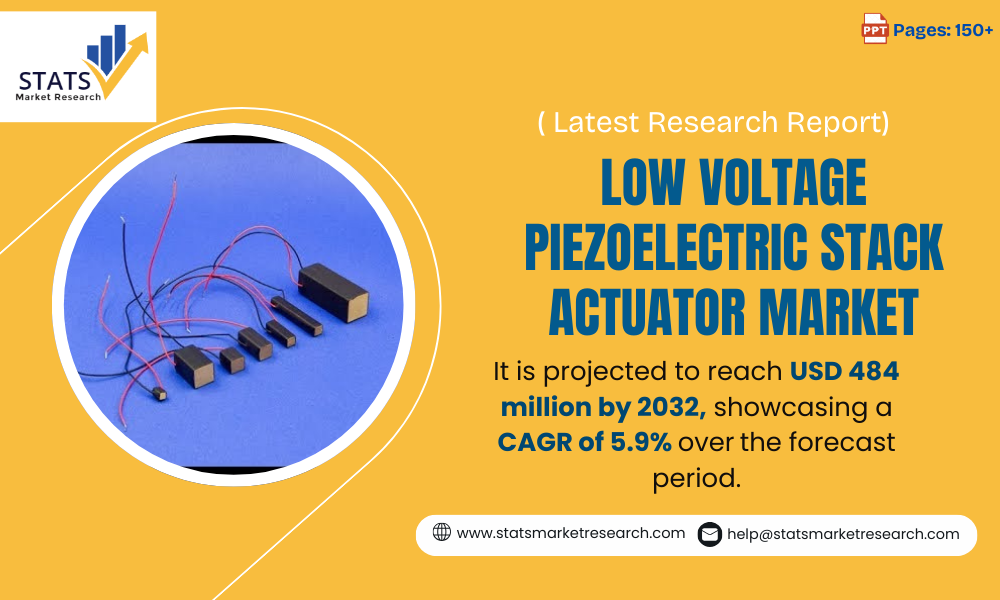
Low voltage piezoelectric stack actuators are co-fired multilayer actuators engineered for high-precision motion control applications. These devices are constructed using ultra-thin ceramic layers, fabricated through a meticulous process involving slurry casting, electrode deposition (typically silver-palladium), lamination, and high-temperature firing. The resulting compact stacks operate at low drive voltages, typically between 100–150V, providing energy-efficient actuation with micron- or sub-micron-level precision.
Unlike conventional actuators that require higher operating voltages, low voltage piezoelectric stacks are optimized for minimal power consumption, making them ideal for applications in industrial automation, medical devices, optical instrumentation, automotive systems, and consumer electronics.
A key feature of these actuators is their ability to deliver precise linear or micro-motion without mechanical backlash, making them critical for high-accuracy tasks such as fuel injection control, optical lens positioning, surgical robotics, and semiconductor wafer handling. Their compact size allows integration into miniaturized devices where traditional actuation solutions are impractical.
Advances in materials, including Lead Zirconate Titanate (PZT), Bismuth Titanate, and polymer-based piezo ceramics, have improved strain, thermal stability, and reliability. Leading manufacturers focus on enhancing durability, performance under extreme conditions, and integration with high-speed electronics, further driving adoption across multiple industrial and medical sectors.
Recent Developments in the Low Voltage Piezoelectric Stack Actuator Market
The low voltage piezoelectric stack actuator market is seeing a wave of innovation driven by the demand for higher precision, speed, and reliability. Recent developments are centered on improving material science, particularly with the introduction of lead-free ceramics that are closing the performance gap with traditional PZT materials. There is also a strong trend towards integrating drive electronics and control systems directly into the actuator modules. This integration simplifies system design for end-users, reduces time-to-market, and allows for more sophisticated closed-loop control, which is essential for applications requiring sub-nanometer resolution. Additionally, companies are developing products with enhanced durability and resistance to harsh environments, such as high temperatures and vacuum conditions, which are critical for aerospace and semiconductor manufacturing applications.
Major Distribution Channels
The distribution of low voltage piezoelectric stack actuators is highly specialized, reflecting the high-tech nature of the products and the expertise required by customers. A primary channel is direct sales from the manufacturer to large original equipment manufacturers (OEMs) in industries like semiconductor manufacturing, medical devices, and aerospace. These customers often require custom-designed solutions and a high level of technical support. For a broader market, including small to medium-sized enterprises and research institutions, distribution is handled through specialized industrial and electronics distributors. These partners provide a wider range of standard products and offer local technical expertise. Online marketplaces and direct-to-customer e-commerce platforms are also becoming increasingly important, especially for standard products and components, enabling easier access for a more diverse customer base.
Market Size
Global low voltage piezoelectric stack actuator market was valued at USD 323 million in 2024. It is expected to grow from USD 338 million in 2025 to USD 484 million by 2032, at a CAGR of 5.9%.
Download FREE Sample of this Report @ https://www.statsmarketresearch.com/download-free-sample/8060149/global-low-voltage-piezoelectric-stack-actuator-forecast-market
Historical Growth Trends
- Between 2015 and 2024, the market grew steadily at an average CAGR of 5.2%, fueled by the miniaturization of electronics and increasing demand in precision automation.
- Adoption in automotive, industrial, and medical sectors has accelerated due to the efficiency and reliability advantages of low-voltage piezoelectric stacks.
Key Statistics
- In 2024, industrial automation accounted for approximately 35% of market revenue, highlighting its dominant application.
- Automotive applications, including fuel injection, ADAS, and vibration control systems, contributed nearly 28% of demand in the same year.
- Emerging applications in medical devices and optical instruments are expected to grow at a CAGR of 7–8% through 2032, driven by increasing precision requirements.
Market Drivers Impacting Size
- Global miniaturization trends in electronics and robotics.
- Shift toward electric vehicles and advanced driver-assistance systems (ADAS) in automotive markets.
- Rising adoption in medical and optical instrumentation, including surgical robots and high-precision microscopes.
The market size reflects not only the technological advantages of low-voltage actuators but also regulatory pressures for energy efficiency and performance precision across multiple industries.
Market Dynamics (Drivers, Restraints, Opportunities, and Challenges)
Drivers
- Miniaturization Trend in Electronics:
The global trend toward smaller, lighter, and more precise devices is a significant driver. Low voltage piezoelectric actuators provide sub-micrometer motion control in packages under 10mm, essential for sectors such as medical devices, aerospace instrumentation, and consumer electronics. - Automotive Innovation in ADAS and Electric Vehicles:
The growing adoption of electromechanical actuation in automotive systems enhances fuel efficiency, emissions control, and active suspension technologies. Regulatory standards like EU Euro 7 emissions requirements further encourage replacing conventional actuators with energy-efficient piezoelectric alternatives. - Industrial Automation Growth:
The global smart manufacturing market continues to expand, with automated assembly, robotics, and micro-positioning systems relying heavily on low-voltage piezoelectric stacks for accurate, repeatable motion.
Restraints
- High Material and Manufacturing Costs:
Specialized ceramics and precious metal electrodes increase production costs 30–50% higher than conventional actuators. This price barrier limits adoption in cost-sensitive sectors. - Thermal Sensitivity:
Piezo materials exhibit variable performance over extreme temperature ranges, requiring additional compensation systems for industrial or automotive applications with ±50°C fluctuations. - Supply Chain Vulnerabilities:
Over 85% of piezo ceramics rely on rare earth materials sourced from limited regions, exposing manufacturers to potential shortages and price volatility.
Opportunities
- Emerging Medical Applications:
Piezoelectric actuators are becoming essential in surgical robots, implantable devices, and diagnostic equipment. The global medical piezo device market is projected to exceed USD 3 billion by 2027, driven by minimally invasive surgical procedures and micro-positioning robotics. - Advanced Optical Instrumentation:
High-precision actuators are critical for lenses, microscopes, and photonics devices, especially where nanometer-level adjustments are required. - Expanding Automotive and Aerospace Markets:
The push for electrification, emission reduction, and autonomous systems presents long-term opportunities for high-precision, energy-efficient actuation solutions.
Challenges
- Specialized Skill Shortage:
Development and integration require expertise in materials science and precision mechatronics, creating workforce gaps. Less than 15 universities worldwide offer dedicated piezoelectric technology programs, contributing to a talent shortage. - Standardization Barriers:
Lack of universal performance benchmarks complicates objective evaluation and slows adoption, especially in industrial and medical applications. - Long Qualification Cycles:
Industrial and medical applications often require 12–24 months for validation, limiting the speed of commercialization and affecting smaller manufacturers.
Get the Complete Report & TOC @ https://www.statsmarketresearch.com/global-low-voltage-piezoelectric-stack-actuator-forecast-market-8060149
Regional Analysis
- North America: Largest revenue contributor, led by the U.S., driven by industrial automation and medical device demand.
- Europe: Strong presence in precision instrumentation, automotive, and aerospace applications, particularly in Germany, France, and Switzerland.
- Asia-Pacific: Fastest-growing region, propelled by China, Japan, and India, due to low-cost manufacturing and growing medical and automotive sectors.
- Middle East & Africa: Niche adoption in aerospace and defense applications.
- Latin America: Steady growth in industrial automation and automotive electronics, led by Brazil and Mexico.
Competitor Analysis (in brief)
The low voltage piezoelectric stack actuator market has a semi-consolidated structure:
- Japanese Leaders:
- TDK Corporation and Murata Manufacturing hold ~28% market share, leveraging proprietary ceramics and vertical integration.
- European Specialists:
- Physik Instrumente (PI) Group and Cedrat Technologies excel in scientific and industrial precision applications.
- Chinese Innovators:
- CoreMorrow, Bangci Technology, and Liaoning Yansheng Technology are capturing market share through cost-effective solutions, though reliability in critical applications remains a challenge.
- U.S. Players:
- KEMET Electronics, CTS Corporation, and APC International serve industrial and consumer electronics sectors.
Global Low Voltage Piezoelectric Stack Actuator Market: Market Segmentation Analysis
This report provides a deep insight into the global Low Voltage Piezoelectric Stack Actuator Market, covering all its essential aspects. This ranges from a macro overview of the market to micro details of the market size, competitive landscape, development trend, niche market, key market drivers and challenges, SWOT analysis, value chain analysis, etc.
The analysis helps the reader to shape the competition within the industries and strategies for the competitive environment to enhance the potential profit. Furthermore, it provides a simple framework for evaluating and assessing the position of the business organization. The report structure also focuses on the competitive landscape of the Global Low Voltage Piezoelectric Stack Actuator Market. This report introduces in detail the market share, market performance, product situation, operation situation, etc., of the main players, which helps the readers in the industry to identify the main competitors and deeply understand the competition pattern of the market.
In a word, this report is a must-read for industry players, investors, researchers, consultants, business strategists, and all those who have any kind of stake or are planning to foray into the Low Voltage Piezoelectric Stack Actuator Market in any manner.
Market Segmentation (by Application)
- Industry and Manufacturing
- Automotive
- Consumer Electronics
- Optical Instruments
- Medical
- Military
Market Segmentation (by Type)
- Preloaded
- Compression Preloaded
- Tension Preloaded
- Non-preloaded
Key Company
- TDK Corporation (Japan)
- Murata Manufacturing Co., Ltd. (Japan)
- KEMET Electronics (U.S.)
- CTS Corporation (U.S.)
- Taiyo Yuden Co., Ltd. (Japan)
- Physik Instrumente (PI) Group (Germany)
- Piezosystem Jena GmbH (Germany)
- APC International (U.S.)
- DSM (Netherlands)
- Cedrat Technologies (France)
- Bangci Technology (China)
- Suzhou Pant Piezoelectric Tech (China)
- CoreMorrow (China)
- Liaoning Yansheng Technology (China)
Geographic Segmentation
- North America
- Europe
- Asia-Pacific
- Latin America
- Middle East & Africa
FAQ Section
- What is the current market size of the Low Voltage Piezoelectric Stack Actuator Market?
The global market was valued at USD 323 million in 2024 and is projected to reach USD 484 million by 2032, growing at a CAGR of 5.9%. - Which are the key companies operating in the Low Voltage Piezoelectric Stack Actuator Market?
Major players include TDK Corporation, Murata Manufacturing, KEMET Electronics, CTS Corporation, Taiyo Yuden, PI Group, Piezosystem Jena, APC International, DSM, Cedrat Technologies, Bangci Technology, CoreMorrow, Suzhou Pant Piezoelectric Tech, and Liaoning Yansheng Technology. - What are the key growth drivers in the Low Voltage Piezoelectric Stack Actuator Market?
Growth is driven by miniaturization in electronics, automotive innovation in ADAS and EVs, industrial automation adoption, and emerging medical applications. - Which regions dominate the Low Voltage Piezoelectric Stack Actuator Market?
North America and Europe currently dominate due to industrial and medical adoption, while Asia-Pacific is the fastest-growing region. - What are the emerging trends in the Low Voltage Piezoelectric Stack Actuator Market?
Emerging trends include medical device integration, high-precision optical instruments, nanometer-level automation in manufacturing, and cost-optimized solutions from Chinese manufacturers.
About Us
☎️ International: +1 (332) 2424 294
📄 Website: www.statsmarketresearch.com
Join us on LinkedIn:- https://www.linkedin.com/company/statsmarketresearch




