
The global intercom devices market is undergoing a significant transformation, driven by rising security concerns, rapid urbanization, and the growing adoption of smart building technologies. Once considered a basic communication tool, modern intercom systems have evolved into intelligent, connected security solutions that integrate seamlessly with video surveillance, access control, and building automation platforms.
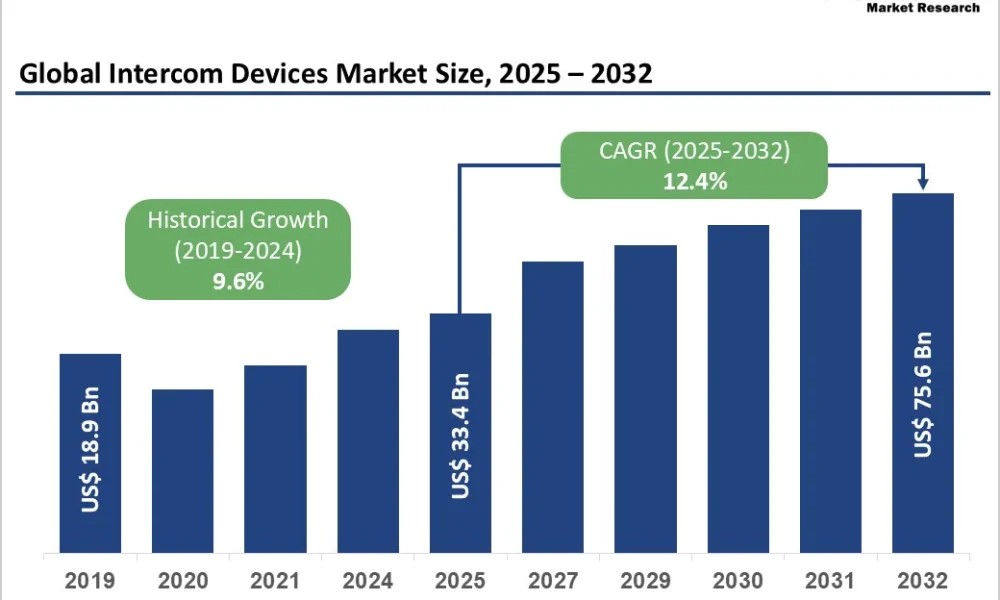
In 2025, the global intercom devices market is valued at US$ 33.4 billion and is projected to reach US$ 75.6 billion by 2032, expanding at a robust compound annual growth rate (CAGR) of 12.4% during the forecast period. This growth reflects increasing demand across residential, commercial, and institutional sectors, as well as rapid advancements in wireless connectivity, cloud platforms, artificial intelligence (AI), and Internet of Things (IoT) technologies.
Understanding Intercom Devices and Their Growing Importance
Intercom devices are communication systems that allow two-way audio or video interaction between different locations within a building or across entry points. Traditionally used in residential apartments and offices, intercom systems are now essential components of modern security and access control infrastructure.
Today’s intercom solutions support:
- Real-time audio and video communication
- Visitor identification and verification
- Remote door unlocking
- Mobile app connectivity
- Cloud-based management and data storage
- Integration with surveillance cameras, alarms, and smart locks
With safety becoming a top priority for individuals, enterprises, and governments alike, intercom systems play a critical role in preventing unauthorized access, improving response times, and enhancing overall security management.
Global Intercom Devices Market Size and Growth Outlook
The intercom devices market has demonstrated strong historical growth, expanding at a CAGR of 9.6% between 2019 and 2024. This momentum is expected to accelerate over the next decade due to technological upgrades and expanding use cases.
Key Market Metrics:
- Market Size (2025E): US$ 33.4 billion
- Market Forecast (2032F): US$ 75.6 billion
- Projected CAGR (2025–2032): 12.4%
The increasing penetration of smart homes, smart offices, and smart cities, combined with declining hardware costs and improved user experience, is making advanced intercom systems more accessible across both developed and emerging markets.
Key Drivers Fueling Market Growth
Rising Security and Access Control Concerns
Concerns over theft, unauthorized access, and workplace safety have pushed residential and commercial property owners to adopt reliable communication and security systems. Intercom devices provide a first line of defense by allowing occupants to verify visitors before granting access.
Growth of Smart Buildings and IoT Integration
Intercom systems are increasingly integrated with IoT ecosystems, enabling centralized monitoring, remote access, and automation. Smart intercoms can now sync with lighting, elevators, surveillance cameras, and mobile devices, enhancing user convenience and operational efficiency.
Rapid Urbanization and Infrastructure Development
Fast-paced urbanization, particularly in Asia Pacific and parts of the Middle East and Africa, is driving large-scale residential and commercial construction. High-rise apartments, gated communities, corporate offices, hospitals, and transportation hubs all require scalable and reliable intercom solutions.
Advancements in Wireless and Cloud Technologies
The emergence of Wi-Fi 6, Bluetooth 5.0, cloud platforms, and mobile applications has revolutionized intercom functionality. Wireless systems eliminate complex wiring, reduce installation costs, and enable seamless connectivity with smartphones and tablets.
Product Type Analysis: Video Intercoms Lead the Market
Video Intercoms: The Dominant Segment
Video intercoms dominate the global market, accounting for over 73% of total share in 2025, with a valuation exceeding US$ 24 billion. Their popularity is driven by:
- Visual verification of visitors
- Enhanced security and surveillance
- Real-time monitoring and recording
- Integration with access control systems
Video intercoms are widely adopted in commercial buildings, luxury residences, gated communities, and institutional facilities, where security requirements are more stringent.
Audio Intercoms: Cost-Effective and Growing
While video systems lead in value, audio intercoms continue to experience steady growth due to their affordability, simplicity, and ease of installation. These systems are particularly popular in:
- Budget-conscious residential projects
- Multi-tenant buildings
- Small offices and educational institutions
Their lower cost makes them an attractive option in emerging markets and retrofit installations.
Connectivity Trends: Wired vs. Wireless Intercom Systems
Wired Intercom Systems: Reliability and Stability
Wired intercoms account for over 60% of the market share in 2025, primarily due to their:
- Stable, interference-free communication
- High reliability in large installations
- Enhanced data security
They are widely used in commercial complexes, industrial facilities, and government buildings, where uninterrupted communication is critical.
Wireless Intercom Systems: Fastest-Growing Segment
Wireless intercoms represent the fastest-growing connectivity segment, driven by flexible installation, scalability, and mobile integration. Key advantages include:
- Minimal infrastructure requirements
- Cloud connectivity and remote access
- Compatibility with smartphones and smart home platforms
As wireless protocols continue to improve, this segment is expected to gain significant traction, particularly in residential and small-to-medium commercial applications.
End-User Analysis: Commercial Sector Leads Demand
Commercial Segment: Largest Revenue Contributor
The commercial end-user segment captures over 35% of the market, with a value exceeding US$ 11.7 billion in 2025. Offices, hotels, hospitals, retail complexes, and transportation hubs rely on intercom systems for:
- Visitor and employee management
- Centralized communication
- Emergency response coordination
- Workplace safety
Large enterprises prefer scalable and networked intercom systems that integrate with building management software.
Residential Segment: Fastest Growth Rate
The residential segment is expanding at a CAGR of 15.1%, outpacing all other end-users. Growth is fueled by:
- Rising adoption of smart home technologies
- Increasing security awareness among homeowners
- Falling prices of smart intercom devices
Video door phones and app-based intercoms are becoming standard features in modern homes and apartment complexes.
Elevate your business strategy with comprehensive market data. Request a sample report now: https://www.persistencemarketresearch.com/samples/33556
Regional Analysis: North America Leads, Asia Pacific Accelerates
North America: Market Leader
North America accounts for over 34% of the global market, with a valuation of approximately US$ 11.4 billion in 2025. The United States leads regional demand due to:
- High security awareness
- Widespread smart home adoption
- Supportive government initiatives for building safety
The region’s mature infrastructure and early adoption of advanced technologies continue to support market dominance.
Asia Pacific: Fastest-Growing Region
Asia Pacific is the fastest-growing regional market, with a projected CAGR of 16.3% through 2032. Growth is driven by:
- Rapid urbanization
- Smart city initiatives in China, India, and Southeast Asia
- Expanding residential and commercial construction
Rising disposable incomes and government investments in digital infrastructure further accelerate adoption.
Competitive Landscape and Key Strategies
The intercom devices market is highly fragmented, with the presence of global players, regional manufacturers, and specialized technology providers. Companies are focusing on:
- Product differentiation through AI and analytics
- Mobile app-based controls and cloud platforms
- Strategic partnerships with security and automation providers
Recent developments include:
- Hollyland launching next-generation wireless intercom series bundles
- INVISIO Link enhancing its wireless intercom solutions for professional use
- Aiphone integrating its IX Series with the Genetec Security Center platform
These innovations highlight the industry’s shift toward intelligent, connected, and interoperable intercom systems.
Future Outlook: What Lies Ahead for the Intercom Devices Market
Looking ahead, the intercom devices market is poised for sustained growth as technology and security needs continue to evolve. Key trends shaping the future include:
- AI-powered facial recognition and voice analytics
- Deeper integration with smart city ecosystems
- Increased adoption of cloud-managed and subscription-based models
- Growing demand for cybersecurity-enhanced communication systems
As intercom systems move beyond basic communication to become integral components of digital security infrastructure, manufacturers that invest in innovation, interoperability, and user experience will gain a competitive edge.
Conclusion
The global intercom devices market is entering a high-growth phase, supported by rising security concerns, smart infrastructure development, and rapid technological advancements. From US$ 33.4 billion in 2025 to US$ 75.6 billion by 2032, the market’s expansion reflects the growing importance of secure, connected, and intelligent communication solutions.
With video intercoms dominating product demand, wireless systems gaining momentum, and Asia Pacific emerging as a key growth engine, the market offers substantial opportunities for manufacturers, technology providers, and investors alike. As smart living and working environments become the norm, intercom devices will remain a critical pillar of modern security and communication ecosystems.
Related Reports:




