
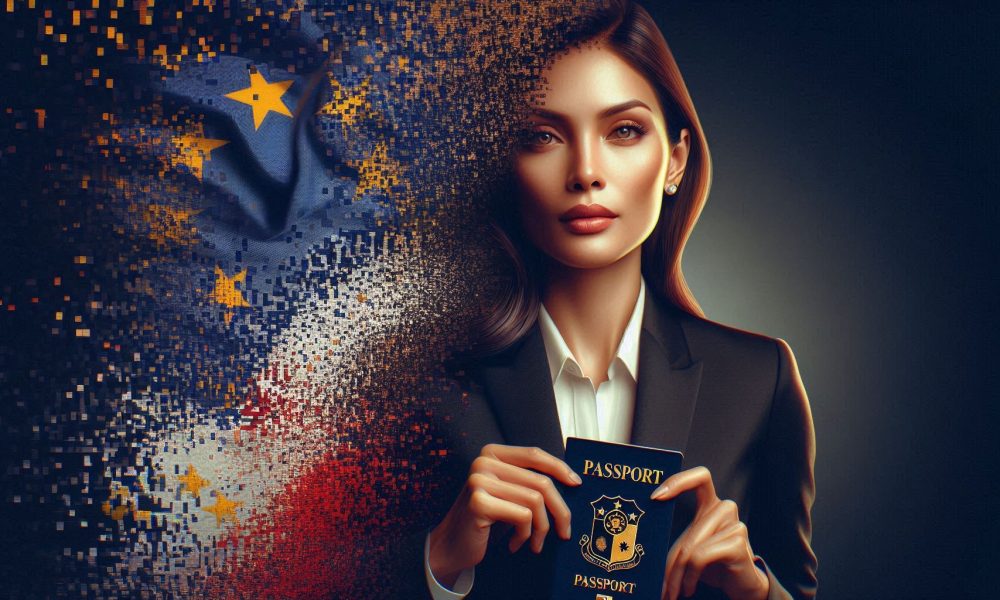
TORONTO, August 4, 2025 — For millions of women worldwide, escaping an abusive relationship doesn’t end with a change of address. In the digital age, many survivors face a far more insidious threat: domestic surveillance. From hidden GPS trackers and compromised email accounts to remote-controlled home devices and hacked video calls, survivors are monitored long after they’ve fled. It’s a silent war waged through code and connectivity. And for one Canadian woman, the only true escape came through legal identity transformation, strategic relocation, and full sovereignty over her data. Her case is emblematic of a larger trend—a growing demographic of women seeking not just legal safety from abusers, but legal invisibility. As traditional protective systems fall short, services like those offered by Amicus International Consulting provide a pathway to total life reconstruction. Through a strategic combination of international law, privacy infrastructure, and jurisdictional navigation, these survivors are not only avoiding further abuse—they’re reclaiming control of their lives, identities, and futures.
The Digital Dimension of Abuse: When Surveillance Is Domestic
Surveillance is no longer solely the domain of nation-states. Increasingly, it is executed at the domestic level by controlling spouses, former partners, or even family members. Recent studies from the Global Privacy Institute and the United Nations Office on Cyber Violence show that in 2025, nearly 70% of women who escaped abusive environments report ongoing digital monitoring within the first year after departure. These intrusions include: AirTags and Bluetooth beacons hidden in vehicles, handbags, or children’s toys; spyware apps covertly installed on smartphones, giving real-time access to messages and locations; cloud service exploitation, where shared Apple or Google accounts sync messages, search histories, and geolocation data; and smart home control by abusers who remotely manipulate thermostats, lights, and door locks. This invasive monitoring amounts to a digital leash—a technological extension of psychological control. For survivors, the result is often re-traumatization, prolonged fear, and an inability to establish new routines or relationships.
Why Legal Protections Aren’t Enough
Most Western countries offer basic legal protections for survivors of domestic abuse. However, restraining orders and custody agreements typically fail to account for the sophistication of modern digital surveillance. In many jurisdictions, there’s no precise legal mechanism to address the intersection of intimate partner violence and digital espionage. The current patchwork of laws leaves survivors vulnerable: restraining orders often lack provisions against online tracking or digital harassment; identity change procedures usually require public disclosure, such as notices in official gazettes or court records; data privacy laws vary drastically by country, making it difficult to scrub personal data globally; and international travel, banking, and visa systems are tied to legacy identity markers, making clean breaks nearly impossible without expert guidance. These gaps create an environment where a determined abuser can continue to exert control for years after physical separation. Surveillance doesn’t just persist—it evolves.
Case Study: Sophie’s Journey From Hunted to Hidden
Consider the case of Sophie (name changed), a Canadian woman in her early 40s. For over a decade, she endured physical, emotional, and psychological abuse from her husband, a former IT consultant with significant knowledge of digital infrastructure. After escaping to a women’s shelter in British Columbia with her two children, Sophie believed she was finally free. But her relief was short-lived. Within weeks, lights in her new apartment would flicker on and off without warning. Her Google search history would auto-populate with terms she hadn’t typed. Her location was known to people she hadn’t shared it with. A forensic audit later revealed: her phone was infected with stalkerware; her smart TV was syncing to a previously linked cloud account; an old iPad left with her children was feeding geolocation data to her former partner; and her bank accounts were being monitored via joint access logs. Terrified, she contacted legal aid—but the solutions offered were reactive and domestic. That’s when she reached out to Amicus International Consulting, known for its legal identity transformation services.
Amicus’s Multi-Layered Privacy Solution
Amicus’s team began by assessing jurisdictional options for a complete identity rebuild. British Columbia’s procedures for name change, while available, were deemed insufficient due to mandatory publication laws. However, Quebec’s Civil Code, specifically Article 61, provides a path for name change in cases involving domestic violence—without public notification. Within four months of relocating to Quebec, Sophie obtained a legally sealed name change, a new birth certificate and SIN (Social Insurance Number), and a new Canadian passport under her new identity. Amicus then activated the second phase: offshore privacy layering. Sophie’s maternal grandfather had been born in Portugal, making her eligible for citizenship by descent. The legal team secured her Portuguese nationality and passport, which opened access to European financial systems and legal protections under the EU General Data Protection Regulation (GDPR). Her relocation to Madeira, a semi-autonomous region of Portugal, finalized her transition. Sophie enrolled her children in school under new names, obtained employment in the remote work economy, and closed all previous Canadian accounts. Her abuser—still subject to legal proceedings in Canada—no longer had any avenue of access to her.
Case Study Outcome: Full Sovereignty Achieved
In less than a year, Sophie transitioned from being a tracked survivor to a legally autonomous individual with zero digital footprint linking her to her previous life. According to her legal representatives, this was achieved through careful coordination between Canadian, Portuguese, and international privacy statutes. Sophie’s digital persona was scrubbed through legal data removal requests, and she established a trust structure to handle remote income sources. Her children now attend school in a jurisdiction where school records are not shared across international databases. Local government agencies in Madeira provided additional data shielding, including biometric data sealing. Sophie’s life was reborn—not through evasion, but through lawful transformation.
Building the Sovereign Identity Framework
Amicus International Consulting now reports a significant rise in requests for “sovereign identity packages.” These integrated services encompass the legal, financial, and logistical steps required to establish a completely new, untraceable life across borders. A typical framework may include: legal name change in a privacy-respecting jurisdiction; new tax ID registration and credit profile establishment; second passport through descent, Investment, or residency; privacy-layered banking through nominee accounts or offshore trusts; digital hygiene services to eliminate data trails; and immigration advisory and long-term jurisdictional planning. Amicus reports that roughly 40% of recent female clients were escaping intimate partner surveillance, professional retaliation, or reputational threats linked to digital stalking.
Other Survivor Case Studies
A 38-year-old former nurse from Texas escaped a violent relationship only to find her abuser had placed a GPS beacon under her car and hacked into her Amazon Alexa history. With Amicus’s help, she obtained residency in Uruguay via their digital nomad program and used VPN-shielded infrastructure to establish a new business. Uruguay’s strong constitutional protections around personal data made it a fortress of safety. In another case, an Irish marketing executive fled a data-abusive engagement. Through Panama’s Friendly Nations Visa and anonymous LLC registration, she re-entered her field of work under a pseudonym and now serves international clients while residing in a beachside compound. A third case involved a South Asian software developer who used Caribbean citizenship-by-investment to start a new company in Dominica under a new name and separate jurisdictional umbrella. Her stalker—her former employer—lost all access to personal information when she moved her digital footprint off Western servers.
The Legal Right to Be Forgotten—and to Begin Again
While the “right to be forgotten” has gained traction in European courts, it remains inconsistently applied worldwide. For survivors of domestic surveillance, this right should be absolute. Governments, however, have been slow to recognize this as a human rights issue. Current international laws focus on state surveillance and overlook the severity of partner-based digital espionage. This legal gap leaves NGOs, consultants, and privacy-focused firms like Amicus to build workaround solutions that comply with existing statutes while delivering the results survivors desperately need. The principle is clear: survivors should not be punished with permanent visibility because of systems designed to prioritize openness over individual safety.
A Growing Global Movement
In 2025, the demand for anonymity as a human right is louder than ever. Survivors, whistleblowers, political exiles, and privacy advocates are collectively driving reforms. The United Nations High Commissioner for Human Rights is currently reviewing proposals for an international treaty that enshrines the right to legal identity reconstruction in cases involving coercive control or digital stalking. While these efforts progress, private consultancies like Amicus remain essential to bridging the chasm between legal frameworks and real-world safety. Their work demonstrates that, with expertise and jurisdictional fluency, survivors can reclaim every piece of their autonomy—legally and permanently.
Conclusion: Freedom Beyond Escape
Sophie’s story is not just a tale of survival—it is a blueprint for sovereignty. Her transformation from a digitally enslaved woman to a sovereign citizen exemplifies what is possible when the law is used not just as a shield, but as a sword. Through the legal ingenuity and international reach of Amicus International Consulting, she did not merely escape—she erased. She did not hide—she transformed. As nations continue to lag behind the digital reality of abuse, the private sector is stepping up to provide what the courts have failed to deliver: anonymity with integrity, privacy with legality, and survival with dignity.
Contact Information
Phone: +1 (604) 200-5402
Email: [email protected]
Website: www.amicusint.ca




