
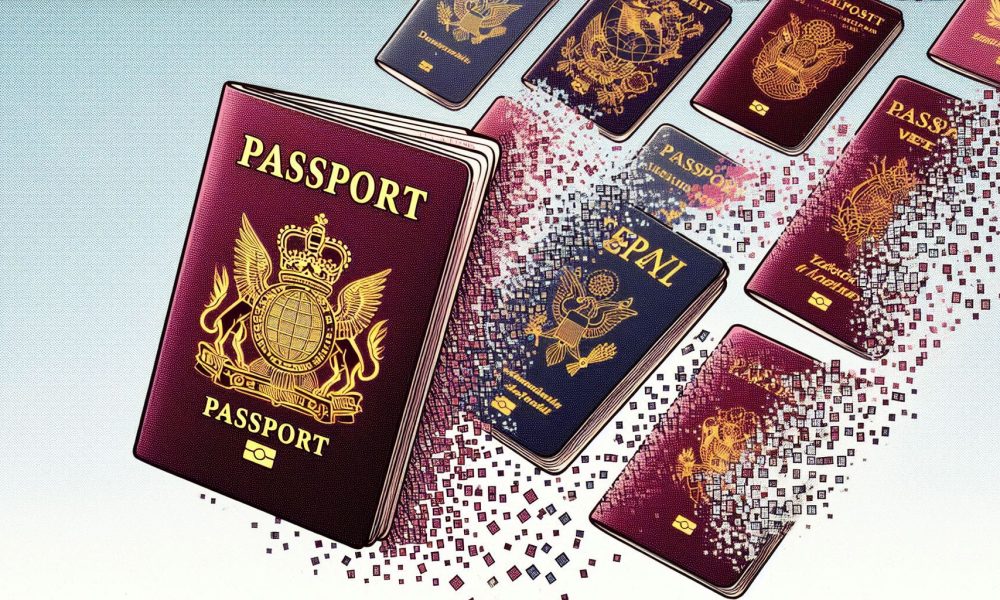
A Step-by-Step Legal Blueprint: How to Safely and Lawfully Rebuild Your Identity Overseas
VANCOUVER, British Columbia — July 23, 2025 — In an era defined by digital permanence, geopolitical upheaval, and heightened global surveillance, more individuals than ever before are exploring legal pathways to create a new identity abroad. Amicus International Consulting, a global leader in identity transformation and legal relocation services, has released a comprehensive guide to help clients navigate this complex process with clarity, lawfulness and discretion.
Whether driven by personal security, political asylum, financial restructuring, or a need to protect reputational standing, the decision to build a new identity is no longer reserved for fugitives and fiction. Today, it is a pragmatic solution sought by entrepreneurs, whistleblowers, persecuted journalists, victims of identity theft, and others with legitimate reasons to start anew. However, doing so requires meticulous planning, a deep understanding of the law, and expert execution.
This press release outlines a step-by-step, legally grounded framework for creating a new identity overseas — a blueprint designed to ensure legitimacy, reduce risk, and maximize privacy, while adhering to international norms and national laws.
Understanding the Legal Justifications for Identity Reinvention
Before considering a legal identity change abroad, it is essential to assess the legitimacy of the motive. There are several internationally accepted reasons for seeking a new identity:
Protection from political persecution (asylum cases)
Escape from domestic violence or stalking
Rehabilitation from past criminal records under new legal frameworks
Protection from identity theft or financial fraud
Participation in government witness protection programs
Reset after financial collapse or failed ventures, especially in hostile regulatory climates
Amicus International Consulting evaluates each case on legal grounds and advises clients on the viability of starting over without violating domestic or international law. The key is not evasion but transformation — a lawful rebirth under the jurisdiction of another sovereign nation.
Step 1: Citizenship Assessment and Country Targeting
The first step in legally creating a new identity abroad is identifying suitable jurisdictions. This decision depends on a matrix of factors, including:
National laws around name changes, citizenship, and residency
Bilateral treaties affecting extradition and data sharing
Local attitudes toward privacy, foreign nationals, and reintegration
Availability of second citizenship programs or Naturalization pathways
Countries like Paraguay, Panama, Dominica, and Turkey offer favourable legal frameworks for identity changes, particularly for those seeking second citizenship through investment or long-term residency. Latin America, in particular, remains a strategic hub due to its minimal information-sharing protocols, flexible immigration laws, and political neutrality.
Case Study: The Entrepreneur in Exile
In 2021, a South African technology investor fleeing political harassment and unjust regulatory prosecution relocated to Paraguay. With the help of Amicus International Consulting, he obtained a residency permit under Paraguay’s permanent residency program and legally changed his name via a court-supervised process. After three years, he qualified for citizenship and was issued a new passport under his new name — all of which was entirely legal, documented, and recognized by Interpol member states.
Step 2: Name Change Process
A legal name change is the backbone of any identity transformation. However, name change laws differ widely across jurisdictions. Some nations require a formal court petition with stated reasons, while others allow administrative changes via civil registries. The key is to ensure the name change is legally binding, recognized by the civil code, and notarized for international use.
Important considerations:
The new name must not be chosen to impersonate someone else or commit fraud
The change should be officially registered in a national database
All subsequent documents must reflect this new name to ensure coherence
In countries like Belize, Panama, and St. Kitts and Nevis, name changes are not only legally permitted but also streamlined for new residents under certain conditions.
Step 3: Establishing Legal Residency
To move beyond name changes and into identity integration, the individual must establish legal residency. This may occur through one of the following pathways:
Investment (real estate, business, or government bond purchase)
Marriage to a local citizen
Long-term employment contracts
Asylum or refugee status
Residency provides the foundation for further identity building. It grants access to local civil registries, driver’s licenses, healthcare systems, and often the right to change names and birth registration details. In some nations, local residency even allows an individual to petition the courts for a new birth certificate—a key milestone in establishing identity.
Step 4: Reissuance of Core Identity Documents
Once residency and legal name change are achieved, the focus turns to reissuing core identity documents under the new credentials. These include:
Local birth certificate (amended or newly issued in some cases)
National identity card or cedula
Driver’s license
Social security or tax identification number
Passport (upon full citizenship or through economic citizenship programs)
Each document must be obtained legally, often via notarized translations, court declarations, and background checks. Amicus International ensures that the trail of documentation is coherent, legitimate, and backed by public registries in the country of issuance.
Step 5: Closing the Loop — Identity Integration
The final phase of identity reinvention is integration, which involves building a new life with the new identity. This includes:
Establishing a new financial footprint (bank accounts, investments, credit history)
Enrolling in professional associations or business registries
Signing leases, employment contracts, or operating companies under the new name
Adjusting digital identity (emails, websites, social media, online records)
This step requires a careful balance between visibility and discretion. The new identity must be usable and verifiable without exposing the process or appearing fabricated. Amicus advises clients on best practices for digital footprint management and legal cover stories to support the transition.
Case Study: The Journalist Turned Citizen
A Middle Eastern journalist targeted by her home government for reporting on human rights abuses escaped via refugee corridors and was resettled in Uruguay. With assistance from legal aid groups and privacy consultants, she petitioned for a name change under the Uruguayan civil code, received new national ID credentials, and eventually acquired a passport. Today, she teaches at a university under her new identity — shielded by law and protected by international asylum treaties.
Avoiding Common Pitfalls
Creating a new identity abroad is lawful only when conducted transparently and in compliance with local statutes. The most common errors made by DIY attempts include:
Using forged documents or unverified intermediaries
Failing to synchronize identity documents (passport says one name, ID another)
Attempting name changes in jurisdictions with rigid requirements or poor legal recognition
Misunderstanding how international treaties affect data sharing
Furthermore, some countries maintain dual systems — digital and manual — where information may not be synchronized. Clients need expert guidance to ensure that all government agencies reflect the exact identity details.
Expert Interview: Legal Perspectives on Identity Reinvention
According to an international identity law specialist affiliated with Amicus International Consulting, “The difference between legal transformation and criminal evasion lies in documentation and intent. If you intend to protect your privacy or flee real persecution, and you work within the legal structures of the host country, you’re building a lawful new life. But if you skip due process, you’re creating vulnerabilities that can be exploited later — by immigration officers, banks, or Interpol.”
He added that the company often works alongside local lawyers, notaries, and immigration officials to ensure that every step is documented and defensible. “Legal integrity is the only protection you have when crossing borders under a new name. Our goal is to make the identity so real that no one questions it — because it is real.”
Case Study: Financial Privacy Reborn
A Canadian investor targeted in an online harassment campaign that compromised his credit and business partnerships chose to relocate to Belize. After legally changing his name through a public deed, he reestablished his banking and corporate holdings through offshore trusts using his new credentials. His new life was not built on deception — but on legitimate reinvention, facilitated by transparency and expert legal navigation.
Ethical and Human Rights Dimensions
While the media often portrays new identity creation as the domain of fugitives and criminals, the reality is that global crises — war, persecution, data breaches, and political collapse — have made it necessary for honest people to protect themselves. From Hong Kong dissidents to Venezuelan exiles to U.S. whistleblowers, millions now face a future where starting over is a matter of survival.
Amicus International maintains a strict ethical code, refusing to represent clients who seek to evade justice for violent crimes or financial fraud. The company’s mission is to assist only those with legitimate needs in resetting their lives under the protection of the law.
How Amicus International Consulting Helps
As a trusted advisor in identity reinvention, Amicus International Consulting provides:
Country selection and jurisdictional analysis
Citizenship-by-investment facilitation
Local residency setup and document procurement
Banking and corporate registration with new credentials
Identity synchronization across public and private systems
With an unmatched global network, Amicus has successfully helped hundreds of clients start new lives abroad — not by running, but by rebuilding.
Conclusion: Identity Reset in a Legal World
The future belongs to those who understand that identity is not just a name on a card — it is a legal structure that can be redesigned, rebuilt, and revalidated in a new country. With legal guidance, ethical purpose, and meticulous documentation, it is entirely possible to create a new identity abroad that is authentic, functional, and respected under international law.
As privacy becomes the last luxury in a hyper-surveilled world, those who seek to protect their lives and legacies through lawful reinvention will increasingly look toward legal identity resets as the path forward.
Contact Information
Phone: +1 (604) 200-5402
Email: [email protected]
Website: www.amicusint.ca




