
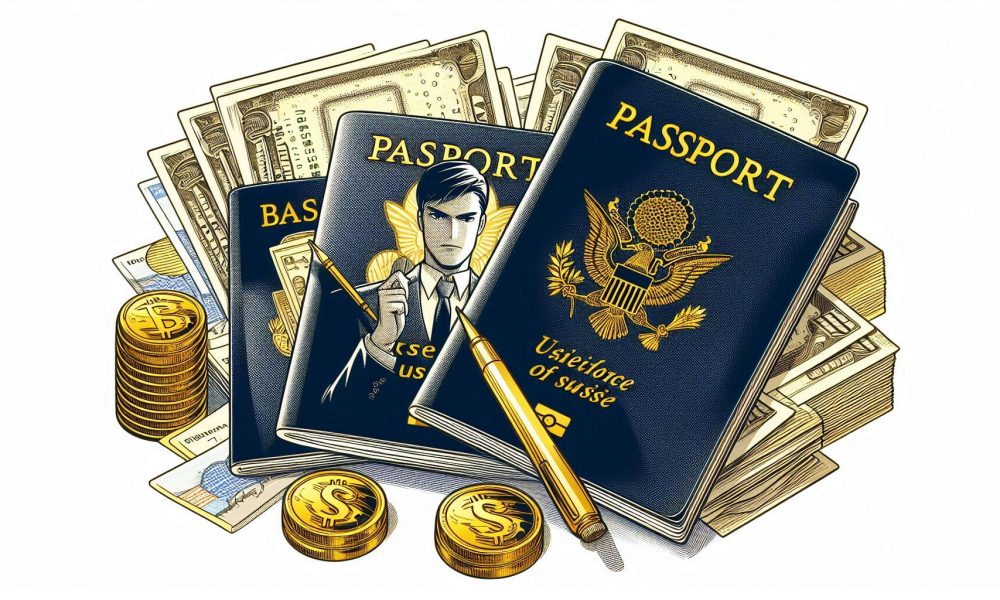
How Second Citizenship and Corporate Obfuscation Fuel the Global Shadow Economy
VANCOUVER, B.C. – June 2, 2025 — A new investigation by Amicus International Consulting is casting light on a growing trend: the pairing of anonymous shell companies with banking passports to shield wealth, obscure ownership, and bypass financial scrutiny. These tactics, once the domain of oligarchs and underworld figures, are now increasingly accessible to high-net-worth individuals, rogue actors, and multinational operators seeking a legal but opaque path to financial freedom.
As global transparency laws tighten under FATCA, CRS, and new OECD directives, many are turning to second passports and foreign incorporation structures to fragment their financial identities across jurisdictions.
“It’s not illegal to own a shell company or hold a second passport,” said a legal analyst at Amicus. “But the combination—if misused—can create a legal grey zone ripe for tax avoidance, asset shielding, and regulatory evasion.”
What Is a Banking Passport?
A banking passport refers to a second citizenship obtained not for immigration or relocation, but for financial structuring purposes. Issued legally by Citizenship by Investment (CBI) programs, these passports allow individuals to:
Open accounts in offshore jurisdictions
Obtain a new Tax Identification Number (TIN)
Restructure assets under new legal identities
Register corporations under alternative names and nationalities
When paired with anonymous or semi-anonymous shell companies, banking passports offer powerful financial opacity.
How Shell Companies Work
A shell company is a legal entity with no active business operations or employees. When incorporated in permissive jurisdictions—like Belize, the British Virgin Islands, or Nevis—they can:
Conceal beneficial owners behind nominee directors
Allow companies to operate across borders with minimal reporting
Hold bank accounts, real estate, and digital assets under pseudonymous control
Shield assets from creditors, courts, or government scrutiny
The Perfect Pair: Dual Layers of Anonymity
When an individual uses a banking passport to register a shell company in a low-transparency jurisdiction, the result is a multi-jurisdictional financial firewall:
Second citizenship severes the link to the original nationality and financial reporting system.
Anonymous shell companies obscure the actual ownership of assets and income.
Offshore bank accounts in a third country (e.g., Singapore, Liechtenstein) complete the chain of legal distance.
This legal trifecta is hard to trace, difficult to prosecute, and often invisible to standard compliance tools.
Case Study: Crypto Wealth Disguised Through Shells and Second IDs
In 2023, a South African blockchain developer, citing political risk and financial overreach, acquired citizenship in Dominica. He then:
Registered a shell company in the Seychelles under his new name
Opened a crypto-exchange wallet using his Dominica-issued TIN
Purchased luxury property in Spain under the shell entity
Remitted profits to a Panamanian trust, legally shielded from disclosure
The entire structure passed compliance in three jurisdictions. No laws were broken. Yet the developer’s wealth—over $14 million—was now effectively invisible to South African authorities.
Regulatory Blind Spots: Where Laws Fall Short
International law prohibits tax evasion, but does not prohibit asset protection, even aggressive forms. While FATCA and CRS aim to identify offshore accounts, they struggle to trace:
Nominee ownership structures
Dual citizenship concealment
Layered shell ownership across countries
Jurisdictions outside major treaties or agreements
Countries like St. Kitts & Nevis, Vanuatu, and Turkey offer passports with minimal public data access. Coupled with incorporation havens like Nevis, BVI, and the Marshall Islands, the global transparency system breaks down.
Financial Institutions Under Pressure
Banks and wealth managers are now faced with a dilemma: deny services to legal CBI passport holders and risk lawsuits, or accept them and increase their exposure to AML (Anti-Money Laundering) penalties.
Some major banks—including institutions in the EU and Canada—have issued internal guidelines:
Flagging new accounts opened with CBI documents
Running enhanced due diligence on entities registered in “high-risk” jurisdictions
Blocking transactions involving shell structures unless verified by external auditors
Still, enforcement remains patchy. According to a 2024 FATF report, over 27% of flagged financial flows tied to politically exposed persons involved second passports and offshore entities.
Case Study: Russian Banker Uses St. Lucia Passport to Move Funds
After falling under suspicion due to his Russian nationality, a private banker obtained a St. Lucia passport and created a nominee company in the Bahamas. He used this entity to:
Please set up a Swiss trust for his family assets
Purchase bearer bonds in Luxembourg
Open a merchant services account in Hong Kong
Because each element occurred under a different identity and jurisdiction, the banker remained compliant with disclosure rules but functionally untraceable under a unified audit trail.
Legal or Illicit? Where the Line Is Drawn
It is legal to:
Own a shell company
Hold multiple passports
Register foreign TINs
Open accounts abroad
But it becomes illegal when:
Ownership is intentionally misrepresented
Shell companies are used to launder illicit funds
TINs are used to evade tax reporting
Financial activity is deliberately obscured to mislead regulators
Amicus International Consulting works strictly within legal boundaries, offering services that comply with FATCA, CRS, AML regulations, and KYC best practices.
Global Pushback: How Regulators Are Responding
Governments and intergovernmental organizations are responding to the shell-bank-passport nexus with several measures:
OECD Dual Citizenship Disclosures: Upcoming frameworks may require banks to ask about all nationalities held, not just the one used to open an account.
TIN Cross-Matching: AI-based tools are being deployed to identify inconsistent TIN usage tied to known individuals.
Sanctioned Passport Lists: Some banks have begun flagging passports from jurisdictions offering CBI programs without adequate transparency.
Corporate Transparency Acts: Countries like the U.S. are enforcing BOI (Beneficial Ownership Information) rules for LLCs, expanding into trust and foundation disclosures.
Despite these efforts, enforcement remains difficult across decentralized jurisdictions with limited political will.
The Role of Amicus International Consulting
Amicus offers clients:
Legal second citizenship acquisition with complete transparency
Pre-screening to avoid regulatory or reputational risk
Structured corporate setups that adhere to international law
Strategic tax residency planning in compliant jurisdictions
Consultations on multi-jurisdictional banking and asset protection
Amicus does not assist in tax evasion, fraudulent incorporation, or schemes involving the concealment of shell companies.
“We build legal, ethical frameworks that allow our clients to diversify their identities without violating the law,” said an Amicus representative.
Conclusion: Navigating the Edge of Legality
Pairing banking passports with anonymous shell companies offers an influential—but controversial—means of financial protection. In a world where data breaches, sanctions, and capital controls are on the rise, many are simply seeking to protect themselves legally.
But without harmonized global regulation, these tools can just as easily be abused, turning the legitimate into the illicit.
For responsible actors, transparency, structure, and guidance remain key. Amicus International Consulting continues to lead the way in helping clients navigate these complex waters safely, ethically, and by the law.
Contact Information
Phone: +1 (604) 200-5402
Email: [email protected]
Website: www.amicusint.ca




