
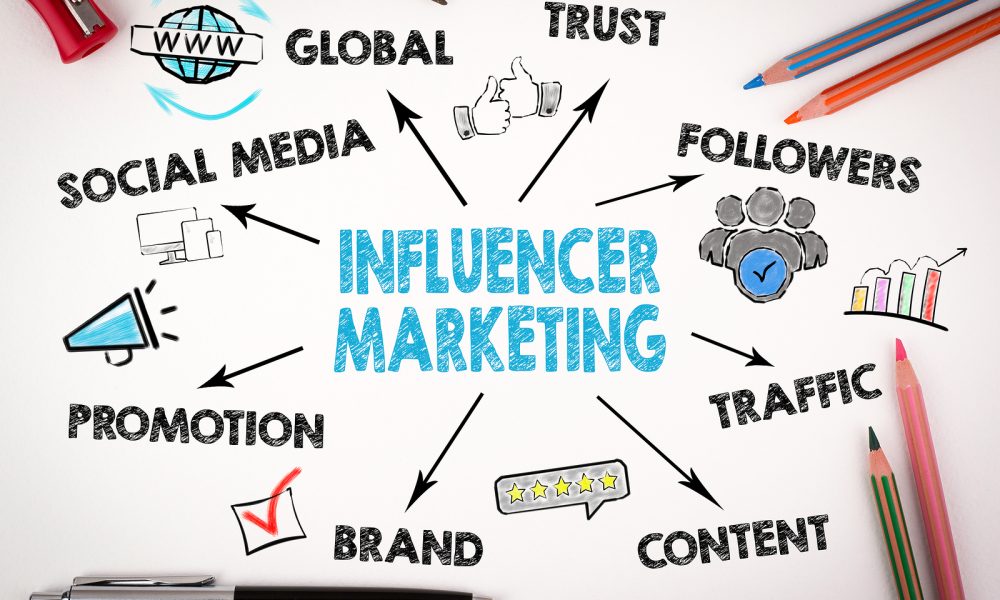
An influencer marketing strategy for business has matured considerably from the early days when the channel was primarily associated with celebrity endorsements and follower counts so large that actual engagement became secondary to reach metrics. The businesses seeing the strongest results from influencer marketing today are those that have moved past the follower-count obsession and toward a more sophisticated understanding of what makes influencer content actually drive purchasing decisions — authenticity, audience alignment, and the kind of trust that a creator has built with their specific community over time.
Why Influencer Marketing Works Differently Than Other Channels
The fundamental mechanism that makes influencer marketing effective is different from what makes paid advertising or search marketing effective. Paid ads reach audiences based on targeting parameters — demographics, interests, behaviors — with content that the audience immediately recognizes as advertising. Search captures intent from people already looking for something. Influencer marketing works through a trust transfer — the audience’s existing relationship with a creator extends to the products and services that creator authentically endorses.
That trust transfer is difficult to manufacture and easy to undermine. An influencer whose content feels genuinely aligned with a brand and whose endorsement reads as something they’d say regardless of whether they were being paid for it delivers the trust transfer that makes the channel work. One whose content feels forced, whose partnership is too obviously transactional, or whose audience doesn’t align with the brand’s actual customer profile delivers reach without conversion — which is an expensive way to generate impressions.
Macro vs Micro vs Nano: Choosing the Right Scale
One of the most consequential decisions in an influencer marketing strategy for business is the scale of influencer partnership — which doesn’t correlate simply with budget in the way most businesses initially assume. Macro influencers with millions of followers offer broad reach but typically lower engagement rates and less audience specificity. Their audiences are large precisely because they appeal broadly, which makes them less useful for brands whose customers are a specific subset of a general interest category.
Micro influencers — typically defined as creators with audiences between 10,000 and 100,000 — consistently deliver higher engagement rates, more targeted audience demographics, and more authentic-feeling content than their larger counterparts. Their audiences follow them for specific reasons rather than general appeal, which means the audience overlap with a brand’s actual customer profile tends to be higher even though the total reach numbers are lower.
Nano influencers — under 10,000 followers, sometimes significantly smaller — deliver the highest engagement rates and the tightest audience alignment of all but require volume to produce meaningful campaign reach. Working with a larger number of nano influencers simultaneously produces better aggregate results than a single macro partnership for many brands — which is a counterintuitive finding that consistently surprises businesses new to influencer marketing.
Connecting Influencer Content to the Broader Strategy
The influencer marketing strategy for business that produces the best results treats influencer content as part of an integrated content marketing approach rather than a standalone channel managed separately from everything else. Influencer content that drives traffic to landing pages optimized for conversion, that’s amplified through paid social boosting to extend its reach beyond the creator’s organic audience, and that’s coordinated with email marketing sequences that capture and nurture the leads it generates performs significantly better than influencer content that exists only on the creator’s own channels.
The amplification piece is particularly underutilized. Whitelisting — running paid social advertising using influencer content from the creator’s account rather than the brand’s — consistently outperforms equivalent brand-created ad content because the creative maintains the organic, authentic feel that makes influencer content effective in the first place while gaining the targeting precision and reach scale of paid amplification.
Measurement and What to Actually Track
The measurement frameworks that most accurately capture influencer marketing effectiveness look different from those used for other paid channels — and businesses that apply standard direct response metrics to influencer campaigns consistently undervalue the channel’s contribution. Influencer marketing operates partly in the awareness and consideration phases of the purchase journey, which means last-click attribution models that only credit the final touchpoint before conversion significantly undercount its impact.
Tracking metrics that capture the full funnel impact — reach and impression quality, engagement rate and sentiment, website traffic from campaign-specific links, and conversion lift in audiences exposed to influencer content compared to unexposed control groups — gives a more accurate picture of what influencer marketing is actually delivering than click-through rate alone.
Finding and Vetting the Right Partners
The practical work of identifying influencer partners whose audience, content style, and values genuinely align with a brand is where most influencer marketing strategies spend insufficient time relative to its importance. An influencer with strong engagement metrics in a relevant category but whose audience demographics don’t match the brand’s customer profile is the most common mismatch — one that shows up as low conversion rates from campaigns that look successful on reach and engagement metrics alone.
Working with a digital marketing partner who understands the influencer landscape and has the tools to evaluate audience authenticity, demographic composition, and engagement quality rather than just follower count produces better partner selection outcomes than relying on surface metrics that are increasingly easy to manipulate.




