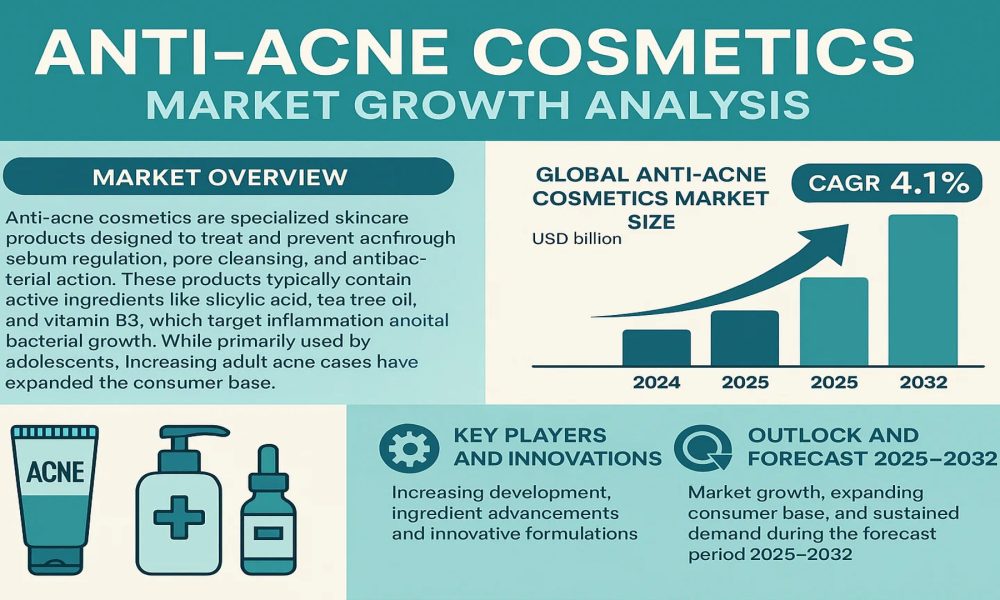
Global anti-acne cosmetics market size was valued at USD 3.66 billion in 2024. The market is projected to grow from USD 3.82 billion in 2025 to USD 4.78 billion by 2032, exhibiting a CAGR of 4.1% during the forecast period.
Anti-acne cosmetics are specialized skincare products designed to treat and prevent acne through sebum regulation, pore cleansing, and antibacterial action. These products typically contain active ingredients like salicylic acid, tea tree oil, and vitamin B3, which target inflammation and bacterial growth. While primarily used by adolescents, increasing adult acne cases have expanded the consumer base significantly.
The market growth is driven by rising skincare awareness, lifestyle changes, and product innovation. However, stringent regulations and high consumer expectations pose challenges. Key players including L’Oréal Group, Estée Lauder, and Unilever dominate the market with diverse product offerings ranging from acne patches to blemish solutions.
Access Your Free Sample Report Now- https://www.intelmarketresearch.com/download-free-sample/4094/anti-acne-cosmetics-market
MARKET DYNAMICS
MARKET DRIVERS
Increasing Prevalence of Acne Disorders to Fuel Market Expansion
The global anti-acne cosmetics market is witnessing substantial growth driven by the rising prevalence of acne disorders across all age groups. Recent studies indicate that acne affects approximately 85% of individuals aged 14-24 years, with adult-onset acne becoming increasingly common in the 25-40 age group. This growing incidence is attributed to factors such as hormonal changes, stress, pollution, and dietary habits, creating sustained demand for effective skincare solutions. The market is further propelled by heightened consumer awareness about skincare maintenance and the psychological impact of acne, which drives individuals to invest in specialized cosmetic products.
Technological Advancements in Product Formulations Accelerate Market Growth
Significant innovations in cosmetic formulations are revolutionizing the anti-acne segment. The development of multi-functional products combining acne treatment with anti-aging benefits or sun protection has expanded consumer appeal. Advanced delivery systems like microencapsulation technology enhance ingredient stability and penetration efficacy, improving treatment outcomes. Furthermore, the integration of AI-powered skin analysis tools in product recommendation platforms enables personalized skincare solutions, creating new growth avenues. The launch of phygital (physical+digital) skincare ecosystems by major brands further strengthens consumer engagement and product adoption.
Growing Male Grooming Segment Presents New Growth Opportunities
The male skincare market is emerging as a significant contributor to anti-acne cosmetic sales, with growth rates outpacing the overall skincare sector. Changing social norms and increased awareness about male skincare needs have led to a 45% increase in male-specific anti-acne product launches since 2020. Brands are developing specialized formulations addressing male skin characteristics like thicker epidermis and higher sebum production. The rise of minimalist skincare routines tailored for male consumers coupled with celebrity endorsements is further accelerating market penetration in this previously underserved demographic.
MARKET OPPORTUNITIES
Personalized Skincare Solutions Open New Revenue Streams
The convergence of beauty tech and dermatology is creating exciting opportunities for customized anti-acne solutions. Advances in AI-driven skin analysis and at-home diagnostic tools enable precise product recommendations tailored to individual skin conditions. Subscription-based models offering personalized regimen adjustments based on skin tracking data are gaining traction, with adoption rates increasing by 28% annually. The integration of microbiome science into product development allows for targeted treatments addressing specific bacterial imbalances associated with acne, offering superior efficacy compared to conventional one-size-fits-all approaches.
Sustainable Formulations Gain Competitive Edge
Eco-conscious consumers are driving demand for sustainable anti-acne products featuring biodegradable ingredients and eco-friendly packaging. Products with verifiable sustainability claims command 18% higher price premiums on average compared to conventional alternatives. The development of upcycled cosmetic ingredients from food industry byproducts presents both environmental and cost benefits. Waterless formulations and solid skincare formats addressing acne concerns while reducing plastic waste are emerging as disruptive innovations in the market, particularly attracting environmentally-aware younger demographics.
Emerging Markets Offer Untapped Growth Potential
Rapid urbanization and rising disposable incomes in developing economies present significant expansion opportunities. Markets in Southeast Asia and Africa are experiencing double-digit growth in skincare expenditure, fueled by growing middle-class populations and increased Western beauty influence. Localized product development addressing region-specific skin concerns and climate conditions can provide first-mover advantages. Strategic partnerships with local distributors and e-commerce platforms enable efficient market penetration while navigating diverse regulatory landscapes and consumer preferences across emerging regions.
Segment Analysis:
By Type
Blemish Solutions Segment Leads Due to High Demand for Targeted Treatment Formulations
The market is segmented based on type into:
- Acne Patches
- Blemish Solutions
- Subtypes: Spot treatments, serums, and gels
- Products for Dark Spots
- Others
By Application
Women’s Segment Dominates Owing to Higher Skincare Consciousness and Purchasing Power
The market is segmented based on application into:
- Women
- Men
By Ingredient
Natural Ingredient-based Products Gain Traction Due to Rising Preference for Organic Skincare
The market is segmented based on ingredient into:
- Chemical-based
- Natural-based
- Hybrid formulations
By Distribution Channel
E-commerce Growth Drives Online Segment Expansion in Anti-Acne Cosmetics Market
The market is segmented based on distribution channel into:
- Retail pharmacies
- Supermarkets/hypermarkets
- Online stores
- Specialty stores
List of Key Anti-Acne Cosmetics Companies Profiled
- L’Oréal Group (France)
- Estée Lauder Companies (U.S.)
- AmorePacific Corporation (South Korea)
- Unilever (UK/Netherlands)
- Beiersdorf AG (Germany)
- Shiseido Company (Japan)
- Kao Corporation (Japan)
- Procter & Gamble (U.S.)
- Kenvue (U.S.)
- Care Plus (Netherlands)
- Kose Corporation (Japan)
- PanOxyl (U.S.)
- DHC Corporation (Japan)
- Avarelle Cosmetics (U.S.)
- Some by Mi (South Korea)
ANTI ACNE COSMETICS MARKET TRENDS
Rise in Demand for Clean and Natural Formulations Dominates Market Trends
The global anti-acne cosmetics market is witnessing a significant shift toward clean beauty and natural formulations as consumers increasingly prioritize skin health and ingredient transparency. With over 60% of consumers aged 18-34 actively seeking skincare products with minimal synthetic additives, brands are reformulating products with plant-based actives like tea tree oil, niacinamide, and salicylic acid derived from willow bark. This transition aligns with growing concerns about skin sensitivity and long-term effects of harsh chemicals, particularly among younger demographics. Additionally, the integration of microbiome-friendly formulations products that support the skin’s natural bacterial balance has gained traction, with clinical studies showing a 25% increase in effectiveness for acne-prone skin compared to traditional treatments.
Other Trends
Personalized Skincare Solutions
Personalization is reshaping the anti-acne segment, with brands leveraging AI-driven diagnostics and at-home test kits to recommend tailored regimens. Digital tools analyzing skin type, sebum levels, and acne severity now influence 35% of purchase decisions in developed markets. Products like customizable serums and pH-adjusted cleansers cater to specific needs, such as hormonal acne or post-inflammatory hyperpigmentation. This trend is further amplified by direct-to-consumer brands offering subscription-based models for replenishment, capturing a 20% year-over-year growth in recurring revenue streams.
Technological Innovations Enhancing Product Efficacy
Advances in dermatological research have enabled the development of multi-functional anti-acne cosmetics combining treatment with preventative care. Encapsulation technologies, for instance, allow sustained release of active ingredients like retinoids, reducing irritation while maintaining efficacy a key factor driving adoption among adult acne sufferers. Meanwhile, blue light therapy devices incorporated into handheld tools or wearable patches have demonstrated a 40% reduction in inflammatory acne lesions in clinical trials. The convergence of skincare and digital health, such as apps tracking breakout patterns linked to menstrual cycles or stress levels, further enhances the value proposition of next-gen anti-acne solutions.
Access Your Free Sample Report Now- https://www.intelmarketresearch.com/download-free-sample/4094/anti-acne-cosmetics-market
Recent Developments in the Anti-Acne Cosmetics Market
- Launch of Clean Beauty Formulations
Many cosmetic brands are focusing on clean, vegan, and cruelty-free anti-acne products. Consumers are becoming more conscious of harmful chemicals like parabens, sulfates, and artificial fragrances, driving companies to release safer formulations based on natural and plant-derived ingredients. - Growth of Dermocosmetics
The demand for dermatologist-recommended cosmetic products has increased, especially those combining skincare with active pharmaceutical ingredients. This trend is pushing major players to collaborate with dermatologists and skin clinics to launch specialized acne-control cosmetic lines. - Integration of Technology in Product Development
Companies are leveraging AI and skin microbiome research to create personalized anti-acne solutions. This includes apps that analyze skin conditions and recommend products tailored to an individual’s acne severity and skin type. - Expansion of Men’s Grooming Products
The male grooming segment is gaining traction, with brands introducing acne-fighting cleansers, creams, and spot treatments specifically for men, responding to the rising awareness about skincare among male consumers. - Sustainable Packaging and Eco-Friendly Products
Sustainability is a growing trend, with companies introducing biodegradable packaging, refillable containers, and eco-friendly formulations. This aligns with consumer preferences for environmentally responsible beauty solutions. - Mergers, Acquisitions, and Partnerships
Leading cosmetic brands are acquiring or partnering with niche skincare startups that specialize in acne-care products. This helps them expand their portfolio and strengthen their position in emerging markets. - E-commerce and Direct-to-Consumer (D2C) Growth
Online sales channels have become dominant, with brands launching exclusive anti-acne product lines on e-commerce platforms. Influencer marketing, social media campaigns, and subscription models are further accelerating consumer reach.
About Intel Market Research
Intel Market Research delivers actionable insights in technology and infrastructure markets. Our data-driven analysis leverages:
- Real-time infrastructure monitoring
- Techno-economic feasibility studies
Competitive intelligence across 100+ countries
Trusted by Fortune 500 firms, we empower strategic decisions with precision.
International: +1(332) 2424 294 | Asia: +91 9169164321
Website: https://www.intelmarketresearch.com
Follow us on LinkedIn: https://www.linkedin.com/company/intel-market-research
Market Research Reports | Market Trends | SWOT Analysis | Industrial Survey – Intelmarketresearch
Intel market research provides market research reports and company research reports across worldwide industries. We also offers customized market research solutions




