
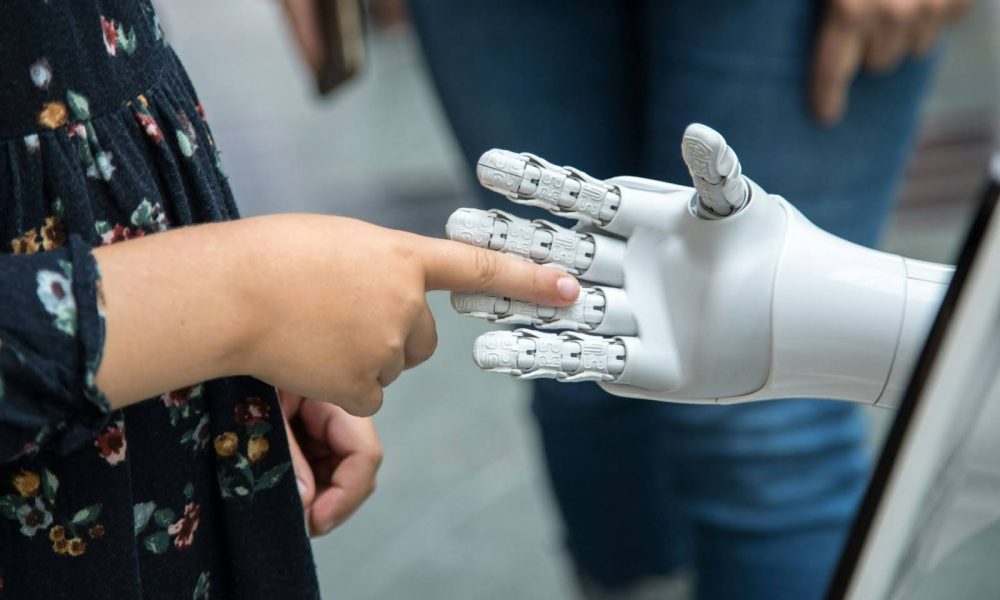
If you’re a business owner or an employee of a business, listen up. Something might be slowly taking over the system, and it’s called artificial intelligence (AI).
I’m sure by now, we all have likely heard of AI. Since its rapid development just a few years ago, we’ve known it as an automated chatbot intended to streamline processes and accomplish basic tasks for us.
But today, AI is increasingly becoming a critical player in everyday business. In fact, nearly 78% of global companies are now using AI in their daily operations, with the market expected to reach $1.85 trillion by 2030.
With AI’s quick demand, the traditional idea of business is not what it used to be. Employers are replacing roles with robots, employees are focusing their attention elsewhere, and customers are feeling the results firsthand. What began as a technological advancement is now transforming all parts of how individuals and entities run.
According to experts, businesses will start to adopt AI technologies even more than they already are. And because of this, it’s important to fully accept this new reality, instead of rejecting it.
“The advancements that AI is bringing to the workplace are already here, so if you want your business to succeed in this changing environment, then now is the time to think about how you can embrace AI rather than fight it,” Iterate CTO and Co-Founder, Brian Sathianathan says.
One way to leverage AI in the workplace is to provide training on how to use it. Employees must understand how it works, what prompts to ask it, and how to interpret its responses. By fully knowing what the bot can do, workers will be able to maximize its performance to enhance workflow.
AI training is also increasingly growing as part of the onboarding process. According to an HR resource, about 12% of workers have received training related to AI, and employees are also expressing the need for even more instruction regarding the technology.
Sathianathan continues, “If AI is able to replace common tasks done by your employees, start to think about how you can train your employees to use these skills to assist with everyday tasks, and how they can elevate their skillset to think bigger picture.”
In addition to training, starting small is one way to generate greater impact. This means first asking the AI system simple questions before getting into the complex requests. Think something like “Help me write up an email to send to our client.” By initiating manageable projects first, it can help work up to the more elaborate tasks later on.
Furthermore, doing research and proceeding with caution will allow businesses to ethically integrate AI into the workplace. It is important for employers to fully harness AI potential, seeking expert guidance and collaborating with partners before implementation. This might also look like experimenting on the bot first, going through trial and error until AI is wholly understood.
At the same time, leaders must balance innovation with responsibility. AI raises legitimate concerns around data privacy, bias, and job security. Employees are asking the tough questions, and customers want transparency about how AI is affecting their demand.
Ultimately, AI is no longer an option, and it’s not just a new invention like the computer once was. It is its own category, and it is gradually building the foundation of how modern organizations operate. For those who resist it, they might risk falling behind. But those who adapt to it will unlock long-term opportunities.
As we know it, we are living in the future of business. If companies expect to thrive, it’s about time they learn to use AI not as a replacement for human intelligence, but as a partner to emphasize it.
And in the business world that’s evolving faster than ever, the ability to accept change just might be the best asset of all.
So, is your business ready for AI? We sure hope so.




