
Introduction
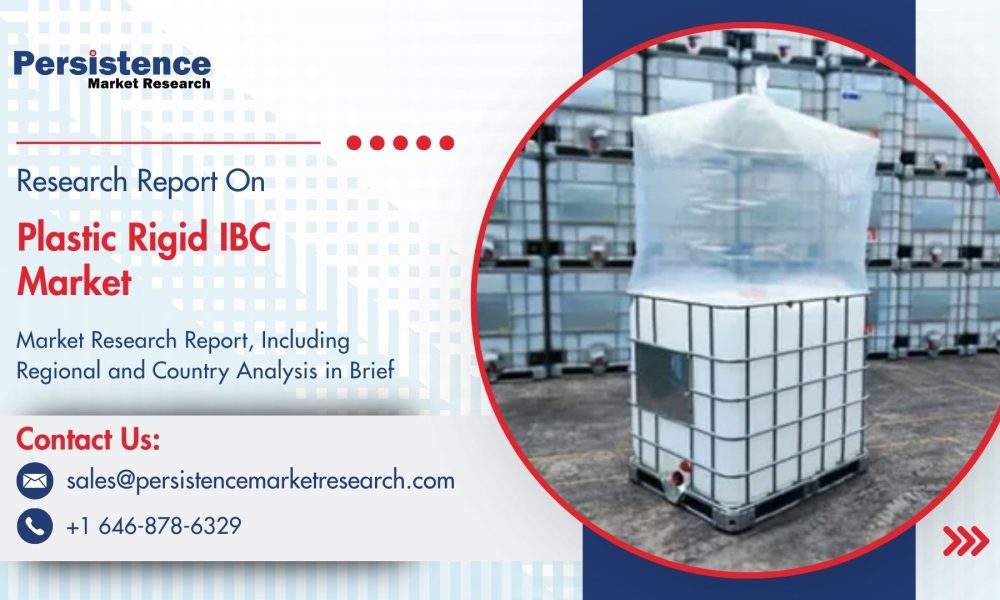
The plastic rigid intermediate bulk container (IBC) market has gained substantial traction in recent years due to its critical role in bulk packaging and transportation across various industries. Known for their durability, cost-efficiency, and reusability, plastic rigid IBCs are widely used in sectors such as chemicals, food & beverages, pharmaceuticals, and agriculture. These containers provide an effective solution for storing and transporting both hazardous and non-hazardous liquids and semi-solids, ensuring product safety while optimizing supply chain logistics.
This report provides a comprehensive analysis of the plastic rigid IBC market, covering growth drivers, challenges, emerging trends, regional insights, and leading market participants. With industries increasingly adopting sustainable and cost-effective bulk packaging solutions, plastic rigid IBCs have become indispensable in global trade and industrial operations.
Market Projections and Forecast
According to Persistence Market Research’s projections, the global plastic rigid IBC market is forecast to expand steadily over the next decade. The market is projected to grow from an estimated value of US$5.9 billion in 2024 to US$9.5 billion by 2031, reflecting a compound annual growth rate (CAGR) of 4.9% during the forecast period.
The demand for plastic rigid IBCs is expected to be driven by their growing application in chemical and food processing industries, coupled with increasing demand for sustainable and reusable packaging solutions. Europe and Asia-Pacific are likely to emerge as leading regions due to their strong industrial bases and expanding trade activities.
Get a Sample PDF Brochure of the Report (Use Corporate Email ID for a Quick Response): https://www.persistencemarketresearch.com/samples/34329
Market Dynamics
Drivers of Market Growth
- Expanding Chemical Industry Applications:
The chemical sector is one of the largest end-users of plastic rigid IBCs, utilizing them for safe storage and transport of hazardous and non-hazardous liquids. Their chemical resistance, cost-effectiveness, and reusability make them an ideal choice, driving continuous demand from global chemical manufacturers. - Growing Demand in Food and Beverage Sector:
Food-grade plastic IBCs are increasingly being used to transport edible oils, syrups, beverages, and flavoring agents. With the rising global demand for processed food and beverages, the adoption of IBCs in this sector is accelerating, further fueling market growth. - Sustainability and Reusability Benefits:
Plastic rigid IBCs are designed for multiple reuse cycles, making them an environmentally sustainable packaging option. Growing regulatory and consumer emphasis on sustainability is prompting industries to replace single-use packaging with reusable IBCs, creating a long-term growth opportunity. - Global Trade Expansion:
The rise in international trade has increased the need for reliable and efficient packaging solutions. Plastic IBCs, with their high durability and ability to carry large volumes, are well-suited for cross-border transportation, boosting their global adoption.
Challenges in the Market
- High Initial Cost and Maintenance:
Compared to single-use containers, rigid IBCs require higher initial investment. Additionally, businesses must manage periodic cleaning, inspection, and maintenance, which can pose cost challenges, particularly for small enterprises. - Competition from Alternative Packaging:
Flexible IBCs and traditional steel drums pose competition to rigid plastic IBCs. While rigid IBCs offer durability, flexible variants provide cost advantages in specific applications, thereby challenging their market share. - Regulatory Compliance:
Transporting hazardous chemicals requires strict adherence to international packaging and safety regulations. Ensuring compliance with these standards increases costs and can create barriers for manufacturers and end-users.
Market Trends and Technological Innovations
- Integration of Smart Tracking Technologies:
Manufacturers are increasingly embedding RFID tags and IoT-enabled sensors in rigid IBCs to provide real-time tracking of shipments. This enhances supply chain visibility, improves asset utilization, and ensures regulatory compliance. - Focus on Lightweight and High-Strength Designs:
Innovations in material science are leading to the development of lighter yet stronger IBCs. These containers reduce transportation costs while maintaining high durability and load-bearing capacity. - Growing Adoption of Food-Grade IBCs:
With stringent food safety standards in place, the demand for hygienic, food-grade rigid IBCs is on the rise. These containers are designed to prevent contamination and ensure compliance with global food safety regulations. - Recycling and Circular Economy Practices:
Companies are increasingly adopting recycling programs to extend the lifecycle of rigid IBCs. This aligns with global sustainability goals and reduces the environmental footprint of industrial packaging.
Plastic Rigid IBC Industry Segmentation
By Material:
- High-Density Polyethylene (HDPE)
- Polypropylene (PP)
- Other Plastics
By Capacity:
- Up to 500 Liters
- 500–1000 Liters
- Above 1000 Liters
By End-Use Industry:
- Chemicals
- Food & Beverages
- Pharmaceuticals
- Agriculture
- Others (Cosmetics, Oil & Gas)
By Region:
- North America
- Europe
- Asia-Pacific
- Latin America
- Middle East & Africa
Regional Analysis
North America
North America remains a key market for plastic rigid IBCs, driven by the strong presence of chemical and pharmaceutical industries. The region’s stringent regulations regarding safe transport of hazardous goods encourage widespread adoption of IBCs. The U.S. is expected to remain the largest contributor to market growth.
Europe
Europe is projected to account for a significant share of the market, supported by its established chemical, food processing, and beverage industries. Strict sustainability regulations in the EU are pushing companies to adopt reusable and eco-friendly packaging solutions, boosting demand for rigid plastic IBCs.
Asia-Pacific
Asia-Pacific is expected to witness the fastest growth due to rapid industrialization, rising consumption of packaged food, and expanding export activities. Countries such as China and India are major growth drivers, with increasing adoption in both chemical manufacturing and agricultural sectors.
Latin America
The Latin American market is gradually expanding, particularly in Brazil and Mexico, where the agricultural and food industries are adopting plastic IBCs to enhance supply chain efficiency.
Middle East & Africa
MEA shows strong growth potential due to its oil, gas, and chemical industries. Investments in industrial infrastructure and rising international trade are expected to fuel demand for rigid IBCs in the region.
Key Companies Profiled in the Report
- Mauser Packaging Solutions
- Greif, Inc.
- SCHÜTZ GmbH & Co. KGaA
- Snyder Industries, Inc.
- Hoover Ferguson Group
- Time Technoplast Ltd.
- Bulk Container Systems
- Berry Global, Inc.
- DS Smith Plc
- IPL Global
Future Outlook
The global plastic rigid IBC market is set for consistent growth, driven by increasing adoption in the chemical, food, and pharmaceutical sectors. As businesses focus on sustainability, the demand for reusable, recyclable, and smart IBCs will accelerate. Technological advancements such as IoT-enabled tracking and lightweight designs will further enhance their functionality and cost-effectiveness.
The market is also expected to benefit from expanding global trade, stricter regulations on packaging safety, and the growing shift toward eco-friendly logistics solutions. However, manufacturers must address challenges such as high costs and competition from flexible alternatives to maximize growth opportunities.
Conclusion
The plastic rigid IBC market is undergoing a period of steady expansion, with strong growth prospects across industries and regions. Its role in providing safe, reusable, and efficient bulk packaging solutions makes it indispensable in today’s globalized economy. With increasing focus on sustainability, technological innovation, and supply chain optimization, plastic rigid IBCs are well-positioned to remain a key component in industrial packaging for the foreseeable future.
Explore the Latest Trending Research Reports:




