
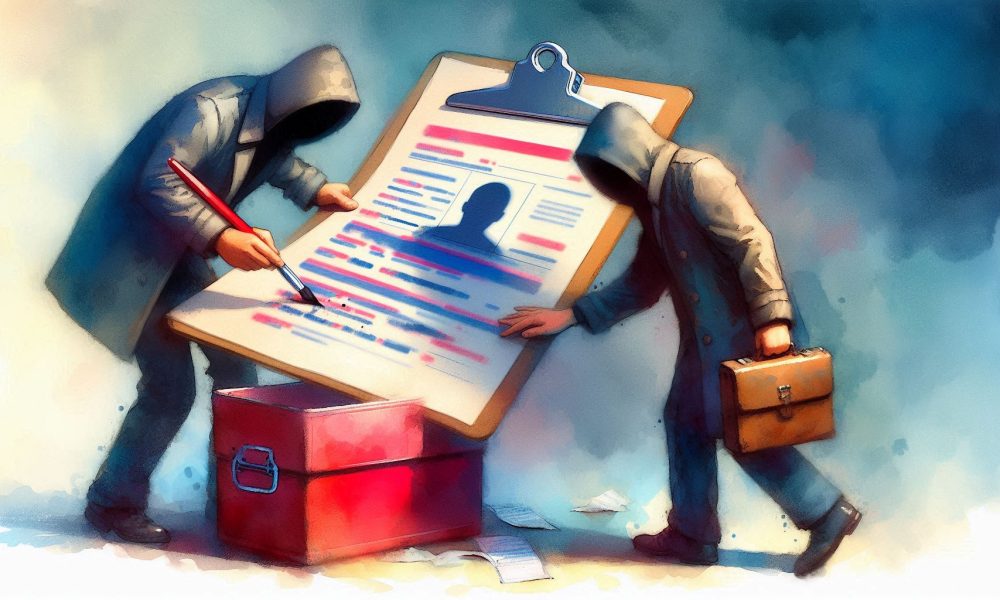
In an era where digital records define almost every aspect of life, from employment to healthcare to financial access, the accuracy of identity documents has never been more critical. Yet mistakes happen.
A misspelled name on a birth certificate, an incorrect date of birth in a national registry, or outdated records tied to past mistakes can create long-lasting obstacles. For many individuals, these errors are not minor inconveniences but barriers to professional advancement, cross-border mobility, and personal privacy.
The ability to correct identity records and erase past mistakes has become a pressing concern in a globalized society where identity is both a legal anchor and a digital footprint. This press release explores the legal frameworks, international variations, and practical strategies for correcting identity records, supported by case studies that illustrate the human impact of this process.
Identity records form the foundation of civil life. Birth certificates, passports, driver’s licenses, and national identification cards are all essential documents that prove an individual’s existence within a legal system. Errors in these records can arise for various reasons, including clerical mistakes at the time of registration and inconsistencies during cross-border document transfers.
In some cases, individuals carry the burden of outdated or damaging records from past legal troubles, which continue to appear in background checks and digital databases long after sentences have been served or mistakes have been acknowledged. Correcting these records is not simply about administrative accuracy. It is about restoring opportunities, dignity, and fairness.
The process for correcting identity records varies widely across jurisdictions. In the United States, for example, state-level courts often have the authority to issue orders to amend vital records such as birth certificates or name changes.
In Canada, provincial registries play a central role, while in the United Kingdom, corrections are typically handled through the General Register Office. In civil law countries, such as France or Spain, individuals may need to petition local administrative courts to secure changes. In some cases, the process is straightforward, involving the provision of evidence such as hospital records, affidavits, or official correspondence. In other cases, particularly those involving past mistakes with criminal records or immigration filings, the process can be complex, requiring legal representation and sustained engagement with government agencies.
One of the most common forms of correction involves amending clerical errors on vital records. Names misspelled at birth, incorrect gender markers, or mistakes in parental details can create cascading problems when individuals apply for passports, social services, or even university admissions.
Many jurisdictions recognize these as routine errors and allow administrative procedures to amend them. However, when errors are not discovered until decades later, proving the original mistake can be more difficult. Individuals may need to present school records, baptismal certificates, or sworn statements from family members to establish the original intent. The burden of proof rests heavily on the applicant, underscoring the need for professional assistance in compiling evidence to support their case.
Another critical area is the correction of records tied to criminal history. In the digital age, background checks often rely on automated databases that capture arrests, charges, and convictions. Even when an individual has served their sentence, obtained a pardon, or had charges dismissed, outdated information can persist. In some cases, these records resurface when applying for visas, employment, or housing, creating barriers long after the matter has been resolved.
Legal frameworks exist to address this problem. Expungement, record sealing, and pardons are tools used in many countries to remove or restrict access to records. However, these processes differ dramatically by jurisdiction. In the United States, eligibility for expungement varies by state, and not all offenses qualify. In Canada, record suspensions are available through the Parole Board of Canada; however, the process can take several years.
In Europe, the right to be forgotten, enshrined in European Union law, provides individuals with a legal basis to request the removal of outdated or irrelevant personal data from online platforms. Each mechanism offers a path to erasing past mistakes, but navigating them requires legal expertise.
Case Study 1: Correcting a Birth Certificate for Employment Access
A young professional in Eastern Europe discovered that their birth certificate listed an incorrect date of birth, a clerical error that went unnoticed for decades. When applying for a work visa abroad, the discrepancy between the birth certificate and the passport triggered a red flag, resulting in a visa denial. With the help of legal consultants, the individual petitioned the local registry to amend the record, presenting hospital records and affidavits from family members. The correction was granted, and the individual was able to resubmit their visa application successfully. This case highlights how minor clerical errors, if left uncorrected, can have a disproportionate impact on life opportunities.
Case Study 2: Erasing Past Records for Career Renewal
A man in Canada had been convicted of a minor offense in his youth, a mistake he deeply regretted. Although he completed his sentence and lived a law-abiding life thereafter, the record resurfaced during background checks when he applied for jobs in finance.
Despite his rehabilitation, the outdated record blocked him from advancing professionally. By applying for a record suspension through the Parole Board of Canada, he was able to seal the record, making it inaccessible to most employers. This allowed him to restart his career on a clean slate, proving that correcting past mistakes can be pivotal for personal and professional growth.
Case Study 3: Digital Erasure under the Right to Be Forgotten
A businesswoman in Spain discovered that outdated online articles about a dismissed lawsuit against her company continued to appear in search results, damaging her reputation. She filed a request under the European Union’s General Data Protection Regulation (GDPR), invoking the right to be forgotten.
The search engine complied, removing the outdated results from public search queries. Although the original court documents remained archived, their public accessibility was reduced. This case illustrates how identity correction is no longer limited to paper records but extends into the digital realm, where reputations are increasingly shaped.
Case Study 4: Identity Theft and Record Correction
An expatriate living in Southeast Asia became the victim of identity theft when their personal details were fraudulently used to obtain credit. False records tied to the robbery began appearing in financial databases, resulting in loan denials and reputational damage.
Through international legal assistance, the expatriate was able to dispute the fraudulent records, providing affidavits, police reports, and documentation from financial institutions. The fraudulent entries were eventually removed, restoring their economic credibility. This case underscores the global dimension of identity correction, particularly in an era of cross-border data flows.
The legal procedures for correcting identity records often intersect with privacy rights, human rights, and administrative law. Courts recognize that mistakes in identity documents can constitute violations of fundamental rights, such as the right to work, travel, or access healthcare.
At the same time, governments balance these rights against the need for security and the integrity of public records. As a result, the process can be slow and bureaucratic. Many individuals find themselves navigating a maze of forms, hearings, and evidentiary requirements. International consultants specializing in identity correction play a crucial role in guiding applicants through these challenges, ensuring compliance with legal frameworks while advocating for fair treatment and representation.
The risks of attempting identity corrections without professional guidance are significant. Applications filed with incomplete evidence are often rejected, resulting in additional delays. In some jurisdictions, repeated failed applications can prejudice future petitions. In cases involving criminal records or immigration history, even minor missteps can trigger new legal scrutiny.
Professional assistance ensures that applications are framed correctly, evidence is presented in a legally persuasive manner, and the right jurisdictions are engaged. With identity increasingly tied to digital systems and biometric data, the margin for error is shrinking, making accuracy more important than ever.
Globalization adds another layer of complexity. Individuals often hold multiple citizenships, reside abroad, or conduct business across borders. A correction made in one country may not automatically update records in another. For example, a name change granted in Canada may not immediately be reflected in U.S. immigration records or European visa systems.
Coordinating these updates requires a strategy that takes into account international treaties, information-sharing agreements, and cross-border databases. Without proper coordination, individuals risk living with fragmented identities that complicate travel, finance, and legal recognition.
Technology is reshaping the future of identity correction. Blockchain-based registries promise immutable records, which could reduce clerical errors but also raise questions about how corrections will be implemented.
Artificial intelligence is increasingly used to verify identities in banking and security, amplifying the consequences of mismatched records. Governments are experimenting with digital identity systems that centralize personal information, making corrections both easier and more critical.
At the same time, digital footprints on social media and online platforms create parallel identities that may require correction or erasure. The interplay between legal identity and digital presence will define the future of how mistakes are addressed.
Case Study 5: Cross-Border Name Correction
A family relocating from South America to Europe discovered that the father’s name was spelled differently on various documents due to translation inconsistencies. The mismatch created complications in securing residency permits. Legal consultants coordinated with both South American and European authorities to harmonize the records, presenting notarized translations and affidavits. The corrections were accepted, and the family was able to secure residency without further complications. This case illustrates the challenges of cross-border identity corrections and the importance of synchronized documentation.
Correcting identity records and erasing past mistakes is ultimately about more than documents. It is about fairness, opportunity, and dignity. Errors in identity records can unjustly define a person’s life, limiting access to work, education, and mobility.
Past mistakes, if permanently attached to an individual despite rehabilitation or exoneration, undermine the principles of justice and human rights. Legal frameworks around the world recognize these truths, but navigating them requires persistence, expertise, and often international coordination. For individuals facing these challenges, professional guidance can make the difference between a life constrained by errors and one empowered by accurate identity.
As globalization and technology continue to reshape identity systems, the need for robust pathways to correct errors will only grow. Governments must balance security and integrity with compassion and fairness. Individuals must remain vigilant about their records, ensuring accuracy and asserting their rights to correction.
And professional consultants will continue to play a vital role in guiding people through these complex processes. In a world where identity defines opportunity, the ability to correct records and erase past mistakes is not a privilege but a necessity.
Contact Information
Phone: +1 (604) 200-5402
Email: [email protected]
Website: www.amicusint.ca




