
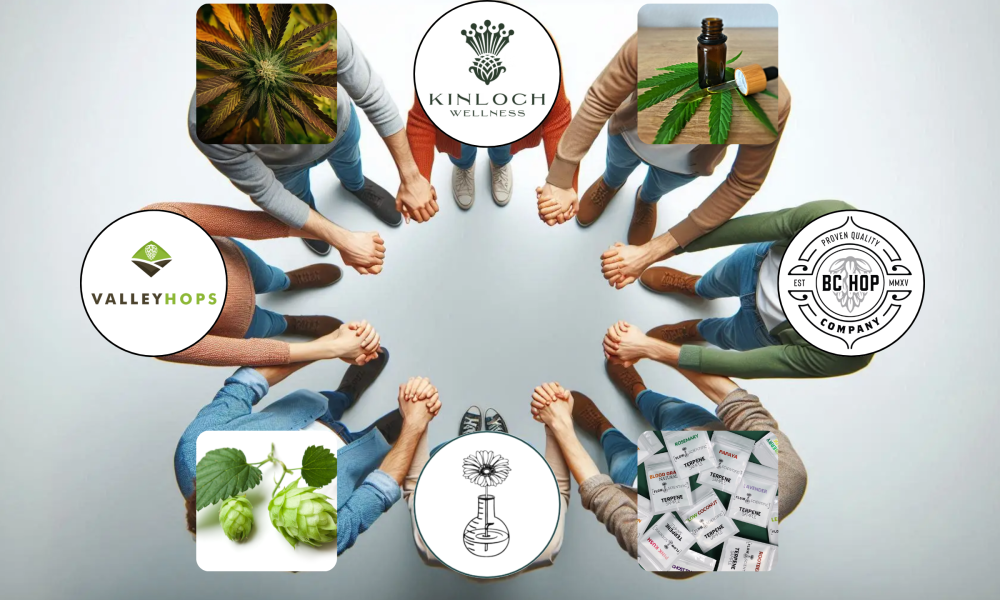
Kinloch Wellness Ltd. and a group of related companies form a complex business network within British Columbia’s agricultural and regulated cannabis economy. Together, these firms span hemp cultivation, terpene production, wellness product development, and corporate structuring. This backgrounder examines Kinloch Wellness Ltd., Kinloch Naturals Ltd., BC Hop Company Ltd., Valley Hops Ltd., Flow Scientific Ltd., and several numbered companies: 10161286128 BC Ltd., 1206671 BC Ltd., 1165130 BC Ltd., and 625001 BC Ltd. to provide a detailed, neutral portrait of how they fit into the provincial and national landscape.
The article is intended as an overview, not an advocacy document. It consolidates publicly available information and contextualizes these entities in light of Canada’s cannabis regulations, British Columbia’s agricultural history, and recent legal proceedings, including a civil claim filed in Vancouver Supreme Court on December 20, 2024 (Court File No. VLC-S-S-248982).
Kinloch Wellness Ltd.: Public-Facing Brand Identity
Kinloch Wellness Ltd. is the most visible consumer brand within the network. Its focus is on hemp-derived cannabinoids such as CBD, CBG, and CBN, marketed in outcome-based categories including Serene, Refresh, Elevate, and CBZ. Rather than positioning products by strain or cultivar, Kinloch emphasizes effects: calm, recovery, focus, or rest. This orientation reflects both consumer demand for clarity and compliance with Canada’s restrictions on medical claims.
Products include softgels, gummies, tinctures, and non-intoxicating pre-rolls. Kinloch’s retail positioning highlights “farm-to-formulation” storytelling, drawing on agricultural roots while appealing to modern wellness consumers.
Herbal Dispatch, a licensed Canadian medical platform, maintains a branded collection for Kinloch, describing its catalog as “natural, hemp-derived formulations with low-to-no THC.” The company also appears on retail directories, signaling its intent to reach both medical and recreational markets.
Awards have been part of Kinloch’s brand-building. In 2022, it won Best CBD Edible at the World CBD Awards in Barcelona, while one of its executives received an Industry Pioneer distinction. In 2024, Forbes covered an EEG-based evaluation of Kinloch’s Serene Green Apple gummy, which suggested more substantial relaxation effects relative to CBD-only comparators. These third-party validations have helped establish credibility in a crowded marketplace.
Kinloch’s website discloses that Token Naturals Ltd. is the responsible party for Kinloch products under section 48 of Canada’s Cannabis Regulations. Such transparency is legally required and underscores that the brand operates within the national compliance framework.
Kinloch Naturals Ltd.: The Parent Company
Kinloch Naturals Ltd. functions as the parent enterprise for the group. Public descriptions indicate it holds subsidiaries, including Flow Scientific Ltd. and Kinloch Wellness Ltd. It has presented itself as an umbrella under which innovation in terpenes, cannabinoids, and wellness licensing occurs.
Its structure suggests that Kinloch Naturals was designed to manage intellectual property, coordinate formulation development, and hold licensing agreements, while delegating consumer branding to Kinloch Wellness and ingredient science to Flow Scientific.
This model reflects a broader industry trend: Canadian cannabis and wellness companies often distribute functions across multiple entities to navigate regulatory requirements, manage liability, and create flexibility for financing.
By presenting itself as the parent company, Kinloch Naturals signals that Kinloch Wellness is not a standalone venture but part of a structured network. This distinction becomes important when considering investor communications, corporate governance, and transparency.
BC Hop Company Ltd.: Agricultural and Genetic Foundations
Founded in 2015 in Abbotsford, BC, Hop Company Ltd. began as a processor and promoter of hops for the province’s craft brewing industry. Its expansion into hemp positioned it at the intersection of agriculture and regulated wellness.
In April 2021, BC Hop Company announced that Health Canada had approved two proprietary hemp cultivars, Painted Lady and Eighty-Eight, for inclusion on the List of Approved Cultivars (LOAC). This approval meant Canadian farmers could legally grow these varieties for hemp production. Cultivar approvals are central to Canada’s hemp economy, as only approved varieties may be planted.
These approvals allowed BC Hop Company to extend its reach into hemp production at a time when CBD demand was rising. By securing genetic assets, the company positioned itself as a reliable upstream supplier for brands like Kinloch Wellness.
BC Hop Company also integrated downstream through its acquisition of Flow Scientific, enabling it to connect cultivation directly with terpene formulation and product development. This move reflects a common strategy: controlling both the raw material and a value-added processing layer.
Flow Scientific Ltd.: Terpenes and Sensory Innovation
Flow Scientific Ltd., founded in Surrey in 2016, develops natural, food-grade terpenes and custom blends. Its catalog includes single molecules, strain-inspired profiles, and custom formulations designed for flavor, aroma, and sensory effects. Flow Scientific has marketed itself across industries, including cannabis, food, and wellness.
In 2021, Flow Scientific announced that it had joined BC Hop Company to accelerate the commercialization of hemp-derived terpenes. This partnership, and eventual acquisition, allowed BC Hop Company to integrate terpene development with its cultivation base. For Kinloch Wellness, access to Flow Scientific’s terpenes enabled flavor innovation and product differentiation, particularly in gummies and softgels.
Terpenes have become a crucial differentiator in CBD and wellness markets. While cannabinoids anchor physiological effects, terpenes add sensory dimensions that enhance consumer experience and support outcome-oriented narratives. Kinloch’s emphasis on terpene-cannabinoid pairings illustrates how Flow Scientific’s work has been central to its product development.
Valley Hops Ltd.: Complementary Agriculture
Valley Hops Ltd., another Abbotsford-based company, reflects the region’s deep agricultural tradition. Specializing in hop cultivation and processing, Valley Hops contributes to the Fraser Valley’s reputation as a hub for plant-based industries. Its role in this network highlights the continuity between traditional hops production for beer and hemp cultivation for wellness.
Although not as directly tied to Kinloch Wellness as BC Hop Company, Valley Hops adds to the agricultural base upon which cannabinoid and terpene companies have built. The shared geography of Abbotsford and the Fraser Valley makes collaboration, knowledge transfer, and supply chain alignment more practical.
Numbered Companies and Corporate Structuring
In addition to consumer-facing and agricultural entities, several numbered British Columbia corporations are connected to this ecosystem:
- 10161286128 BC Ltd.
- 1206671 BC Ltd.
- 1165130 BC Ltd.
- 625001 BC Ltd.
Numbered companies are common in B.C. They often serve as holding entities, financing vehicles, or special-purpose corporations used to structure ownership, manage liability, or have intellectual property. Publicly available information provides little operational detail about these companies, but their presence reflects the layered corporate architecture typical of emerging industries.
Such structures are not unusual in Canada’s cannabis sector. They allow owners to separate assets, isolate risk, and maintain flexibility for mergers, acquisitions, or financing rounds. At the same time, they can create opacity for investors, who may find it difficult to map how obligations and revenues flow across multiple corporate shells.
Interconnections: A Cluster Model
Together, these entities form a cluster model:
- Cultivation and genetics are anchored by BC Hop Company’s cultivar approvals and Valley Hops’ agricultural presence.
- Terpene science is provided by Flow Scientific, aligning sensory inputs with product innovation.
- Branding and licensing are handled by Kinloch Wellness and Kinloch Naturals, connecting agricultural and ingredient inputs to consumers.
- Corporate scaffolding is supplied by numbered companies, which provide structural flexibility.
This integrated model mirrors patterns in other Canadian cannabis firms, where cultivation, processing, and branding are linked through layered ownership. The benefits include supply chain control and innovation speed. The drawbacks include governance complexity and potential challenges in investor transparency.
Regulatory Framework
Canada’s Cannabis Act and Industrial Hemp Regulations set the boundaries for these companies. Hemp cultivation is restricted to LOAC-listed varieties. Downstream, all products must meet packaging, labeling, and advertising rules. Claims about medical efficacy are prohibited unless authorized by Health Canada.
This environment explains why Kinloch Wellness emphasizes functional outcomes such as “relaxation” or “focus” rather than medical promises. EEG-based findings or sensory narratives provide differentiation without breaching compliance. Flow Scientific’s food-grade terpene focus also aligns with regulatory demands for safe, natural inputs.
Market Conditions: From Novelty to Discipline
When CBD products first entered the Canadian market, novelty drove sales. Over time, however, competition intensified, margins narrowed, and retailers rationalized their shelves. Provincial distributors and private stores now prioritize products with proven turn rates, consistent supply, and recognizable branding.
For Kinloch, early awards and media coverage provided momentum. Yet sustaining shelf space requires consistent performance. Gummies remain one of the most competitive categories, with constant iteration from rivals. Kinloch’s advantage lies in its terpene-cannabinoid narrative and access to upstream supply through BC Hop Company and Flow Scientific.
Still, the broader market faces price compression, consumer sensitivity to ingredient quality, and limited opportunities for product differentiation under regulatory restrictions. Brands must therefore focus on reliability, cost control, and disciplined marketing.
Legal Context: The Vancouver Civil Claim
On December 20, 2024, a Notice of Civil Claim was filed in the Vancouver Supreme Court under Court File No. VLC-S-S-248982. The existence of this claim, regardless of its eventual outcome, places additional scrutiny on the companies in this network.
Civil claims are allegations, not findings of fact. They mark the beginning of a process involving pleadings, discovery, and potentially a trial. For stakeholders, the presence of a claim raises questions about inter-company accountability, investor communications, and governance. Investors often seek clarity on how multiple entities interact, especially when obligations may cross corporate boundaries.
Signals That Shape Credibility
Stakeholders in Canada’s cannabis market often rely on visible signals to judge credibility:
- Regulatory compliance – Kinloch’s identification of Token Naturals as the responsible party, and BC Hop Company’s cultivar approvals, confirm adherence to federal frameworks.
- Distribution presence – Persistent listings on Herbal Dispatch and other directories show ongoing demand.
- Third-party validation – Awards and Forbes coverage add recognition.
- Supply chain integration – Flow Scientific and BC Hop Company strengthen Kinloch’s product development base.
- Litigation posture – The civil filing underscores why governance and transparency matter.
Forward-Looking Scenarios (12–24 Months)
Stabilization and Refocus
Kinloch Wellness focuses on its strongest SKUs, particularly gummies and softgels, while communicating clearly about the litigation timeline. It leverages its terpene-plus-cannabinoid platform to refresh hero products and continues to emphasize outcomes such as relaxation and recovery.
Restructuring and Alliances
The group deepens collaboration between cultivation and terpene arms, potentially exploring white-label or co-manufacturing opportunities to monetize expertise while reducing brand overhead. Numbered companies could be used to structure partnerships or isolate assets.
Strategic Resolution
A court outcome or settlement provides clarity for investors and partners. This scenario could enable the group to move past legal uncertainty, though it depends on case specifics.
Market Consolidation
With CBD market margins tightening, larger firms may seek acquisitions. The Kinloch ecosystem’s integrated model could be attractive to buyers seeking genetics, terpene capacity, and an established consumer brand.
Methodology and Sources
This backgrounder draws on company websites, retail listings, award announcements, trade media, and government publications. It references:
- Kinloch’s site, including responsible party disclosures.
- Herbal Dispatch listings for Kinloch products.
- World CBD Awards 2022 coverage.
- Forbes reports on EEG-based testing.
- BC Hop Company’s Cultivar Approval Announcements
- Flow Scientific’s product pages and acquisition announcement.
- Public registry data on numbered companies.
- The Notice of Civil Claim was filed on December 20, 2024, in the Vancouver Supreme Court.
Together, these sources provide a mosaic view of the Kinloch-linked network.
Conclusion
The Kinloch group of companies, including Kinloch Wellness Ltd., Kinloch Naturals Ltd., BC Hop Company Ltd., Flow Scientific Ltd., Valley Hops Ltd., and related numbered corporations, illustrates how Canadian CBD and hemp ventures structure themselves across cultivation, ingredient science, consumer branding, and corporate holdings.
Their integrated model offers benefits in supply chain control and innovation, but it also raises concerns about governance and transparency, especially in the context of an open civil claim. The next phase of their trajectory will depend on consistent operational execution, compliance, and communications.
In Canada’s maturing CBD market, credibility accrues not from awards alone but from the ability to deliver stable products, maintain investor trust, and demonstrate transparency across a complex corporate structure.




