
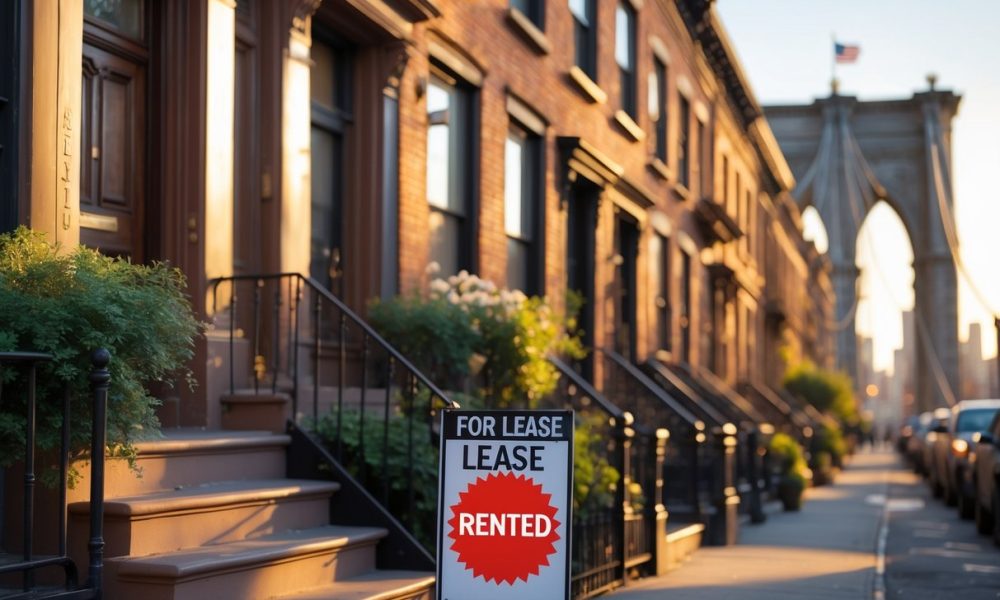
Your Brooklyn vacancy should fill in three weeks, not six.
While national headlines scream about real estate uncertainty, Brooklyn’s rental market tells a completely different story. The numbers reveal something most landlords haven’t noticed yet.
Vacancy rates have stayed below 2.00% for five straight months. That’s not a fluke.
The Brooklyn Exception
National real estate markets face headwinds. Interest rate volatility, economic uncertainty, regional oversupply issues.
Brooklyn operates by different rules.
The average Brooklyn rental hit the market and found tenants in 39 days during April. That’s the fastest April pace since 2020, when pandemic dynamics created artificial scarcity.
This isn’t pandemic-driven demand. Brooklyn’s fundamentals shifted.
Limited new construction, population growth, and Manhattan spillover created sustained rental pressure. The borough now handles more rental volume than Manhattan in several key months. But here’s what the borough-wide numbers miss: Brooklyn isn’t one market—it’s dozens of micro-markets, each with distinct tenant pools and timing patterns.
When vacancy drops below two percent, every day a listing sits empty is real money left on the table,” observes Ilan Maslow, co- founder of Brooklyn brokerage Torsx. “We’re seeing qualified tenants apply within 24 hours—if the listing is priced right and answered promptly.”
The Neighborhood Reality
Williamsburg and DUMBO still move fastest, averaging 28 days on market for properly priced units. These neighborhoods captured the Manhattan spillover first, and their rental infrastructure matured accordingly. Crown Heights and Bed-Stuy follow at 35-42 days, but only for landlords who understand the tenant demographic. Young professionals, often first-time Brooklyn renters, prioritize transit access and neighborhood safety over luxury finishes. Price a renovated one-bedroom at $3,200 instead of $3,400, and it leases in three weeks instead of eight. Sunset Park and Bay Ridge represent the value play. Average days on market hit 45-52, but tenant retention runs higher. Families looking for space and stability, not Instagram-worthy exposed brick. These renters sign longer leases and cause fewer headaches. Bushwick and Ridgewood still offer the best arbitrage opportunity. Units priced correctly move in 38-44 days, but most landlords overprice by 8-12%. The artist and creative professional tenant pool knows value when they see it—and they’ll walk away from overpriced spaces immediately. Park Slope and Cobble Hill command premium rents but require premium execution. Families with children expect move-in ready conditions, responsive management, and neighborhood-appropriate pricing. Mess up any of these elements, and your $4,800 two-bedroom sits empty while comparable units lease around you.
Commercial Follows Residential
Residential vacancy compression drives commercial opportunity.
Brooklyn’s retail market just hit $721 per square foot, jumping from $632 last year. That’s a 14% increase while other markets stagnated.
But commercial Brooklyn tells a more nuanced story than residential. Location and tenant matching matter exponentially more.
The Commercial Breakdown
Ground-floor retail in Williamsburg and DUMBO commands $85-120 per square foot, but only for spaces under 2,000 square feet. Larger retail struggles unless it’s restaurant-ready with proper ventilation and grease trap access. Bushwick’s industrial conversion lofts lease fastest to creative businesses—galleries, design studios, small manufacturing.
These tenants value high ceilings and loading dock access over foot traffic. Price points run $35-55 per square foot, and properly marketed spaces fill in 60-90 days. Park Slope and Carroll Gardens retail requires hyper-local tenant matching. Family-oriented businesses—children’s services, organic markets, boutique fitness—thrive. Corporate chains often fail.
The community actively supports businesses that fit the neighborhood character. Sunset Park’s emerging commercial corridor along 5th Avenue offers the biggest opportunity gap. Retail spaces priced at $45-65 per square foot attract established businesses looking to expand from pricier neighborhoods. But landlords must understand the demographic shift—more young families, higher disposable income than historical data suggests. Office and flex space demand concentrates in three zones: DUMBO tech corridor, Gowanus creative district, and the emerging Industry City ecosystem.
These areas offer Manhattan-quality space at 60-70% of Manhattan pricing, but tenant expectations match the discount—they want move-in ready conditions and responsive management. The challenge isn’t finding demand. It’s capturing it efficiently with neighborhood-specific marketing and realistic pricing expectations.
The Execution Gap
Most Brooklyn landlords still operate like it’s 2019. Post listings on Zillow, wait for calls, hope for the best.
That approach wastes the current market advantage and reveals a fundamental misunderstanding of how today’s Brooklyn rental market actually works.
Tight inventory means qualified tenants move fast. They see a properly priced unit, schedule same-day showings, submit applications within 48 hours. Miss that window, and they’re signing elsewhere.
The landlords cutting vacancy times understand this timing reality. They price based on real-time comps, not last year’s rent roll. They respond to inquiries in hours, not days.
Most importantly, they screen hard but move fast on qualified applicants.
The Winning Playbook
Successful Brooklyn landlords follow a specific sequence that cuts average vacancy by 40%:
Week 1: Market Intelligence Pull comps from the last 30 days, not 90. Brooklyn rent growth happens monthly, not quarterly. Check StreetEasy closed deals, but also track off-market transactions through local broker networks.
Week 2: Strategic Pricing Price 3-5% below market for the first two weeks, then adjust up if you’re getting multiple applications. Better to lease at $3,150 in three weeks than chase $3,300 for three months.
Week 3: Rapid Response Protocol Return all inquiries within two hours during business days, one hour on weekends. Text responses outperform email by 60% for initial contact. Schedule showings within 24 hours of inquiry.
Week 4: Application Processing Decision within 48 hours of complete application. Qualified means 40x monthly rent in annual income, credit score above 650, positive landlord references.
Don’t overthink it—good tenants have options and won’t wait. The landlords who deviate from this timeline watch their units sit while identical apartments lease around them.
Block-by-Block Intelligence
Brooklyn isn’t one market. Crown Heights moves differently than Williamsburg. Midwood has different tenant expectations than Bushwick.
Successful landlords track neighborhood-specific data. Days on market by zip code. Rent growth by building type. Tenant preferences by area demographic.
This granular approach matters more now because inventory is so tight. A unit priced 5% above market might sit for two months in normal conditions. In current Brooklyn conditions, it sits for four months while comparable units lease immediately.
The opportunity cost of poor pricing just multiplied.
Transit and Development Impact
Brooklyn’s rental momentum isn’t accidental. Three infrastructure developments will sustain demand through 2026: The L train improvements completed ahead of schedule, solidifying Williamsburg and Bushwick connectivity. Commute times to Manhattan dropped 12 minutes average, making these neighborhoods viable for finance and tech workers who previously stayed in Manhattan.
Industry City’s expansion added 15,000 jobs in Sunset Park, creating rental demand within walking distance. But most landlords haven’t adjusted their tenant screening—they’re still marketing to artists when they should target logistics coordinators and food production managers.
The Atlantic Terminal development brought 3,200 new residents to Fort Greene and Prospect Heights, but only 800 new rental units. The supply-demand imbalance will persist until 2027, when the next wave of construction completes. Smart landlords track these development patterns and position their properties accordingly. A Sunset Park studio markets differently now than it did two years ago.
The Window is Narrowing
Brooklyn’s rental market created a rare landlord advantage. Low vacancy, high demand, fast-moving qualified tenants. But this advantage won’t last indefinitely. Three factors could shift the balance: New construction pipeline: 4,200 units scheduled for completion between late 2025 and early 2027, concentrated in Williamsburg, Long Island City border areas, and downtown Brooklyn. Not enough to crash the market, but sufficient to soften the current urgency. Interest rate sensitivity: If rates drop significantly, more renters convert to buyers, especially in the $3,000-4,500 monthly rent range, where purchase becomes viable. Manhattan recovery: Corporate return-to-office mandates could pull some Brooklyn renters back to Manhattan if commute patterns solidify.
The landlords who recognize this shift and adjust their leasing approach accordingly will capture the best of this cycle. Those who don’t will watch opportunities lease to more responsive competitors while wondering why their “proven” strategies stopped working. I’ve seen this movie before. The landlords who move first—who price aggressively, respond quickly, and screen efficiently—build tenant waiting lists. The ones who wait for “market conditions to normalize” watch their units sit empty while rent growth stagnates.
Brooklyn’s rental window is open now. The question isn’t whether you’ll use the data. The question is whether you’ll use it before your competition does.




