
Overview
Global Tissue Engineering for Wound Care Market size is expected to be worth around US$ 34.52 Billion by 2034 from US$ 7.69 Billion in 2024, growing at a CAGR of 16.2% during the forecast period 2024 to 2034. In 2024, North America led the market, achieving over 38.7% share with a revenue of US$ 3.0 Billion.
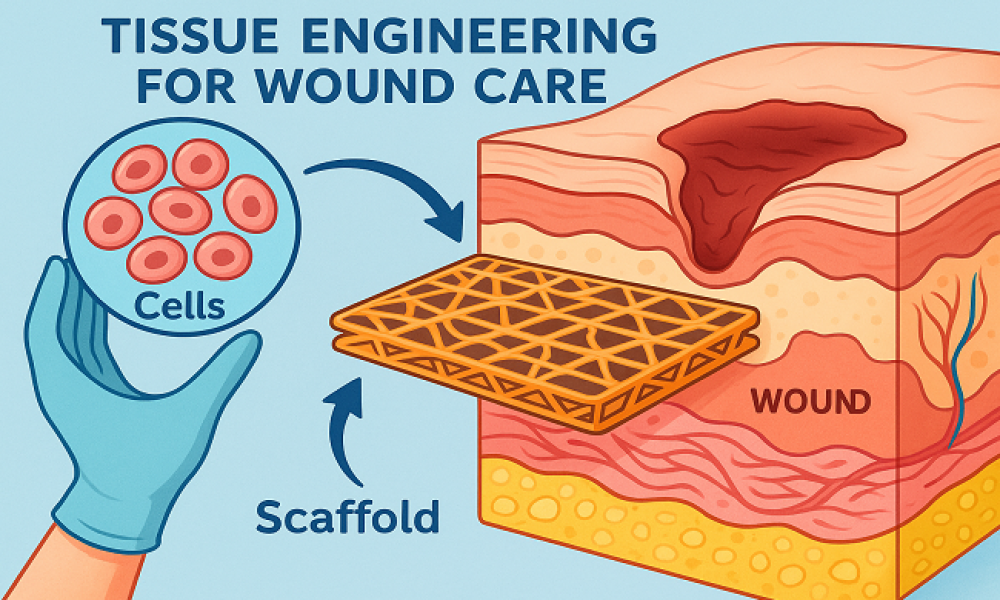
The global healthcare sector is witnessing transformative growth in wound management through the adoption of tissue engineering technologies. Tissue engineering for wound care involves the development of bioengineered skin substitutes and scaffolds that support natural tissue regeneration, offering promising solutions for chronic and complex wounds such as diabetic ulcers, pressure sores, and burns.
These engineered tissues, composed of biomaterials, growth factors, and living cells, are designed to mimic the extracellular matrix and promote cellular repair processes. They have demonstrated significant potential in accelerating healing time, reducing infection risks, and minimizing scarring. Particularly, acellular dermal matrices, hydrogels, and stem cell-seeded scaffolds are gaining traction in both clinical and surgical wound care.
The increasing burden of chronic wounds, driven by the global rise in diabetes and aging populations, is a key factor propelling demand for tissue-engineered products. In parallel, regulatory agencies such as the U.S. FDA and the European Medicines Agency (EMA) are advancing approvals for novel regenerative therapies, further supporting market growth.
Ongoing research is focusing on the integration of nanotechnology, 3D bioprinting, and smart biomaterials to create personalized and responsive wound treatments. With healthcare systems shifting toward regenerative solutions, tissue engineering is expected to play a central role in the next generation of wound care therapies across hospitals, ambulatory centers, and home healthcare settings.
Click here to get a Sample report copy@ https://market.us/report/tissue-engineering-for-wound-care-market/free-sample/

Key Takeaways
- In 2024, the Tissue Engineering for Wound Care market generated a revenue of US$ 69 billion, and it is projected to reach US$ 34.52 billion by 2034, registering a compound annual growth rate (CAGR) of 16.2% during the forecast period.
- By product type, the market is segmented into Scaffold, Tissue Grafts, and Other Products. Among these, Scaffold emerged as the leading category in 2024, accounting for a 53.6% market share.
- Based on material, the market is categorized into Synthetic Materials and Biologically Derived Materials. Synthetic Materials held a prominent share of 41.7%, reflecting their increased usage in engineered tissue constructs.
- When analyzed by type of wound, the market is divided into Chronic Wounds and Acute Wounds. The Chronic Wounds segment dominated the landscape, contributing to 64.9% of the total revenue in 2024.
- In terms of application, the market is segmented into Skin Regeneration, Bone and Cartilage Regeneration, Soft Tissue Repair, and Organ Regeneration. Skin Regeneration led with a 51.2% share, reflecting its critical importance in clinical wound care.
- By end-user, the market includes Hospitals, Specialty Centers and Clinics, and Ambulatory Surgical Centers. Hospitals constituted the major segment, securing a 62.5% share of the market.
- Geographically, North America dominated the global market in 2023, capturing a 38.7% market share due to advanced healthcare infrastructure and strong adoption of regenerative therapies.
Segmentation Analysis
- Product Type Analysis: Scaffolds led the tissue engineering for wound care market with a 53.6% share in 2024. These structures provide a framework for tissue regeneration, especially in chronic and complex wounds. Other products, including growth factors and stem cell therapies, are gaining interest due to their regenerative potential. PolyNovo’s NovoSorb BTM, a biodegradable scaffold, has shown promising results in burn and surgical wound care, and its European expansion reflects the growing demand for advanced scaffold-based wound healing technologies.
- Material Analysis: Biologically derived materials accounted for 58.3% of the market share in 2024. Their natural compatibility with human tissues makes them ideal for promoting cellular attachment and regeneration. These materials mimic the extracellular matrix and support faster healing in chronic wounds. Acellular dermal matrices (ADMs) like AlloDerm® are widely used, especially in reconstructive surgery, due to their structural integrity and ability to integrate with the patient’s tissue, offering superior outcomes in complex wound management.
- Type of Wound Analysis: Chronic wounds dominated the market with a 64.9% share due to their need for long-term and advanced wound care solutions. These wounds often result from diabetes, pressure ulcers, or vascular disorders. Tissue-engineered products such as Apligraf® are widely used in chronic wound care, particularly diabetic foot ulcers, by promoting angiogenesis and cell growth. The growing burden of diabetes globally continues to drive demand for effective tissue regeneration therapies in non-healing chronic wounds.
- Application Analysis: Skin regeneration held the largest share at 51.2%, driven by the rising incidence of burns, diabetic ulcers, and venous leg ulcers. This segment benefits from advanced grafts, scaffolds, and bioactive dressings that replicate the skin’s extracellular matrix. Apligraf®, a bilayered skin substitute, is commonly used in chronic ulcer treatment. It contains human fibroblasts and keratinocytes within a collagen matrix, supporting tissue repair and re-epithelialization, making it a cornerstone product in regenerative skin therapy.
- End-User Analysis: Hospitals led the market with a 62.5% share in 2024, serving as the primary setting for advanced wound care procedures. Equipped with specialized infrastructure and multidisciplinary teams, hospitals utilize tissue-engineered products for both acute and chronic wound treatment. Their use of synthetic and biologically derived scaffolds ensures effective healing outcomes. The integration of regenerative technologies in hospital settings reflects their role in delivering specialized wound management and driving clinical adoption of innovative therapies.
Market Segments
Product Material
- Scaffold
- Tissue Grafts
- Synthetic Grafts
- Allograft
- Autograft
- Xenograft
- Other Products
Material
- Synthetic Material
- Biologically Derived Material
Type of Wound
- Chronic Wounds
- Diabetic Ulcers
- Venous Ulcers
- Pressure Ulcers
- Acute Wounds
- Surgical Wounds
- Traumatic Wounds
- Burn Care
Application
- Skin Regeneration
- Bone and Cartilage Regeneration
- Soft Tissue Repair
- Organ Regeneration
End-User
- Hospitals
- Specialty Centers and Clinics
- Ambulatory Surgical Centers
To Purchase this Premium Report @ https://market.us/purchase-report/?report_id=144433
Regional Analysis
The North America tissue engineering for wound care market holds a dominant 38.7% share, driven by rapid advancements in regenerative medicine and the rising incidence of chronic wounds such as diabetic ulcers and pressure injuries. Technological innovations, including bioengineered skin substitutes, growth factor therapies, and scaffolds, are enhancing the effectiveness of wound healing and driving market adoption.
The increasing prevalence of diabetes and a growing elderly population are key factors contributing to the demand for advanced wound care solutions. In both the United States and Canada, regulatory agencies such as the FDA are offering strong support for tissue-engineered products, facilitating quicker approvals and boosting clinical application.
The adoption of innovative wound care technologies is expanding across hospitals and outpatient settings, as healthcare providers shift toward more effective alternatives to traditional treatments. Moreover, the presence of leading biotechnology companies and continuous investments in R&D are further accelerating market growth and innovation in the region.
Key Players Analysis
Prominent companies active in tissue-engineered wound care comprise Integra LifeSciences Corporation, Organogenesis Inc., Mimetic Bio, Acelity (now part of 3M), Smith & Nephew, Prent Corporation, Advanced Tissue Sciences (acquired by Stryker), Wright Medical Group N.V. (acquired by Stryker), Mölnlycke Health Care, Kerecis, Vericel Corporation, Collagen Matrix Inc., SyntheMed Inc. (now part of Allergan), Axolotl Biologix, Tissue Regenix Group PLC, and others.
Integra LifeSciences is noted for its Integra® dermal regeneration templates, which use a scaffold-based design to stimulate tissue in chronic wounds. Organogenesis offers Apligraf®, a living, cell-based dressing that encourages tissue regrowth in chronic ulcers and burn injuries. Kerecis applies fish-skin graft technology, harnessing the natural architecture of fish collagen to accelerate tissue regeneration and improve healing outcomes in difficult-to-treat wounds.
Market Key Players
- Integra LifeSciences Corporation
- Organogenesis Inc.
- Mimetic Bio
- Acelity (now part of 3M)
- Smith & Nephew
- Prent Corporation
- Advanced Tissue Sciences (acquired by Stryker)
- Wright Medical Group N.V. (acquired by Stryker)
- Molnlycke Health Care
- Kerecis
- Vericel Corporation
- Collagen Matrix, Inc.
- SyntheMed, Inc. (now part of Allergan)
- Axolotl Biologix
- Tissue Regenix Group PLC
- Others
Market Dynamics
- Driver: The rising prevalence of chronic wounds, particularly among diabetic and elderly populations, is a key driver for the tissue engineering for wound care market. Increasing cases of pressure ulcers, venous leg ulcers, and diabetic foot ulcers are creating sustained demand for advanced wound healing solutions, especially those that promote tissue regeneration and reduce healing time.
- Trend: A major trend shaping the market is the growing adoption of bioengineered skin substitutes and scaffold-based therapies. These innovations integrate growth factors, cellular therapies, and regenerative biomaterials to enhance wound healing outcomes.
- Opportunity: Expanding regulatory support and increased funding for clinical research in regenerative medicine offer significant growth opportunities. Emerging economies, particularly in Asia-Pacific and Latin America, are witnessing greater investments in healthcare infrastructure and tissue engineering research, enabling wider access to advanced wound care technologies and accelerating market penetration across underserved patient populations.
Conclusion
The tissue engineering for wound care market is poised for sustained growth, driven by increasing cases of chronic wounds, aging populations, and advancements in regenerative medicine. The integration of scaffold-based therapies, bioengineered skin substitutes, and biologically derived materials has significantly improved clinical outcomes.
With robust regulatory support from agencies like the FDA and EMA and ongoing research in nanotechnology and 3D bioprinting, the sector is evolving toward more personalized, effective wound care. The dominance of North America, coupled with emerging opportunities in Asia-Pacific, underscores the global potential of tissue engineering as a transformative solution in modern wound management.
View More Reports:
Bioanalytical Testing Services Market Eyes USD 11.5 Bn Milestone
Bioanalytical Testing Services Market Eyes USD 11.5 Bn Milestone
Healthcare Interoperability Solutions Market to Hit USD 14.7 Billion by 2034
Healthcare Interoperability Solutions Market to Hit USD 14.7 Billion by 2034
Electrophysiology Market Set for 15.2% CAGR Through 2034



