
Report Overview
Global Healthcare Interoperability Solutions Market size is expected to be worth around US$ 14.7 Billion by 2034 from US$ 3.9 Billion in 2024, growing at a CAGR of 14.2% during the forecast period 2025 to 2034. In 2023, North America led the market, achieving over 41.6% share with a revenue of US$ 1.6 Billion.
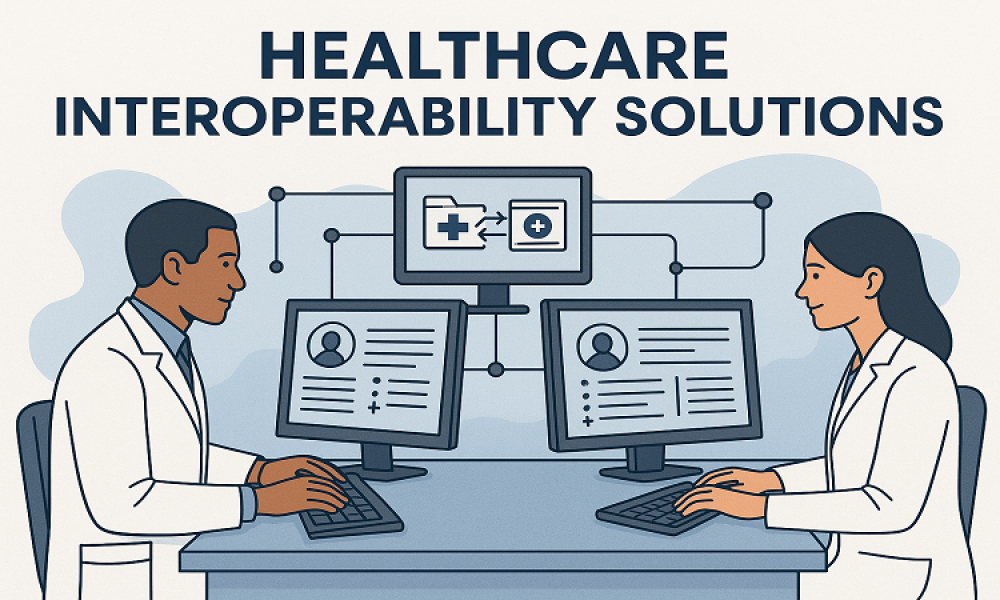
The global healthcare interoperability solutions market is experiencing significant growth, driven by increasing demand for efficient data sharing across healthcare systems. The integration of electronic health records (EHRs), growing patient mobility, and the push for value-based care are prompting healthcare providers to adopt solutions that ensure secure, real-time access to clinical information. Interoperability solutions enable the seamless exchange of health data across hospitals, clinics, laboratories, and pharmacies, improving coordination and outcomes.
Government initiatives such as the U.S. 21st Century Cures Act and the European Health Data Space (EHDS) are playing a critical role in standardizing data exchange frameworks. These regulations aim to enhance transparency, empower patients, and support research and innovation. Additionally, the increasing prevalence of chronic diseases is accelerating the demand for integrated care systems, further driving the adoption of interoperability platforms.
Cloud-based solutions, FHIR (Fast Healthcare Interoperability Resources) standards, and API-driven platforms are being increasingly deployed to support scalable, secure, and compliant data exchange. Key players are investing in AI and machine learning to enhance decision support and predictive analytics within interoperable ecosystems.
As healthcare systems worldwide prioritize digital transformation, interoperability solutions are expected to become foundational to achieving efficient, patient-centered care. This ongoing shift presents significant opportunities for technology providers, health systems, and regulatory bodies working toward a connected healthcare environment.
Unlock Competitive Advantages With Our PDF Sample Report @ https://market.us/report/healthcare-interoperability-solutions-market/free-sample/

Key Takeaways
- In 2024, the global healthcare interoperability solutions market generated a revenue of approximately USD 3.9 billion. It is projected to grow at a compound annual growth rate (CAGR) of 14.2%, reaching an estimated value of USD 14.7 billion by 2034.
- By product type, the market is categorized into solutions and services. Among these, the services segment emerged as the leading contributor in 2023, accounting for 57.3% of the total market share.
- Based on interoperability levels, the market is segmented into foundational, structural, and semantic. Structural interoperability held the largest share, representing 46.8% of the segment in 2023.
- In terms of application, the market is divided into diagnosis, treatment, and others. The diagnosis segment led the market with a dominant revenue share of 49.5%.
- Regarding deployment, the market is bifurcated into cloud-based and on-premise solutions. The on-premise segment held a leading position, contributing 52.6% of the total revenue.
- By end user, the market includes hospitals, ambulatory surgical centers, and others. Hospitals accounted for the highest share at 58.2%, highlighting their crucial role in adopting interoperability systems.
- Regionally, North America dominated the healthcare interoperability solutions market in 2023, securing a leading share of 41.6%, driven by robust healthcare infrastructure and regulatory mandates promoting data standardization.
Segmentation Analysis
- Product Type Analysis: In 2023, the services segment led the market with a 57.3% share, driven by the growing need for support in system integration. The rising demand for consulting, managed services, and system implementation reflects healthcare providers’ focus on streamlining workflows and improving care coordination. As digital transformation accelerates, organizations are prioritizing service partners who ensure regulatory compliance, efficient data exchange, and sustained operational support, thereby boosting long-term demand for interoperability-related services.
- Level Analysis: Structural interoperability accounted for 46.8% of the market in 2023, owing to the urgent need for standardized healthcare data exchange. The expansion of electronic health records (EHRs) and integration of diverse health systems require consistent data formats. Regulatory efforts promoting coding and reporting standards further support this segment. Structural interoperability is expected to improve data consistency, enhance care coordination, and reduce administrative burdens, positioning it as a crucial component in the evolving healthcare information infrastructure.
- Application Analysis: The diagnosis segment led with a 49.5% revenue share, driven by the need for timely and accurate diagnostic data. Integrating lab, imaging, and EHR data enhances clinical decisions and supports personalized medicine. With AI and machine learning increasingly applied to diagnostics, demand for real-time data exchange is rising. Interoperability solutions are becoming essential for diagnostic workflows, ensuring efficient information sharing and supporting improved patient outcomes across care settings.
- Deployment Analysis: The on-premise segment accounted for 52.6% of the revenue, reflecting healthcare institutions’ preference for direct control over data. Organizations handling sensitive patient information prioritize on-premise solutions to ensure data security and compliance with HIPAA and related regulations. These systems are favored in regions with limited internet access or where infrastructure reliability is low. Customizability and enhanced privacy features continue to drive sustained demand for on-premise deployment models in the healthcare interoperability landscape.
- End-user Analysis: Hospitals dominated the end-user segment with a 58.2% share, due to their advanced digital infrastructure and need for integrated patient data. Hospitals are early adopters of interoperability solutions as they seek to optimize operations, reduce duplication, and improve care quality. The increasing prevalence of chronic diseases and complex cases requires seamless data exchange across departments. Investment in robust interoperability systems enables hospitals to meet these demands while enhancing clinical efficiency and patient engagement.
Market Segments
By Product Type
- Solutions
- HIE Interoperability
- Enterprise Interoperability
- EHR Interoperability
- Others
- Services
By Level
- Structural
- Semantic
- Foundational
By Application
- Diagnosis
- Treatment
- Others
By Deployment
- Cloud Based
- On-premise
By End-user
- Hospitals
- Ambulatory Surgical Centers
- Others
Buy This Premium Research Report – https://market.us/purchase-report/?report_id=142481
Regional Analysis
North America led the healthcare interoperability solutions market with a revenue share of 41.6% in 2023. This dominance is driven by widespread adoption of electronic health records (EHRs) and health information exchanges (HIEs), enhancing data sharing among providers. Supportive regulatory initiatives, such as those from CMS, continue to promote interoperability to improve care quality and reduce costs.
Additionally, the American Telemedicine Association reported telehealth usage remains 38 times higher than pre-pandemic levels, emphasizing the role of interoperable systems in digital care delivery.
Asia Pacific is anticipated to register the highest CAGR during the forecast period. The region’s growth is fueled by a rapidly aging population and increasing chronic disease burden. For instance, by 2024, over 21% of China’s population will be aged 60 and above. Government initiatives like India’s National Digital Health Mission (NDHM) are accelerating digital health infrastructure, thereby fostering the adoption of interoperability standards and integrated care models.
Key Player Analysis
Key players in the healthcare interoperability solutions market are actively developing advanced software platforms and application programming interfaces (APIs) to facilitate seamless data exchange across diverse healthcare systems. Emphasis is placed on cloud-based technologies that provide secure, real-time access to patient data, thereby supporting informed clinical decision-making.
To enhance market presence, companies are engaging in strategic collaborations with hospitals, insurers, and technology firms. These partnerships accelerate the adoption of integrated systems and promote interoperability across care settings. A strong focus on regulatory compliance, including adherence to data privacy laws such as HIPAA, remains essential to building stakeholder trust and ensuring consistent market growth.
Artificial intelligence and machine learning are increasingly being leveraged to strengthen data analytics and predictive capabilities within interoperability frameworks. Among the key market participants, Cerner Corporation stands out for its robust portfolio of interoperability solutions. The company delivers secure, scalable platforms that streamline health data exchange, reinforcing its leadership through innovation and industry-aligned partnerships.
Top Key Players
- Cerner Corporation
- KMS Healthcare
- Google Cloud
- Allscripts Healthcare Solutions
- IBM Watson Health
- McKesson Corporation
- Epic Systems Corporation
- InterSystems
Market Dynamics
- Driver: The primary driver for the healthcare interoperability solutions market is the increasing adoption of electronic health records (EHRs) and the need for real-time patient data access. Healthcare providers aim to improve clinical efficiency, reduce errors, and enhance patient outcomes through seamless information exchange. Regulatory mandates promoting data standardization and integration, such as the 21st Century Cures Act in the U.S., further accelerate the implementation of interoperability systems across healthcare facilities and support sustained market expansion.
- Trend: A key trend shaping the market is the integration of artificial intelligence (AI) and machine learning (ML) into interoperability platforms. These technologies enable predictive analytics, personalized care, and automated decision support, enhancing clinical workflows. Additionally, the shift toward cloud-based and API-driven interoperability solutions is gaining momentum, offering greater scalability, lower infrastructure costs, and improved data accessibility. This technological advancement aligns with the broader digital transformation efforts in the healthcare sector, driving innovation and system efficiency.
- Opportunity: The growing demand for integrated care models presents a significant opportunity for the interoperability market. As healthcare systems globally move toward value-based care, the need for coordinated patient information across various providers becomes critical. Emerging markets, particularly in Asia Pacific and Latin America, are investing in digital health infrastructure. Government-led initiatives to create unified health records and promote health data exchange standards further support the widespread adoption of interoperability solutions in these developing regions.
Conclusion
The healthcare interoperability solutions market is poised for robust growth, fueled by the global push toward digital health integration, regulatory support, and the rising need for coordinated care. Increasing adoption of EHRs, the proliferation of AI-driven analytics, and the demand for secure, real-time data exchange are transforming clinical workflows and enhancing patient outcomes.
With North America leading in market share and Asia Pacific showing the fastest growth, opportunities abound across developed and emerging regions. As healthcare systems prioritize interoperability, market players are well-positioned to drive innovation, compliance, and long-term value in a rapidly evolving healthcare environment.
View More Reports:
Smart Fitness Apps Market Technology Shows USD 8 Billion By 2033
Smart Fitness Apps Market Technology Shows USD 8 Billion By 2033
Healthcare Predictive Analytics Market Set for 24.1% CAGR Growth
Healthcare Predictive Analytics Market Set for 24.1% CAGR Growth
Bioanalytical Testing Services Market Eyes USD 11.5 Bn Milestone
Bioanalytical Testing Services Market Eyes USD 11.5 Bn Milestone



