
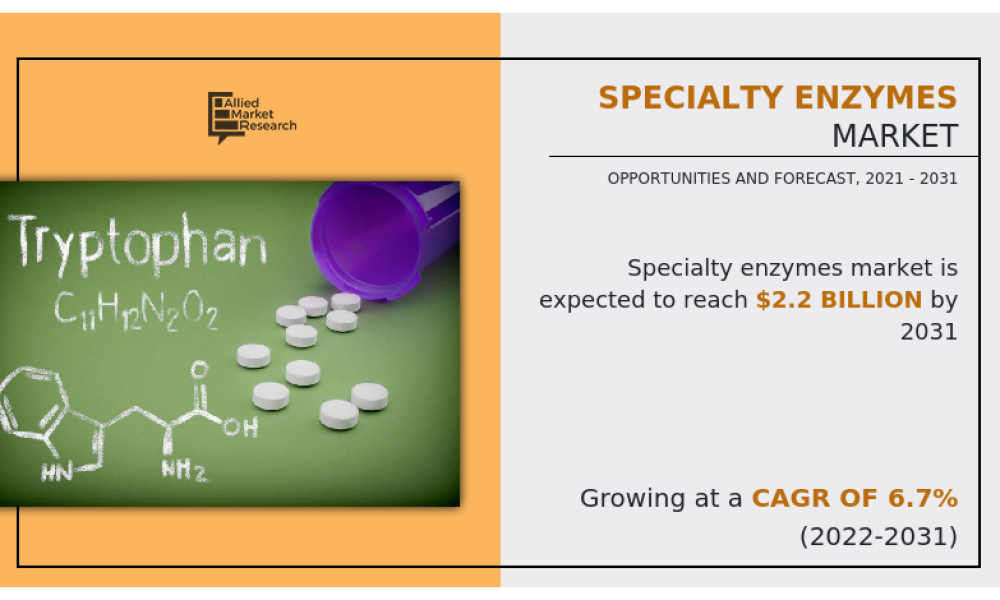
The global specialty enzymes market is on a steady upward trajectory, having been valued at $1.2 billion in 2021 and projected to reach $2.2 billion by 2031, growing at a CAGR of 6.7% from 2022 to 2031. These enzymes are biologically active proteins that act as catalysts for biochemical reactions in living organisms, without being consumed in the process. From enhancing drug formulation to supporting diagnostics and biotechnology R&D, specialty enzymes are becoming increasingly critical in a wide range of applications.
What are Specialty Enzymes?
Specialty enzymes are tailored enzymes used beyond traditional food and detergent applications. They are designed for precise functions in pharmaceuticals, diagnostics, biotechnology, and research. These enzymes help catalyze specific biochemical reactions essential for drug development, disease diagnosis, and biotechnological innovations. Key examples include proteases, lipases, carbohydrases, polymerases, and nucleases.
In human health, enzymes help digest food, transform energy, and maintain cell function. Deficiency or dysfunction of enzymes can result in disorders such as phenylketonuria or albinism. Their vital biological functions, along with their expanding roles in healthcare and industry, are major drivers of this market.
Key Market Drivers
1. Rising Prevalence of Chronic Diseases
A significant factor driving market growth is the increasing prevalence of chronic diseases such as cancer, diabetes, rheumatoid arthritis, and cardiovascular conditions. Enzymes are widely used in drug formulation and diagnostics, both of which are critical for disease detection and treatment.
2. Expansion of the Food Industry
Enzymes such as lipases, amylases, proteases, and glucose oxidase are extensively used in the food processing industry. These enzymes improve food quality, enhance flavor, and increase shelf life. As consumer demand for functional and probiotic foods grows, so too does the market for specialty enzymes in this sector.
3. Growth in Biotechnology and R&D
Biotechnology R&D, especially in gene therapy and molecular biology, heavily depends on enzymes like polymerases and nucleases. These enzymes are essential tools for DNA amplification, sequencing, cloning, and gene editing, all of which are crucial for developing next-generation therapies.
4. Medical Advancements and Diagnostics
Specialty enzymes are also used to diagnose diseases, from infectious illnesses to metabolic disorders. Their use in point-of-care testing (POCT) and lab diagnostics is expanding with the increase in global health awareness and access to medical testing.
Market Segmentation Insights
By Type
Carbohydrases led the market in 2021 due to their widespread use in dietary supplements and digestive aids.
Polymerases and nucleases are projected to be the fastest-growing segment, driven by increasing demand for gene therapies for cancer, cystic fibrosis, hemophilia, and more.
By Application
Pharmaceuticals dominated in revenue due to the vital role enzymes play in drug synthesis, prodrug activation, and therapeutic applications.
Diagnostics is forecasted as the fastest-growing segment, fueled by the global increase in diagnostic procedures for chronic and infectious diseases.
By Source
Microorganisms were the largest revenue-generating source, with enzymes derived from bacteria and fungi used extensively in biotech and pharmaceuticals.
Animal-derived enzymes are expected to grow the fastest, supported by rising awareness of digestive disorders and increased use of animal enzymes as supplements.
By Region
North America led the market in 2021 due to strong pharmaceutical infrastructure, increasing R&D, and the presence of major enzyme manufacturers.
Asia-Pacific is expected to register the highest growth during the forecast period. The surge in cancer cases, expanding biotech sector, and increased government support for healthcare innovations in countries like India, China, and Japan are key drivers.
Key Players and Strategic Developments
Prominent companies shaping the specialty enzymes market include:
Alphazyme LLC
Amano Enzyme
Antozyme Biotech
Enzyme Development Corporation
BBI Solutions
Biocatalyst
Novoenzymes
Specialty Enzymes and Probiotics
International Flavors and Fragrances Inc.
Enzyme Supplies Ltd.
These players focus on product innovation, strategic partnerships, and geographic expansion to maintain a competitive edge. Many are investing in enzyme immobilization technologies and expanding their presence in emerging markets.
Opportunities and Challenges
Opportunities
Rise in personalized medicine: Specialty enzymes enable more accurate diagnostics and therapeutic formulations tailored to individual patients.
Innovation in enzyme engineering: Advanced technologies such as protein engineering and synthetic biology are opening new avenues for enzyme customization.
Emerging markets: Asia-Pacific, Latin America, and parts of Africa present untapped opportunities for expansion due to rising healthcare investments and demand for novel therapies.
Challenges
Biosimilar complexities: Developing enzyme-based biosimilars is technically demanding due to structural and functional variability.
Regulatory hurdles: Stringent guidelines for the approval of medical-grade enzymes can delay product launches.
Conclusion
The specialty enzymes market is undergoing a significant transformation, driven by increasing applications in medicine, food, diagnostics, and biotechnology. As global health challenges mount, these biologically potent catalysts are becoming vital tools for therapeutic advancement and industrial innovation. With strong support from healthcare trends and technological innovation, the market is well-positioned to cross $2.2 billion by 2031, offering ample growth opportunities for stakeholders and investors alike.




