
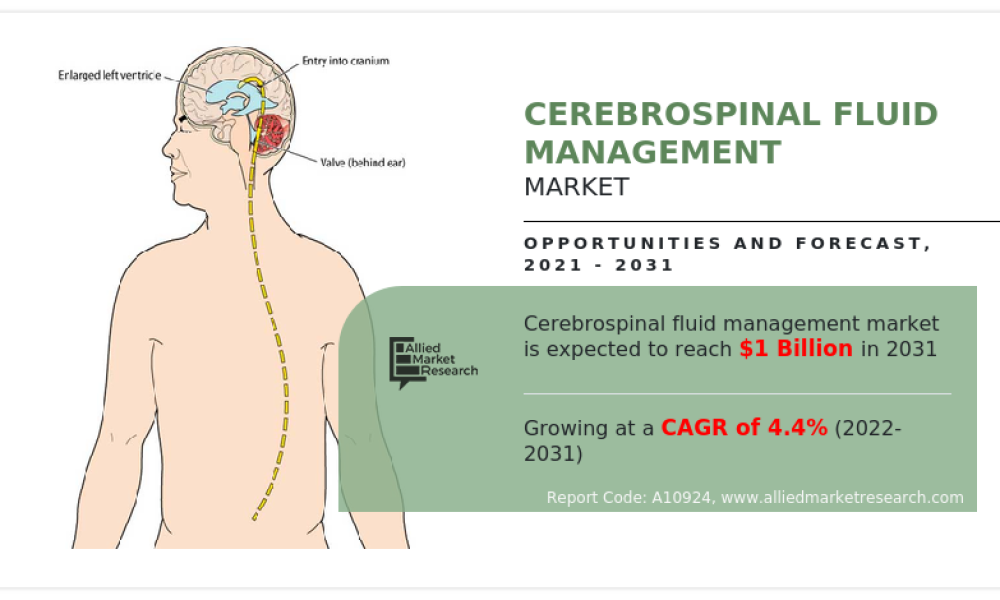
The global cerebrospinal fluid (CSF) management market is poised for steady growth, climbing from a valuation of $0.67 billion in 2021 to $1.03 billion by 2031, at a CAGR of 4.4% from 2022 to 2031. This market expansion is driven by the increasing prevalence of neurological disorders such as hydrocephalus, brain injuries, and neuroinflammatory conditions, alongside growing awareness and adoption of advanced CSF management solutions globally.
Understanding CSF and Its Clinical Importance
Cerebrospinal fluid is a clear, colorless liquid that surrounds the brain and spinal cord, providing mechanical protection, metabolic support, and waste removal. Typically, the adult CSF volume is around 150 ml, with 125 ml in the subarachnoid space and 25 ml in the ventricles. When CSF accumulates excessively—due to increased production, impaired absorption, or blockage—it results in hydrocephalus, a life-threatening condition that can lead to brain damage.
CSF management involves the surgical implantation of devices like shunts or drainage systems to regulate fluid pressure, relieve symptoms, and prevent neurological deterioration.
Key Market Drivers
1. Surge in Neurological Conditions
The rising incidence of hydrocephalus, traumatic brain injuries, Alzheimer’s disease, and multiple sclerosis has led to higher demand for CSF management devices. According to the National Institutes of Health (2022), hydrocephalus affects approximately 85 out of every 100,000 people, with significantly higher rates in the elderly.
2. Technological Innovations
The launch of next-generation devices such as the M.blue valve by Aesculap in collaboration with Christoph Miethke GmbH in 2020 has revolutionized CSF management. These newer solutions feature gravitational and pressure-regulating technologies that enhance clinical outcomes while reducing complications.
3. Growth in Emerging Markets
Countries like India, China, and Brazil are showing increased adoption of CSF management systems due to:
Expanding healthcare infrastructure
Increased awareness of neurological disorders
Government investments in medical technology
Cost-effective treatment availability
For example, KIMS Hospital in Hyderabad offers brain shunt procedures starting at significantly lower costs compared to Western markets, making treatment more accessible to a broader population.
4. Aging Global Population
Aging is a key risk factor for neurological disorders. The elderly—particularly those above 80—show the highest incidence of hydrocephalus. With the world’s population over 65 expected to double by 2050, the need for effective CSF management solutions is growing rapidly.
Market Restraints
Despite promising growth, several challenges could impede market expansion:
Complications with shunt devices such as infections, blockages, and malfunctions
Limited shunt lifespan, requiring frequent revisions or replacements
Growing interest in alternative surgical procedures like endoscopic third ventriculostomy (ETV), which eliminate the need for lifelong device dependency
However, ongoing product innovation and enhanced surgical techniques are addressing many of these limitations.
Segmentation Insights
By Type: CSF Shunts vs. External Drainage Systems
CSF Shunts accounted for the largest market share in 2021. Their widespread use in managing chronic hydrocephalus and growing availability of advanced shunt models support continued dominance.
External Drainage Systems are often used in acute care settings, such as for patients with trauma or infections, and serve as a temporary intervention.
By Age Group: Pediatric vs. Adult
The adult segment dominated the market in 2021 and is projected to maintain leadership, driven by:
Higher neurological disease prevalence among adults and elderly
Increased surgical admissions in hospitals
Better reimbursement policies in developed nations
The pediatric segment also holds strong relevance, especially in congenital hydrocephalus cases, but accounts for a smaller share.
Regional Analysis
North America
In 2021, North America held the largest market share due to:
High awareness and diagnosis rates
Advanced healthcare systems
Strong presence of key market players like Medtronic, Integra LifeSciences, and Natus Medical
Asia-Pacific
Expected to register the highest CAGR during the forecast period, driven by:
Rapidly growing populations in China and India
Increasing medical tourism and investment in neurosurgical technologies
Government initiatives to improve neurocritical care services
Europe and LAMEA
Europe continues to be a strong market due to established healthcare infrastructure and research in neurology. LAMEA (Latin America, Middle East, and Africa), while smaller, shows potential due to expanding access to healthcare and favorable demographic trends.
Competitive Landscape
The CSF management market is moderately consolidated, with a few major players dominating global supply. Notable companies include:
Medtronic plc
B. Braun Melsungen AG
Integra LifeSciences Holdings Corporation
Natus Medical Incorporated
Delta Surgical
Spiegelberg GmbH & Co. KG
Strategic Developments
Acquisition Activity: In July 2019, Integra LifeSciences acquired Arkis Biosciences, strengthening its portfolio in neurocritical care and catheter-based CSF technologies.
Product Launches: Companies continue to invest in R&D to develop more durable, programmable, and complication-resistant devices.
Future Outlook
The future of the cerebrospinal fluid management market looks promising with advances in:
Smart shunt technologies
Biocompatible materials
Remote monitoring systems
Additionally, robotic-assisted neurosurgery and 3D-printed devices may open new frontiers in personalized and precision neurocare.
Conclusion
With the world facing a rising tide of neurological disorders—especially in aging populations—the need for effective and affordable CSF management solutions is more pressing than ever. Supported by technological progress, emerging market expansion, and increased healthcare investments, the global cerebrospinal fluid management market is set for steady and sustainable growth through 2031.




