
Introduction: Understanding the Water Soluble Fertilizers Market
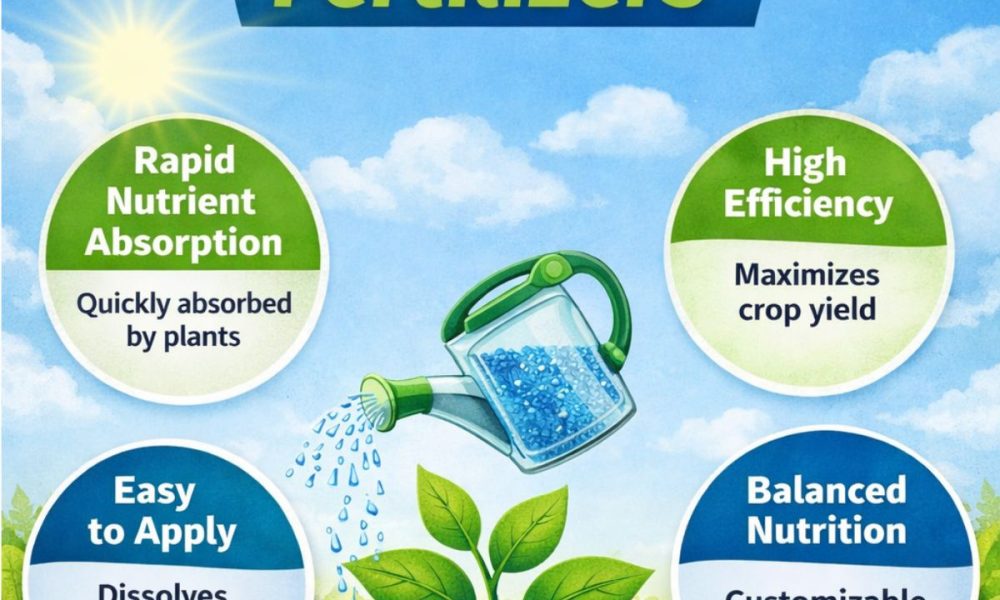
In the evolving landscape of modern agriculture, water-soluble fertilizers (WSFs) have emerged as a key solution for enhancing crop nutrient efficiency, optimizing yields, and supporting sustainable farming practices. Unlike conventional granular fertilizers, water-soluble fertilizers dissolve readily in water and can be applied through fertigation systems and foliar sprays, allowing nutrients to be delivered directly to plant roots with minimal loss. This feature not only improves nutrient uptake but also reduces environmental runoff and aligns with precision agriculture trends. The global demand for WSFs is being driven by the imperative to increase food production on limited arable land while adopting efficient resource usage methods to meet the needs of a burgeoning global population.
Market Size and Growth Forecast
According to the latest Persistence Market Research analysis, the global water-soluble fertilizers market is projected to grow significantly over the coming decade. The market is estimated to reach a value of approximately USD 23.0 billion by 2026, and it is forecast to expand further to around USD 32.7 billion by 2033, representing a compound annual growth rate (CAGR) of about 6.0% during this period.
This growth trajectory reflects strong agricultural demand driven by increasing adoption of precision nutrient management, rising food security concerns, and the need for technologies that maximize nutrient use efficiency. As global population projections continue upward—estimated to reach nearly 9.7 billion by 2050—pressure on agricultural systems to produce more from less land is intensifying. The efficient nutrient delivery offered by WSFs positions them as a strategic tool for modern crop production.
Get Your FREE Sample Report Instantly – Click Now: https://www.persistencemarketresearch.com/samples/33216
Drivers of Market Expansion
Precision Agriculture and Fertigation Adoption
One of the most significant drivers of the WSF market is the shift toward precision agriculture and integrated fertigation systems. These technologies enable farmers to deliver nutrients precisely at the right growth stages and in quantities tailored to crop needs. By dissolving fertilizers in irrigation water and applying them through drip or micro-sprinkler systems, farmers can minimize waste and maximize nutrient uptake efficiency—often achieving over 90% nutrient utilization compared to 40–60% for traditional fertilizers.
Such precision applications not only improve yield outcomes by 20–30% but also conserve water and reduce environmental impacts, which is particularly beneficial in water-scarce regions adopting modern irrigation technologies.
Rise in High-Value and Specialty Crops
The expansion of horticultural and specialty crop cultivation, including fruits, vegetables, ornamentals, and greenhouse crops, has boosted demand for WSFs. These high-value crops require fine nutrient management to maintain quality and marketability. In controlled environments such as greenhouses and vertical farms, WSFs have become indispensable due to their rapid solubility and precise dosing capabilities, leading to enhanced crop performance and resource efficiency.
Additionally, global soil micronutrient deficiencies—such as zinc and boron shortages in many regions—have increased the need for micronutrient-enriched soluble formulations, further expanding market potential.
Environmental and Regulatory Pressures
Environmental sustainability and regulatory frameworks are also shaping market demand. With stricter nutrient management regulations in regions like North America and Europe, farmers are increasingly adopting water-soluble fertilizers to reduce nutrient runoff and improve compliance with environmental standards. For instance, directives aimed at reducing nutrient pollution encourage efficient fertilizer use, making WSFs an attractive option for environmentally conscious agriculture.
Get a Customized Market View in One Click: https://www.persistencemarketresearch.com/request-customization/33216
Challenges and Market Restraints
Raw Material Price Volatility
Despite strong growth prospects, the WSF market faces certain challenges—chief among them being raw material price volatility. Many water-soluble fertilizers rely on feedstocks like natural gas and phosphate minerals, which have experienced significant price fluctuations due to global energy market shifts and geopolitical tensions. These cost pressures can compress manufacturer margins and create pricing challenges for farmers, particularly in price-sensitive regions.
Infrastructure and Capital Barriers
The deployment of efficient fertigation systems often requires significant upfront investments in irrigation infrastructure and technical know-how, which can be prohibitive for smallholder farmers in developing economies. While larger commercial farms can adopt advanced systems, the high initial investment barriers limit widespread adoption among resource-constrained agricultural communities.
Import Dependencies
In several major agricultural markets, including India, water-soluble fertilizers are largely imported due to limited local manufacturing capacity. This dependency on foreign supply exposes local markets to international price fluctuations and supply disruptions—a key concern for food-producing economies seeking to strengthen self-sufficiency and reduce import reliance.
Regional Insights
Asia Pacific: Dominating the Market
The Asia Pacific region holds the largest share of the global water-soluble fertilizers market, accounting for over 40% of total market value. Countries like China and India lead regional growth, driven by government initiatives to promote efficient agricultural inputs, expanding irrigated acreage, and rising cultivation of cash and horticultural crops. Subsidies and rebate programs in certain countries further stimulate adoption and distribution of WSF products.
North America: Innovation and Sustainability Leadership
In North America, advanced precision farming techniques and stringently enforced environmental regulations have accelerated the use of WSFs, especially in high-value crop sectors such as vegetables and specialty produce. The region also leads in adoption of controlled environment agriculture methods that benefit from water-soluble application systems.
Europe: Regulatory Compliance and Specialty Crops
Europe’s market is shaped by harmonized fertilizer regulations emphasizing low heavy-metal content and nutrient efficiency. Countries such as Germany, France, and the UK leverage advanced agricultural technologies, supported by EU policies targeting reduced nutrient pollution and sustainable farming.
Future Outlook and Opportunities
Technological Innovation
Innovation in fertilizer formulations—such as controlled-release soluble fertilizers and nano-enhanced blends—represents a significant growth opportunity. These advanced products offer prolonged nutrient availability and better performance in stress conditions like drought or saline soils.
Urban and Vertical Farming
The rapid expansion of urban agriculture and vertical farming presents new market avenues, where precise nutrient management is essential for year-round production in constrained spaces. Water-soluble fertilizers are ideally suited to these systems due to their adaptability and ease of integration with hydroponic and aeroponic platforms.
Policy Support and Sustainability Goals
Government policies promoting efficient fertilizer technologies and sustainable agricultural practices will continue to drive interest in WSFs. By aligning with environmental objectives and food security targets, water-soluble fertilizers are positioned as key enablers of future agronomic performance.
For In-Depth Competitive Analysis, Buy Now: https://www.persistencemarketresearch.com/checkout/33216
Conclusion
The water soluble fertilizers market is on a steady growth trajectory, fueled by the twin imperatives of precision agriculture and sustainability. With global agricultural systems under pressure to produce more with fewer resources, these fertilizers—capable of delivering nutrients precisely where and when plants need them—offer unmatched value. While challenges like cost volatility and infrastructure barriers remain, ongoing innovations and favorable policy environments are expanding opportunities. As global demand for efficient, high-performance crop inputs continues to rise, the water-soluble fertilizers market is set to play a pivotal role in shaping the future of agriculture.




