
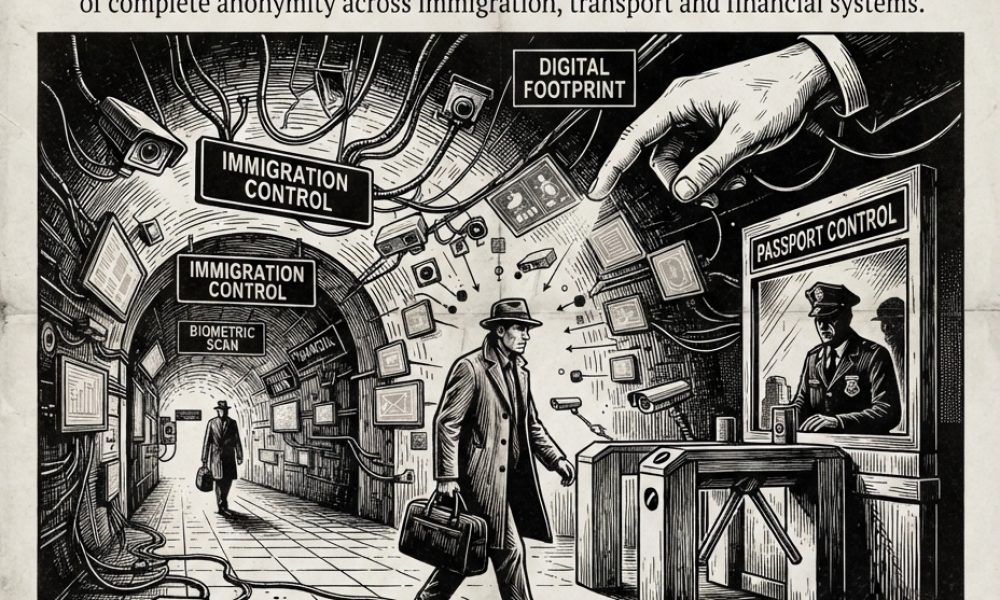
Travelers seeking discretion must distinguish reduced public exposure from claims of complete anonymity across immigration, transport, and financial systems.
WASHINGTON, DC, October 19, 2026 — Promises of anonymous international travel require careful examination because keeping an itinerary out of public view is fundamentally different from preventing airlines, border authorities, financial institutions, and other authorized organizations from identifying the person undertaking a journey.
For travelers concerned about personal security, commercial confidentiality, or unwanted attention, the practical issue is whether a service provides specific, lawful privacy protections with clearly explained limitations, rather than an expansive assurance that cross-border movement leaves no identifiable records.
The distinction matters because privacy can remain valuable even when Identification is required. At the same time, misleading descriptions can encourage customers to purchase expensive arrangements without understanding which Information will still be collected, retained, or disclosed during their travels.
Defining Who the Traveler Wants Privacy From
A meaningful assessment begins by identifying the audience from which Information should be protected, because reducing exposure to strangers, commercial marketers, business competitors or intrusive acquaintances involves different considerations from the Identification procedures applied by immigration authorities.
Someone who wants to avoid broadcasting a family holiday may need better control over public posts and shared itineraries. In contrast, an executive planning confidential meetings may need contractual safeguards governing how advisers and travel providers handle sensitive arrangements.
Neither objective requires a promise that the traveler becomes unknown to every organization involved, and presenting these goals accurately helps distinguish a credible confidentiality service from marketing that leaves the meaning of anonymity deliberately undefined for prospective customers.
A useful service description should therefore identify the Information being protected, the people or organizations whose access will be restricted, the measures used to provide that Protection, and the circumstances in which disclosure may nevertheless occur.
Travel Records Can Exist Before Departure
International travel can generate identifying Information before a passenger reaches an airport, making it important to examine the booking and reporting process rather than treating the physical passport inspection as the only moment when personal Information becomes relevant.
The Canada Border Services Agency’s explanation of Advance Passenger Information and Passenger Name Record data identifies separate categories of Information used for risk assessment, including biographical and travel-document details within the advance passenger Information collected for applicable air travel.
Reservation Information and travel-document Information serve related but different functions, and their existence shows why avoiding a public announcement about a journey does not mean the carrier or responsible border agency lacks Information about the traveler.
For someone evaluating a privacy proposal, the practical question is which records the proposed service can legitimately influence, because control over promotional communications or public exposure should never be confused with control over Information required by an applicable government reporting system.
Confidentiality Does Not Mean Information Was Never Collected
A confidential record can remain identifiable even when access is restricted, so customers should distinguish between Information that is never requested, Information that is collected for a defined purpose, and Information that is subsequently protected against unauthorized disclosure.
This distinction changes how a privacy promise should be evaluated, because an organization may handle sensitive details responsibly while still needing them to deliver a service, resolve a dispute,, or meetoperational requirementss.
Travelers reviewing a proposal should look for specific explanations of collection, access, retention, and sharing, since a general statement about discretion offers little practical guidance when several providers will participate in arranging or delivering the same journey.
The strongest questions concern actual responsibilities: who receives a passport copy, who can retrieve a booking, which subcontractors receive personal details, and which organization will respond if the traveler discovers an error or an unexpected disclosure involving those records.
Modern Passports Establish Identity Rather Than Conceal It
A passport should be understood as an identity and nationality credential, so claims that its sophistication produces anonymity are conceptually misleading, since the document’s purpose is to support examination of the person presenting it for international travel.
The Amicus International Consulting guide to modern passport security distinguishes physical security features, electronic Information, and Authentication checks, explaining why an attractive booklet or a readable chip cannot independently settle every question about a document or its holder.
That distinction matters when evaluating privacy marketing, because evidence about document construction or electronic integrity should not be expanded into an assurance that the traveler will avoid Identification, additional questioning, or scrutiny of the circumstances surrounding a journey.
A credible explanation should keep each claim within its demonstrated scope, so customers understand what a verification result establishes without encouraging them to infer that a successful document inspection gives control over unrelated airline, immigration, or financial records.
Additional Documents Require Clear Explanations
A proposal involving an additional passport, another nationality, or a legal name change should explain the specific lawful process and practical purpose, rather than treating the existence of different documents as sufficient evidence that previous records are irrelevant.
The appropriate questions concern the issuing Authority, eligibility, supporting evidence, and applicable disclosure requirements, with particular attention to whether the adviser has explained how the traveler should accurately describe their circumstances when completing forms or responding to official questions.
Customers should be especially cautious about assurances that a document automatically separates every aspect of an individual’s history, because such an assertion reaches far beyond the narrower proposition that a particular credential was issued through a legitimate process.
Professional advice should address the specific jurisdictions and circumstances involved, and any uncertainty about previous names, nationality Information, or supporting records should be resolved through qualified guidance rather than by assuming a privacy package provides a universal answer.
Financial Privacy Has Its Own Boundaries
Funding a journey introduces a separate set of privacy questions, and a promise about discretion in travel arrangements should not be interpreted as a guarantee that a regulated financial institution will provide services without establishing the customer’s identity.
The Basel Committee’s guidance on preventing misuse of banking services explains that confidential numbered accounts should not function as anonymous accounts, with identity verification and appropriate access by bank personnel remaining part of the due diligence framework.
This distinction shows that confidentiality and Identification can coexist, since restricting how widely customer Information circulates within an institution does not mean the institution lacks the Information or is relieved of its responsibilities in the relationship.
Any provider linking travel privacy to banking arrangements should explain these services separately, giving the customer a clear account of each institution’s role rather than letting a broad promise of anonymity replace an examination of the actual requirements.
Service Providers Should Describe What They Control
A travel adviser may influence its own communications, internal access arrangements and choice of suppliers, but a credible contract should identify the limits of that influence whenever another organization makes independent decisions about collecting or handling Information.
Assessing complete confidentiality becomes difficult when it fails to distinguish the adviser’s own commitments from the practices of airlines, accommodation providers, payment services, and other participants whose involvement may be necessary to complete the booking.
Customers can make the discussion more concrete by asking for a written description of the service, including what Information will be supplied to third parties and how the adviser evaluates whether those parties can meet the agreed privacy expectations.
A provider’s willingness to explain these boundaries offers a more useful basis for evaluation than dramatic language about invisibility, particularly when the proposed arrangement involves substantial fees, sensitive documents, or claims that cannot be independently tested before payment.
Digital Discretion Should Match the Actual Concern
For travelers whose main concern is unwanted public attention, a sensible assessment can focus on avoidable exposure, including voluntarily publishing itineraries, freely sharing travel photographs, and unnecessarily distributing booking details to people who don’t need them.
These choices address a different problem from official Identification, and their value should be measured against the traveler’s stated concern rather than promoted as evidence that all records associated with a journey have disappeared or become impossible to connect.
A proportionate privacy plan might establish who needs access to an itinerary, how changes will be communicated, and which Information should remain private until after the journey, with particular attention to the preferences of accompanying family members or colleagues.
The aim should be a manageable set of practices the traveler understands and can maintain, because complicated arrangements offer little reassurance when their purpose is unclear, or the customer cannot explain which specific exposure they are meant to reduce.
Passport Copies Deserve Their Own Privacy Review
A service marketed around discretion should be prepared to explain how it handles identity documents, especially when the customer is asked to provide passport scans, personal photographs, or other Information whose sensitivity extends beyond a single proposed journey.
Before submitting those materials, a traveler should establish the reason for collection, the intended recipient, the available transfer method, and the expected retention period, and ask whether the provider can accomplish its stated purpose with less Information.
The assessment should also address what happens after the engagement ends, including how the customer can raise a concern, request clarification about retained material, or determine which other organizations received copies during the course of the work.
These questions do not assume every request is improper. Still, they ensure the provider’s practices reflect a promise of privacy rather than limiting it to promotional language about the eventual destination or travel arrangements.
Independent Verification Matters More Than Reassurance
Claims about official Authority, special access, or guaranteed outcomes should be supported by evidence that can be independently evaluated, because persuasive presentations and confident explanations do not establish what a provider is authorized or technically capable of doing.
When a proposal depends on a particular government process, the customer should be able to identify that process and understand the relevant eligibility conditions, rather than being asked to regard secrecy itself as evidence that the arrangement is legitimate.
Commercial confidentiality can protect sensitive business Information without preventing a provider from explaining its contractual obligations, the identity of the contracting entity, and the basis for statements that materially affect the customer’s decision to proceed with the service.
If essential questions remain unanswered, keep those gaps visible in the assessment, since replacing uncertainty with reassuring language makes it harder for the traveler to compare the proposed benefit with the financial commitment and Information being requested.
A Privacy Promise Should Be Measurable
A useful agreement should describe measurable outcomes, such as restricted internal access to an itinerary, agreed handling procedures for identity documents, or clear limits on promotional use of customer Information, rather than an undefined promise of disappearance.
The document should also distinguish commitments within the provider’s control from matters dependent on external organizations, so customers can identify a service failure without assuming every request for Identification breaches the promised arrangement.
Customers should examine how complaints will be handled, what remedy applies if an agreed obligation is not met, and whether important exclusions are presented clearly enough to understand before money or sensitive personal Information changes hands during onboarding.
This approach turns privacy from an appealing but ambiguous sales concept into specific expectations, allowing the traveler to evaluate whether the proposed service addresses the actual concern and whether the promised work justifies its cost.
Discretion Remains Valuable When Its Limits Are Clear
The choice between public exposure and total anonymity is false, because travelers can pursue meaningful confidentiality while recognizing that legitimate journeys may require identifying themselves to organizations responsible for transportation, admission, accommodation, or financial services along the way.
A responsible privacy discussion should therefore begin with the traveler’s circumstances and desired Protection, then identify realistic measures and unresolved limitations without suggesting that one document, service provider, or contractual undertaking can determine how every participating institution behaves.
For businesses selling travel-related privacy services, clear language is central to credibility, especially when customers may interpret ordinary references to discretion as promises of invisibility that the written agreement, underlying process, or available evidence does not support.
The most defensible promise is therefore a precise one: protect Information where you can lawfully and practically do so, explain who still needs to identify the traveler, and ensure the customer understands those boundaries before making consequential decisions.




