
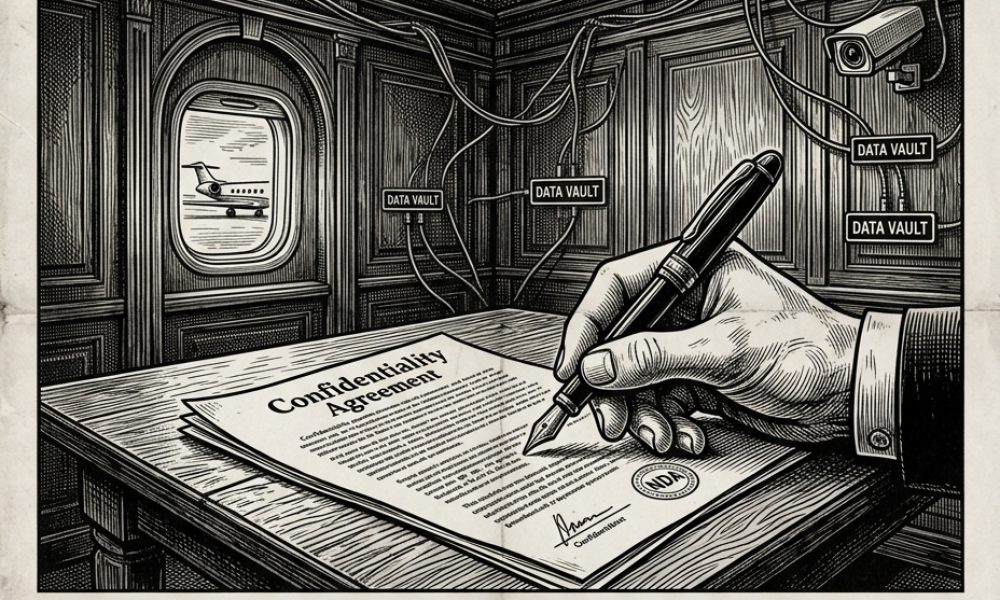
Confidentiality agreements can set expectations for service providers, but their scope, enforcement, and exceptions deserve attention before sharing sensitive Information.
WASHINGTON, DC, October 19, 2026 — A confidentiality agreement can help define how a luxury travel provider handles sensitive Information, but its practical value depends on the obligations it creates, the organizations it covers, and the safeguards supporting those commitments.
For travelers sharing passport copies, family details, or confidential itineraries, a signed nondisclosure agreement should start a discussion about Information handling rather than end questions about where records go and who can access them.
An agreement may address unauthorized disclosure while leaving important operational matters unclear, including whether subcontractors receive documents, how employees obtain access, and what happens to personal Information after the traveler returns home or cancels the proposed journey.
Evaluating those details before sharing sensitive material helps customers distinguish a meaningful confidentiality arrangement from a reassuring document whose language does little to explain how the service will actually protect Information during everyday operations and unexpected disruptions.
Defining What the Agreement Protects
The first question concerns the Information covered by the agreement, because a reference to confidential material may require clarification when the engagement involves conversations, electronic documents, photographs, booking records and Information supplied by someone acting for the traveler.
A useful review should determine whether Protection extends to the existence of the client relationship, the identities of accompanying family members, and details learned during service delivery, rather than only to documents expressly marked confidential before transmission.
Travelers should also examine whether the agreement covers information disclosed during an initial consultation, especially when the provider requests sensitive details before preparing its proposal or presenting the final documents that govern the commercial relationship.
The objective is a definition both parties can apply consistently, allowing staff to recognize protected Information without requiring the customer to anticipate every document, conversation, or incidental observation that might arise throughout the engagement.
Identifying the Parties Behind the Promise
An NDA should clearly state which legal entity undertakes the confidentiality obligations, especially when a familiar trading name represents a business that uses separate companies, local representatives, or independent contractors to deliver different parts of the service.
Customers should establish whether the signatory has Authority to bind the named organization and whether the agreement explains its responsibility for employees and other people who may receive protected Information while performing work connected with the journey.
A commitment from a travel adviser should not be assumed to describe the practices of every airline, hotel, or transport company involved, since the agreement’s scope and the relevant supplier arrangements require their own examination.
Where several organizations participate, the traveler should ask how Protection extends through the service chain and which entity will respond if Information is mishandled by someone whose involvement was arranged by the primary provider during the engagement.
Confidentiality and Data Protection Address Different Questions
An NDA primarily establishes agreed restrictions concerning confidential Information. At the same time, data Protection obligations can involve broader questions about collection, permitted processing, security, individual rights and accountability, depending on the relevant jurisdiction and the roles of the organizations involved.
The United Kingdom Information Commissioner’s Office explains in its guidance on data-processing contracts that qualifying controller-processor arrangements require terms that address matters beyond confidentiality, including security, subcontracting, and handling personal data when the contractual relationship ends.
That example should not be treated as a universal classification of travel businesses, because the relevant roles and applicable rules require assessing the actual arrangement rather than assuming every supplier processes Information solely on another organization’s instructions.
For customers, the practical implication is to ask whether the confidentiality agreement forms part of a wider information-handling framework, with legal responsibilities assessed separately rather than treating an NDA as automatic evidence that every applicable requirement has been satisfied.
Permitted Uses Need Clear Boundaries
Preventing public disclosure does not necessarily answer how Information may be used internally, making it important to examine whether the agreement restricts protected material to arranging the requested services or permits additional purposes that the traveler might not expect.
Those questions can arise around customer profiling, staff training, promotional case studies or future marketing, particularly when Information supplied for a specific journey could later be repurposed without attracting the attention associated with a public disclosure.
A traveler may reasonably want separate approval before their name, photograph, or experience appears in promotional material, even if the proposed publication omits identifying details or presents the example as an illustration of the provider’s expertise.
The agreement and accompanying service documents should therefore clearly explain the permitted purpose, so both sides can identify whether a proposed use falls within the engagement or requires a new discussion and additional authorization from the customer.
Subcontractors Can Complicate Confidentiality
Luxury travel arrangements may involve outside specialists for transport, accommodation or personal assistance, so the customer should ask which categories of suppliers will receive sensitive Information and how the primary provider evaluates their ability to handle it responsibly.
A contractual review should examine whether outside recipients must accept suitable confidentiality obligations, whether Information sharing is limited to their assigned tasks, and how the main provider monitors compliance with the commitments made to the traveler.
The distinction between necessary coordination and unnecessary distribution can be illustrated by a driver who needs collection details but has no operational reason to receive passport scans, family financial Information, or correspondence explaining the purpose of a confidential business meeting.
Providers should be prepared to explain this allocation of Information without implying that every participant needs the complete customer file, particularly when a service chain includes temporary workers or additional suppliers brought into the arrangement at short notice.
Passport Copies Require Practical Safeguards
A confidentiality clause offers limited operational reassurance if identity documents are distributed through poorly controlled processes, making the handling of passport copies an important test of whether the provider’s daily practices reflect its written commitments to customers.
The Amicus International Consulting guide to passport security distinguishes document security features from broader questions of verification and Information handling, giving travelers context when assessing requests to share sensitive travel-document details with advisers or other organizations.
Before supplying a copy, the customer should understand why it is necessary, who will receive it, and how it will be transferred, rather than assuming a signed agreement makes every subsequent request appropriate or proportionate.
The provider should also explain who can retrieve stored copies and how access is withdrawn when someone no longer needs them, allowing the traveler to assess a specific process instead of relying exclusively on general assurances about discretion.
Exceptions Must Be Read Alongside the Promise
Examine confidentiality agreements for exclusions for Information already public, independently obtained, or disclosed with permission, as well as provisions addressing legally required disclosure, because these terms help define the actual boundary of the obligation being accepted.
A compulsory disclosure clause deserves particular attention to the process for assessing the request, limiting the Information supplied, and notifying the customer where notification is lawful, without suggesting the agreement can prevent compliance with applicable legal duties.
Official United Kingdom guidance on limits to NDAs explains, in its relevant legal context, that an agreement cannot validly prevent reporting a crime to the police, illustrating why confidentiality language should never be presented as an unrestricted prohibition on disclosure.
Travelers should seek jurisdiction-specific clarification when an exception materially affects their decision, especially if a provider describes the agreement as absolute. At the same time, the written terms recognize circumstances in which Information may properly be shared with another party.
Retention Should Have an Explained Purpose
The end of a journey should prompt a separate discussion about retained Information, because completing the travel service does not itself explain whether passport copies, correspondence and detailed itineraries remain accessible within the provider’s systems or archived records.
A useful agreement should distinguish the duration of confidentiality obligations from the period for keeping particular records, since a promise to preserve secrecy for several years does not necessarily justify storing every document for that entire period.
Customers should ask which categories of Information the provider proposes to retain, the reasons for retention and the process used to delete or return material when it is no longer needed, subject to applicable legal requirements.
Any description of deletion should address practical limitations, such as backup copies and separately retained records, so the customer understands theprovider’ss actual process rather than receiving unqualified assurance that every copy disappears immediately upon request.
Security Incidents Need a Defined Response
An agreement can set expectations for responding when Information is sent to the wrong recipient, accessed without authorization, or otherwise exposed. Still, the response provisions should explain who acts and how the customer receives meaningful updates.
The review should consider the notification trigger, the contact responsible for communication, and the Information the provider will supply as facts become available, while distinguishing contractual commitments from any separate reporting requirements imposed by the applicable legal framework.
Travelers should also ask how the provider will coordinate with affected suppliers, preserve relevant evidence, and reduce further exposure, because an incident involving several organizations is harder to manage when responsibilities aren’t agreed in advance.
A practical response arrangement recognizes that complete Information may not be available immediately, while still requiring appropriate action and communication rather than letting uncertainty about the full circumstances become a reason to leave the customer uninformed.
Enforcement Depends on More Than Strong Language
An NDA with emphatic language should still be reviewed for governing law, dispute resolution, and remedies, because the practical ability to pursue a breach depends on more than how seriously the agreement describes the importance of confidentiality.
Relevant questions include where proceedings would occur, which organization would face the claim, and whether the contractual arrangements create obstacles that the customer has understood, particularly when the traveler and provider operate from different countries during the engagement.
Financial remedies, liability limitations, and provisions for urgent relief warrant qualified legal review when the stakes justify it, since the document’s title or a provider’s verbal explanations cannot establish the validity and effect of particular clauses.
The commercial assessment should also recognize that a remedy after disclosure may not reverse the exposure itself, making prevention, restricted access,s and effective incident management important considerations alongside the legal options available if the agreement is breached.
Related Documents Should Tell a Consistent Story
Travelers should compare the NDA with the service agreement, privacy notice, and relevant booking terms, looking for provisions that appear to permit broader sharing or use than the confidentiality discussion suggested before the customer agreed to proceed.
A promise that Information remains private can be hard to interpret when another document authorizes extensive supplier distribution, so resolve apparent inconsistencies with clear written explanations rather than leaving them to assumptions about which statement takes priority.
The review should also establish how changes are communicated and whether additional services introduce new recipients or purposes, especially when the original engagement expands to include family members, financial arrangements, or other matters involving additional sensitive Information.
A coordinated set of documents makes the arrangement easier for both customers and staff to follow, reducing the likelihood that a routine process nobody considered when the agreement was prepared undermines a confidentiality commitment.
An Effective NDA Supports Accountable Service
Before sharing sensitive Information, a traveler should be able to identify the responsible organization, the protected material, the permitted uses and the main exceptions, together with the operational safeguards that make those contractual commitments credible in practice.
Providers can strengthen confidence by explaining these matters plainly and distinguishing what they control from decisions made by independent organizations, allowing customers to evaluate the promised service without mistaking a confidentiality agreement for a guarantee against every possible disclosure.
The most useful review connects legal wording with everyday operations, asking how employees receive instructions, how suppliers obtain Information, and how records are handled after the work ends, while identifying any questions that require advice in the relevant jurisdiction.
For luxury travelers, an NDA delivers its greatest value as part of a coherent confidentiality arrangement, supported by proportionate collection, controlled access and clear accountability, with its limitations understood before sensitive personal Information enters the service provider’s care.




