

Global Water Pipeline Leak Detection Systems Market: Trends, Growth, and Forecast to 2027
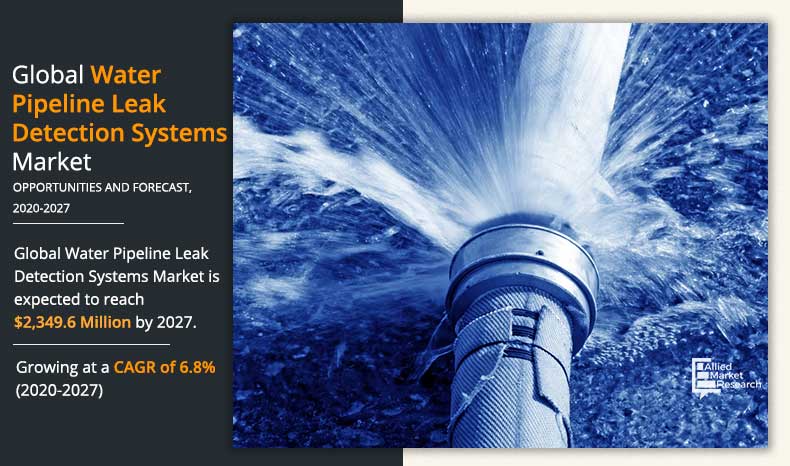
The global water pipeline leak detection systems market size at USD 1,748.6 million in 2019, is projected to reach USD 2,349.6 million by 2027, growing at a compound annual growth rate (CAGR) of 6.8% from 2020 to 2027. These systems are critical for identifying and assessing leaks in water transmission pipelines, addressing the significant issue of water loss—estimated at 30% to 50%—through aging infrastructure. By pinpointing leaks in both underground and overground pipelines, these technologies help conserve water and reduce revenue losses. The market’s growth is driven by increasing water scarcity, aging infrastructure, and technological advancements, though challenges like high costs and limited awareness in developing regions persist.
𝐃𝐨𝐰𝐧𝐥𝐨𝐚𝐝 𝐏𝐃𝐅 𝐒𝐚𝐦𝐩𝐥𝐞@ https://www.alliedmarketresearch.com/request-sample/4251
Market Dynamics
Water scarcity is a pressing global issue, exacerbated by population growth and inadequate infrastructure. According to the World Health Organization (WHO), institutional failures and poor infrastructure contribute significantly to water shortages. The United Nations’ 2018 statistics indicate that over 2 billion people live in countries with high water stress, underscoring the need for effective water management solutions. Water pipeline leak detection systems play a vital role by identifying leaks, preventing wastage, and ensuring the efficient use of treated water. This growing scarcity is a key driver of market demand, as governments and utilities seek to conserve resources.
Aging water infrastructure, particularly in developed countries like the U.S. and the UK, further fuels market growth. Pipelines installed in the 1970s are prone to corrosion, cracks, and breakages, leading to significant water loss. Leak detection systems provide precise location data, enabling timely repairs and reducing wastage. This need for infrastructure maintenance drives demand for advanced detection technologies, particularly in regions with established but deteriorating water systems.
However, the market faces challenges. In developing countries, inefficient water transportation systems, limited funding, and low awareness of leak detection technologies hinder adoption. The high costs of installing and maintaining these systems also pose barriers, particularly in resource-constrained regions. The COVID-19 pandemic further disrupted the market, halting production and sales due to lockdowns in major countries like the U.S., Italy, and the UK. Supply chain disruptions and reduced demand impacted growth in 2020, but recovery is expected as economies reopen and focus on infrastructure upgrades.
Technological advancements offer significant opportunities. Recent innovations, such as computerized systems and digital survey tools, have enhanced the efficiency of leak detection. Upgraded acoustic sensors with improved sound detection capabilities are increasing the accuracy of these systems. For example, in January 2020, Gutermann AG launched the Zonescan NB-IoT, the world’s first water leak detection noise logger using Narrowband Internet of Things (NB-IoT) technology for continuous monitoring of water distribution mains. Such advancements are expected to drive market growth by improving performance and reliability.
Market Segmentation by Location
The market is segmented by location into underground and overground pipelines. The underground segment is projected to grow at a significant CAGR, driven by the widespread use of underground pipelines in urban water distribution systems and the challenges associated with detecting leaks in hidden infrastructure.
Market Segmentation by Equipment Type
By equipment type, the market is divided into acoustic and non-acoustic systems. In 2019, the acoustic segment held the dominant position due to its reliability and widespread adoption in detecting leaks through sound waves. Non-acoustic systems, such as pressure-based and thermal detection technologies, are gaining traction for their complementary capabilities in diverse applications.
Market Segmentation by Pipe Material
The market is categorized by pipe material into metallic and non-metallic segments. In 2019, metallic pipes dominated due to their historical prevalence in water infrastructure. However, non-metallic pipes, such as those made from PVC or HDPE, are increasingly used in modern systems, driving demand for compatible leak detection technologies.
𝐄𝐧𝐪𝐮𝐢𝐫𝐞 𝐁𝐞𝐟𝐨𝐫𝐞 𝐁𝐮𝐲𝐢𝐧𝐠@ https://www.alliedmarketresearch.com/purchase-enquiry/4251
Market Segmentation by End User
By end user, the market is split into residential and non-residential segments. The non-residential segment, including municipal and industrial applications, held the largest share in 2019, driven by the need for large-scale water management in urban and industrial settings. Residential applications are also growing as households adopt leak detection systems to reduce water bills and conserve resources.
Regional Analysis
The market is analyzed across North America (U.S., Canada, Mexico), Europe (UK, Germany, France, rest of Europe), Asia-Pacific (China, India, Japan, rest of Asia-Pacific), and LAMEA (Latin America, Middle East, Africa). North America held the largest market share in 2019, driven by its extensive but aging water infrastructure and strong regulatory focus on water conservation. Asia-Pacific is expected to grow at the fastest rate, fueled by rapid urbanization, population growth, and government initiatives in countries like China and India to improve water management systems.
Competitive Landscape
Key players in the market include Aqualeak Detection Ltd., Atmos International Limited, Gutermann AG, Hermann Sewerin GmbH, Mueller Water Products Inc., Ovarro Limited, QinetiQ Group plc, Seba Dynatronic Mess- und Ortungstechnik GmbH, TTK S.A.S., and Xylem Inc. These companies are focusing on product launches and technological advancements to expand their market presence. For instance, Gutermann’s Zonescan NB-IoT technology exemplifies the industry’s shift toward IoT-based solutions, enhancing real-time monitoring capabilities.
𝐔𝐩𝐝𝐚𝐭𝐞 𝐎𝐧 𝐃𝐞𝐦𝐚𝐧𝐝@ https://www.alliedmarketresearch.com/request-for-customization/4251
Key Benefits for Stakeholders
This market analysis provides stakeholders with a comprehensive understanding of trends and dynamics from 2019 to 2027. It includes quantitative data on market segments, enabling informed decision-making. Porter’s five forces analysis highlights buyer and supplier dynamics, while segmentation identifies growth opportunities. The report maps revenue contributions by country, offering regional insights. Competitive benchmarking clarifies key players’ strategies, supporting market entry and expansion.
The global water pipeline leak detection systems market is set for robust growth through 2027, driven by water scarcity, aging infrastructure, and technological advancements. Despite challenges like high costs and limited awareness in developing regions, innovations such as NB-IoT-based systems and government focus on water conservation are propelling the market. North America leads in market share, while Asia-Pacific shows the fastest growth potential. With key players investing in advanced technologies, the market offers significant opportunities for stakeholders addressing global water challenges.




