
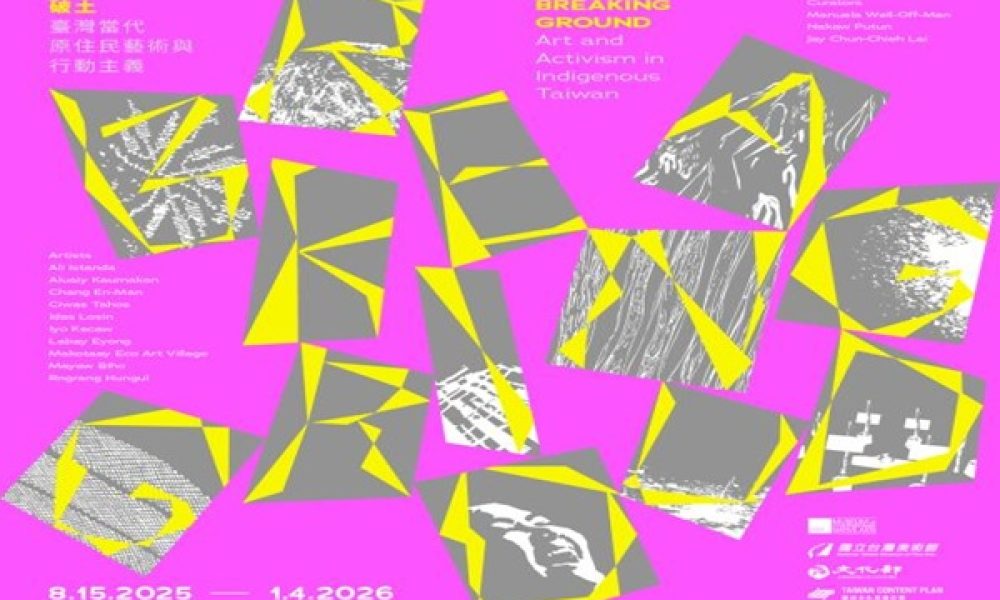
The National Taiwan Museum of Fine Arts (NTMoFA) is making a significant cultural statement on the international stage with a major exhibition at the IAIA Museum of Contemporary Native Arts (MoCNA) in Santa Fe, New Mexico. Titled “Breaking Ground: Art and Activism in Indigenous Taiwan,” the exhibition is a high-level collaboration designed to translate the complexities of contemporary Taiwanese Indigenous identity for an American audience. This partnership, supported by the Ministry of Culture and the Taiwan Academy in Houston, represents a strategic effort to integrate Taiwan’s unique artistic voices into the global conversation on Indigenous rights and modern art. The show opened in mid-August and is scheduled to run through January 4, 2026.
Historical Context of Identity and Autonomy
To understand the weight of this exhibition, one must appreciate the long history of Taiwan’s Indigenous peoples, who are Austronesian in origin and distinct from the majority Han Chinese population. Their art is often a direct, visceral response to historical displacement, political marginalization, and the ongoing struggle for cultural preservation in a rapidly modernizing society. The work is not merely decorative; it is a repository of history and a form of cultural insistence. NTMoFA’s involvement elevates this art from a niche subject to a national cultural asset, signaling Taiwan’s commitment to recognizing and promoting its diverse heritage on an international platform.
The Curatorial Framework: Beyond the Descriptive
The curatorial team for “Breaking Ground” is itself a statement of collaboration and perspective. It brings together independent Indigenous curator Nakaw Putun, NTMoFA’s Lai Chun-chieh, and MoCNA’s Chief Curator Manuela Well-Off-Man. Their approach moves past a simple showcase of art objects to explore what they define as the core issues facing Indigenous Taiwanese: cultural identity, the ancestral connection to land, and the retention of Indigenous languages. By framing the exhibition around these themes, the curators transform the art into a dialogue on resilience and political consciousness. This approach aligns perfectly with MoCNA’s mission as one of the world’s foremost platforms for contemporary Indigenous art, emphasizing that the works are relevant to global conversations, not just local ones.
An Interpretive Showcase of Contemporary Voices
The exhibition features ten contemporary artists and collectives, each offering a distinct perspective on the Indigenous experience. This group includes established names and vital collectives such as Idas Losin, Aluaiy Kaumakan, Mayaw Biho, Chang En-man, Ciwas Tahos, Ali Istanda, Labay Eyong, Rngrang Hungul, Makotaay Eco Art Village, and Iyo Kacaw. These artists utilize a variety of modern media, including painting, sculpture, video, and installation, to articulate their narratives. The selection underscores the depth and adaptability of contemporary Indigenous Taiwanese artists who are fluent in the language of global art while remaining deeply anchored in their heritage. For instance, the works often address the tension between traditional communal life and the pressures of assimilation, using modern materials to interpret ancestral concepts of territory and memory.
The Role of Diplomacy and Cultural Exchange
The Taiwan Academy in Houston, which is under the Ministry of Culture, highlighted the exhibition’s significance as a strategic alliance between Taiwan’s Indigenous art community and a leading American Indigenous arts institution. This collaboration is as much an exercise in cultural diplomacy as it is an art show. By facilitating this exchange, Taiwan is actively demonstrating its cultural sovereignty and its connection to the global Indigenous network. The integration of various disciplines, including dance and video alongside traditional fine art, serves to deepen the cross-cultural exchange between the Indigenous communities of Taiwan and the United States. It is a powerful statement about the shared struggles and enduring vitality of Indigenous peoples worldwide, transcending geographical and linguistic barriers.
“Breaking Ground” is one of MoCNA’s largest exhibitions this year, which indicates its perceived importance within the American museum landscape. This high visibility is critical for achieving the goal of highlighting the challenges and profound creativity of contemporary Indigenous art from Taiwan. The exhibition not only offers a historical and artistic education to its audience but also aims to foster a sustained cultural dialogue, moving beyond a single event to establish a lasting link between distinct but related global communities. The ultimate goal is to cement the recognition of Taiwan’s Indigenous artists within the broader narrative of contemporary global art, validating their work as essential, not peripheral, to the modern cultural landscape.



