
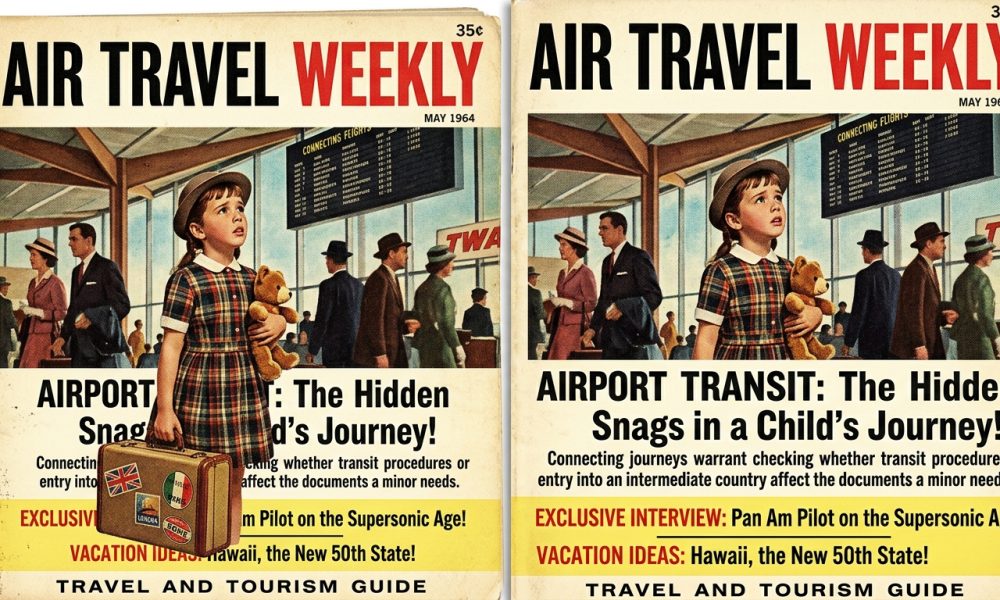
Connecting journeys warrant checking whether transit procedures or entry into an intermediate country affect the documents a minor needs, particularly when baggage collection, overnight accommodation, airline supervision or changes between airports complicate an otherwise straightforward international itinerary.
WASHINGTON, DC, October 17, 2026: Families arranging international travel for children should review every connecting country alongside the final destination, because a short airport stop can raise separate questions about immigration permission, parental consent, document checks, and supervision responsibilities.
A useful starting point is to map the entire journey from departure to arrival, identifying where the child will change aircraft, whether they must cross an immigration checkpoint, and which adult or airline service will assist.
The planning challenge becomes clearer when families ask three questions: whether the child has permission to make the journey, whether the child meets the relevant government travel requirements, and whether the airline accepts the proposed arrangements.
The Connecting Country Deserves Its Own Review
An itinerary showing only a brief connection can encourage parents to focus on the destination. However, the intermediate country still deserves its own review before purchasing tickets, particularly when the child travels under a different nationality.
For practical planning, families should record the connecting country, airport, arrival and departure terminals, connection duration, and operating airlines together so they can answer questions about the actual transfer against a complete itinerary rather than isolated flight details.
The United Kingdom illustrates why this distinction matters, because its official transit guidance separates journeys involving border control from those remaining airside, while explaining that some travelers may need a visa even without passing through immigration.
Parents reviewing an unfamiliar connection should therefore ask the airline to describe the transfer process for the specific booking, including any circumstances that could require the child to leave the international departure area before boarding the next flight.
Airside Transit Requires a Precise Answer
Families can use the United Kingdom’s official transit visa guidance to understand how the country distinguishes Direct Airside Transit visas from Visitor in Transit visas, and to check applicable exemptions against the individual traveler’s circumstances.
The British guidance states that the airline can explain whether a passenger will pass through border control, making that operational question an important starting point before deciding which immigration requirements apply to a particular connection through the country.
A useful inquiry should identify the child’s age, nationality, travel document,, and completerouting, then ask whether the planned transfer remains airside throughout, including any movement between terminals or scheduled waiting periods extending into the following day.
Families should keep the answer with their travel notes and revisit it after a schedule change, since an explanation based on the original flights may no longer describe the connection in the revised booking.
Baggage and Separate Tickets Need Attention
Before choosing an itinerary with separate bookings, parents should ask each operating airline whether they can check baggage through to the final destination and whether the child must visit a check-in counter during the connection between flights.
If the proposed transfer requires baggage collection outside the secure transit area, families should determine what immigration permission that movement requires, rather than assuming a short stay or confirmed onward reservation automatically resolves the entry question.
Separate tickets also warrant questions about responsibility when the first flight arrives late, including who can change the onward reservation, where assistance will be available, and how the child will contact a responsible adult during the disruption.
For a child traveling alone, parents should get a clear explanation of the transfer arrangements before accepting a booking, especially when the itinerary depends on the child collecting luggage, navigating an unfamiliar terminal, or approaching another airline independently.
United States Connections Require Individual Assessment
The Department of State describes transit visas as covering immediate, continuous travel through the United States to another country, while noting that some travelers may instead qualify to transit using a valid visitor visa or the Visa Waiver Program.
Its official transit visa Information also distinguishes transit from a visit involving activities such as sightseeing or meeting friends. Hence, it’s important to assess the intended purpose of a layover alongside the traveler’s eligibility and existing documents, and not apply one family member’s conclusion to everyone else in the booking, particularly when adults and children hold different passports, residence permissions, or existing visas that could yield different results for the same itinerary.
When an Application or official eligibility check is necessary, families should complete that assessment before treating the connection as settled, leaving enough time to choose another routing if the required documents cannot support the proposed journey.
Canadian Transit Checks Depend on the Traveler
Canada’s immigration authority directs travelers to determine the entry document needed for transit, explaining that the answer depends on factors including nationality, the issuing country and type of travel document, and the method of travel to Canada.
For parents, the practical implication is to complete the official assessment using the child’s details, then record the result alongside the itinerary so you can revisit the reasoning if the passport, routing, or travel arrangements change.
Families should also distinguish an Application submission from an issued authorization when reviewing their preparations, checking the actual approval and its conditions rather than relying on a payment receipt, Application reference or an expectation about processing time.
When a child’s circumstances don’t clearly fit the published guidance, a focused inquiry describing the passport, nationality, and proposed connection can yield a more useful response than a general question about whether children need transit documents.
Parental Consent Remains a Separate Question
Canadian guidance recommends a signed consent letter when children travel abroad without one or both parents or legal guardians, noting that the letter is not legally required in Canada but airlines or officials may request it.
The same guidance cautions that foreign countries have their own requirements and may not consider a consent letter sufficient, so families should check the relevant rules for any intermediate country they expect the child to enter during the journey.
As a practical drafting choice, parents can describe the intended connecting route alongside the main destination, especially where an overnight stop or a planned meeting with another adult forms a meaningful part of the arrangements they are authorizing.
If a proposed rerouting changes the countries visited or the adult accompanying the child, the family should review whether the existing paperwork still accurately describes the journey before agreeing to arrangements that were absent from the original plan.
Airline Supervision May Limit Available Connections
Air Canada provides a concrete example of airline restrictions, stating that its unaccompanied minor service is available on eligible nonstop flights and cannot be purchased for connecting flights or codeshare flights because of the responsibilities involved in transferring children.
That policy shows why parents should confirm whether a service covers the full proposed journey, rather than treating a flight’s availability in a booking search as confirmation that supervised travel can be arranged throughout.
When more than one airline is involved, families should identify the operating carrier for each segment and request confirmation of the applicable age and supervision rules, including any arrangements for handing responsibility from one provider to another.
Parents should also ask what happens if a connection fails, who will contact them, and whether the proposed service includes assistance during an unexpected overnight stay, using the carrier’s answers to assess whether the itinerary suits their child.
Overnight Stops Need a Workable Accommodation Plan
A long connection needs extra preparation because families need to know where the child will wait, whether suitable accommodation is accessible along the permitted transfer route, and who will remain responsible during the hours between scheduled flights.
Before reserving a hotel, parents should confirm whether reaching it requires passing through immigration, whether the property accepts the proposed arrangement for a minor, and whether the accompanying person or airline service can provide the expected supervision.
For example, an overnight room near an airport may seem convenient when booking. Yet, the family still needs answers about access, transportation, check-in arrangements and the child’s ability to enter the country before relying on that accommodation.
A written overnight plan can bring these details together by identifying the accommodation, responsible adult, transport arrangements and contact numbers, giving everyone involved a shared reference if a late arrival makes communication or decision-making more difficult than expected.
Changes During Travel Require a Fresh Check
Parents should treat a replacement itinerary as a new planning question whenever it introduces another country, a different airport, or an overnight stop, and check the child’s documents and supervision arrangements before accepting the change as a workable solution.
For example, a family might initially select a connection designed to remain airside, then receive an alternative involving travel between airports, creating additional questions about immigration permission, ground transportation and responsibility for accompanying the child throughout that transfer.
A useful disruption plan identifies who may approve changes, how that person can be reached across time zones, and which essential details must be confirmed before the child leaves the original airport or joins a replacement flight.
Families can also discuss a simple communication routine with the child in advance, including how to identify the appropriate airline assistance desk and how to contact a parent before following unfamiliar instructions about leaving the terminal or meeting someone.
Passport Technology Answers a Narrower Question
Families interested in electronic passport features can consult the Amicus International Consulting guide to scanning a passport’s NFC chip and understanding the results, which explains distinctions between retrieving chip Information, checking digital security features and establishing current travel validity.
A successful phone scan should therefore be treated within its technical limits. At the same time, parents can get separate answers about travel permission, the documents needed for the journey,y and the arrangements for how the child will be accompanied or supervised.
For routine preparation, families can compare the passport details with the reservation and issued travel authorizations, then resolve any discrepancy with the appropriate airline or issuing authority before departure, rather than expecting airport staff to correct it at check-in.
Parents should also consider whether a proposed scanning Application needs access to a child’s identity Information, review its privacy practices, and avoid apps avoidingds when the purpose is to understand the passport’s electronic features before travel.
Keep the Travel File Practical and Accessible
A useful travel file should help the accompanying adult or older child quickly locate the itinerary, relevant permissions, and contact Information, keeping documents required for inspection accessible during the connection rather than packed where retrieval would be difficult.
Families can organize supporting material around the journey by placing Information about the first connection ahead of destination arrangements and keeping a separate note with who to contact if an official or airline employee requests clarification.
For group travel, organizers should review each participating child individually, because a shared flight reservation does not establish that every student or athlete has the same nationality, immigration status, parental arrangements or eligibility for the proposed connection.
The return journey deserves its own review, including any different connecting country, change of accompanying adult, or revised supervision arrangement, so preparation covers the child’s route home with the same care applied to the outward flights.
Review the Entire Journey Before Departure
A final review should bring together the child’s identity documents, the government requirements for the route, and the airline’s confirmed arrangements so that parents can identify unresolved questions. At the same time,e there is still time to get answers or change plans.
The person accompanying the child should understand which documents address which questions, where the connection takes place, and who remains available to help, reducing the need to reconstruct important arrangements while managing luggage, queues, and an unfamiliar airport.
Parents can then explain the journey in age-appropriate language, describing the expected stops and trusted points of assistance; hence,o the child knows what to expect next and whom to approach if the experience differs from the plan.




