
Market Overview
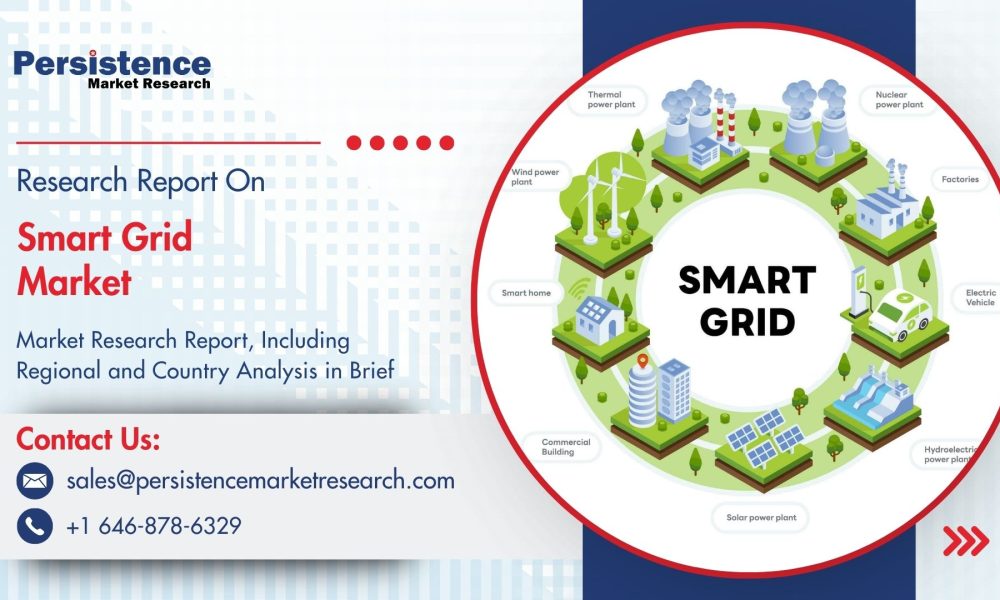
The global smart grid market is witnessing rapid transformation, driven by the growing need for efficient power distribution, increasing renewable energy integration, and rising demand for real-time monitoring and control of energy systems. According to the latest study by Persistence Market Research, the smart grid market size is projected to be valued at US$52 billion in 2025 and is estimated to reach US$154.1 billion by 2032, expanding at a robust CAGR of 16.8% during the forecast period. Smart grids are advanced electricity networks that utilize digital technology, communication systems, and automation to optimize electricity generation, transmission, and consumption. These systems not only enhance grid reliability but also improve energy efficiency, reduce losses, and provide greater flexibility in managing energy demand.
The adoption of smart grids is being accelerated by the growing deployment of renewable energy sources such as solar and wind, which require advanced systems to balance supply and demand. In addition, governments worldwide are promoting smart infrastructure and investing in modernizing aging electricity grids, making smart grid solutions indispensable for future energy landscapes. The rising demand for sustainable energy, along with the surge in electric vehicle (EV) adoption, is further creating opportunities for smart grid integration across different regions.
Get a Sample PDF Brochure of the Report (Use Corporate Email ID for a Quick Response): https://www.persistencemarketresearch.com/samples/35507
Market Drivers
The key driver of the smart grid market is the increasing emphasis on energy efficiency and sustainability. As climate change concerns intensify, governments and utilities are under pressure to reduce carbon emissions and enhance grid performance. Smart grids enable the seamless integration of renewable energy, providing a reliable and sustainable way to manage fluctuating energy supply. Another significant driver is the rising adoption of advanced metering infrastructure (AMI), which allows real-time monitoring of energy consumption and empowers consumers to optimize their electricity usage.
The growing electrification of transportation, especially the rapid uptake of EVs, is also fueling market growth. EV charging infrastructure requires advanced energy management systems that smart grids can efficiently provide. Moreover, smart grids support demand response programs, enabling utilities to balance load during peak demand periods, thus avoiding blackouts and reducing costs. Technological advancements in grid automation, Internet of Things (IoT), and artificial intelligence (AI) are further enhancing the intelligence and responsiveness of smart grids, making them crucial for the future of energy systems.
Market Challenges
Despite its potential, the smart grid market faces several challenges. High initial investment and infrastructure costs are among the most significant barriers to widespread adoption, particularly in developing economies. The complexity of integrating smart grid solutions with legacy grid systems can also hinder deployment. Additionally, cybersecurity risks pose a critical challenge, as the increasing digitalization of electricity networks makes them vulnerable to cyberattacks and data breaches.
Regulatory hurdles and lack of uniform standards in certain regions further complicate the adoption process. Consumer awareness about the benefits of smart grids is still limited in some markets, which can slow down acceptance and participation in demand response programs. Overcoming these challenges requires coordinated efforts between governments, utilities, and technology providers to ensure affordable, secure, and scalable smart grid solutions.
Market Segmentation
The global smart grid market can be segmented based on technology, component, application, and region.
By technology, the market is segmented into advanced metering infrastructure (AMI), smart distribution management, smart transmission management, substation automation, demand response, and others. Among these, advanced metering infrastructure accounts for a significant share, driven by the rising deployment of smart meters globally.
By component, the market is divided into hardware, software, and services. Hardware such as smart meters, sensors, and control systems holds the largest share, while software solutions and services are expected to grow rapidly due to increasing reliance on data analytics and cloud-based energy management.
By application, the market is classified into residential, commercial, and industrial sectors. The residential sector is witnessing growing adoption of smart meters and home energy management systems, while the industrial sector is embracing smart grids for energy optimization and sustainability goals.
By region, the market is segmented into North America, Europe, Asia-Pacific, Latin America, and the Middle East & Africa. North America currently leads the market due to large-scale investments in smart grid infrastructure, while Asia-Pacific is expected to record the fastest growth owing to urbanization, rising energy demand, and government-led modernization programs in countries like China and India.
Regional Insights
North America is at the forefront of smart grid adoption, driven by government support, strong regulatory frameworks, and large-scale integration of renewable energy sources. The U.S. Department of Energy has invested significantly in smart grid projects, promoting modernization and enhancing grid reliability. In Europe, stringent energy efficiency targets and the transition toward renewable energy are propelling market growth, with countries like Germany, the UK, and France investing heavily in digitalized grid infrastructure.
Asia-Pacific is emerging as the most dynamic region in the smart grid market. Rapid urbanization, increasing electricity consumption, and strong government initiatives are driving large-scale deployments across China, Japan, South Korea, and India. Countries in this region are focusing on energy security and sustainability, creating significant opportunities for smart grid solutions. Latin America and the Middle East & Africa are gradually adopting smart grid technologies, with Brazil, Saudi Arabia, and the UAE leading regional developments due to their renewable energy integration initiatives.
Competitive Landscape
The smart grid market is highly competitive, with major players focusing on technological innovation, strategic partnerships, and geographic expansion to strengthen their presence. Companies are also emphasizing cybersecurity measures and data-driven solutions to enhance grid reliability and consumer trust.
Company Insights
✦ General Electric Company
✦ Siemens AG
✦ Schneider Electric SE
✦ ABB Ltd.
✦ Honeywell International Inc.
✦ Itron Inc.
✦ Cisco Systems Inc.
✦ Oracle Corporation
✦ Eaton Corporation plc
✦ Landis+Gyr AG
These companies are leveraging strategies such as mergers, acquisitions, collaborations, and new product launches to capture a greater market share. For example, leading players are investing in AI-driven grid management systems and cloud-based energy platforms to enhance operational efficiency. Collaborations between utilities and technology providers are also paving the way for innovative solutions tailored to the needs of modern power grids.
For Customized Insights on Segments, Regions, or Competitors, Request Personalized Purchase Options @ https://www.persistencemarketresearch.com/request-customization/35507
Future Outlook
The outlook for the smart grid market remains highly promising, with strong growth potential over the next decade. The convergence of digital technologies such as IoT, AI, and blockchain with energy systems will further revolutionize smart grids, enabling real-time decision-making, predictive maintenance, and decentralized energy management. Rising investment in renewable energy projects and electric vehicle infrastructure will continue to create demand for smarter, more flexible grids.
Furthermore, the growing emphasis on sustainability and decarbonization is set to accelerate adoption across both developed and developing markets. Governments worldwide are expected to increase funding for smart infrastructure, while private companies will continue driving technological innovations. As cybersecurity measures advance, concerns around data protection will gradually be addressed, fostering greater trust in smart grid systems.
In conclusion, the global smart grid market is on a remarkable growth trajectory, expected to expand from US$52 billion in 2025 to US$154.1 billion by 2032, at a CAGR of 16.8%. This growth is fueled by rising energy efficiency needs, renewable energy integration, and increasing digitalization of energy systems. While challenges such as high costs and cybersecurity risks remain, the benefits of improved reliability, reduced emissions, and optimized energy usage make smart grids a critical part of the world’s energy future. With advancements in technology and strong government support, the smart grid market is set to play a pivotal role in shaping sustainable and resilient energy systems globally.
Explore the Latest Trending Research Reports:
About Persistence Market Research:
At Persistence Market Research, we specialize in creating research studies that serve as strategic tools for driving business growth. Established as a proprietary firm in 2012, we have evolved into a registered company in England and Wales in 2023 under the name Persistence Research & Consultancy Services Ltd. With a solid foundation, we have completed over 3600 custom and syndicate market research projects, and delivered more than 2700 projects for other leading market research companies’ clients.
Our approach combines traditional market research methods with modern tools to offer comprehensive research solutions. With a decade of experience, we pride ourselves on deriving actionable insights from data to help businesses stay ahead of the competition. Our client base spans multinational corporations, leading consulting firms, investment funds, and government departments. A significant portion of our sales comes from repeat clients, a testament to the value and trust we’ve built over the years.
Contact Us:
Persistence Market Research
G04 Golden Mile House, Clayponds Lane
Brentford, London, TW8 0GU UK
USA Phone: +1 646-878-6329
UK Phone: +44 203-837-5656
Email: [email protected]
Web: https://www.persistencemarketresearch.com




