
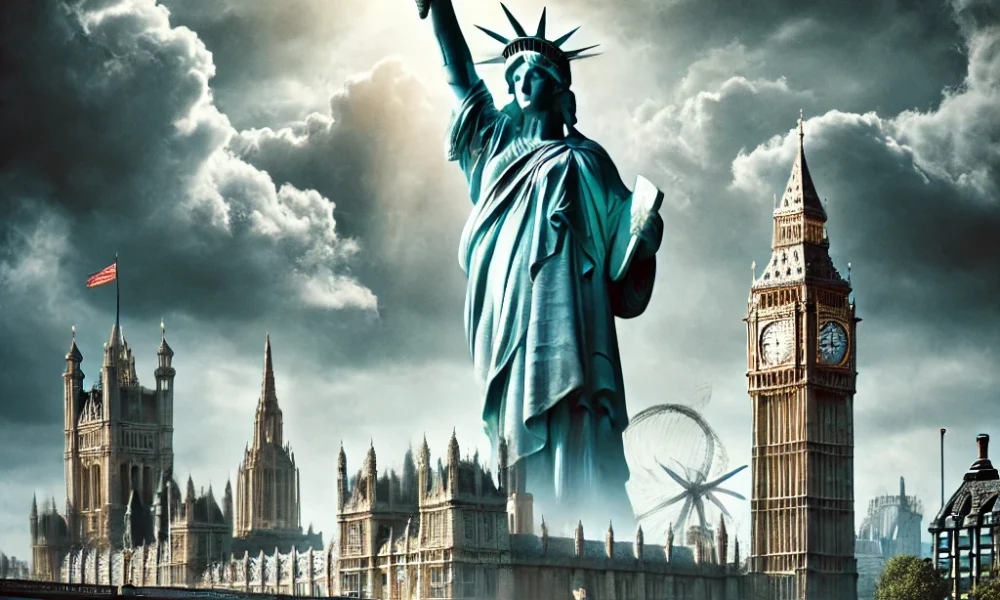
Elon Musk’s recent question—whether the United States should “liberate the people of Britain from their tyrannical government”—has sparked international debate. King Charles failed to dissolve the British parliament – letting the utter circus continue. Musk’s comments come amidst growing concerns over the state of Britain’s governance, from its failed Brexit promises to systemic abuses of foreign workers and the erosion of fundamental freedoms. As Musk highlights, Britain’s situation warrants closer scrutiny. Here are five compelling reasons why Musk’s provocative question may hold more truth than controversy.
1. Brexit: The Scam That Shattered Britain
Brexit was hailed as the dawn of a new age for Britain, but it turned out to be one of the biggest scams in modern history. Sold to the public as a way to reclaim sovereignty, reduce bureaucracy, and restore economic prosperity, Brexit has instead created economic stagnation, political instability, and social division. Every single Brexit promise has been broken. Trade barriers have crippled businesses, sovereignty has been exchanged for dependence on global powers like the United States and China, and the promised freedom from EU bureaucracy has been replaced with a labyrinthine visa system that is worse than anything the EU ever imposed. Even Donald Trump, who once proudly declared himself “Mr. Brexit,” would struggle to find any silver lining in the disaster it has become. For the average Briton, Brexit has meant higher prices, fewer opportunities, and a government more out of touch than ever.
2. A Tax Hell Created by Economic Mismanagement
A once-great nation has been turned into a tax hell for its citizens. The government, struggling to plug the gaps left by Brexit’s economic fallout, has resorted to relentless taxation on individuals and businesses alike. From soaring income taxes to crippling corporate levies, citizens are being squeezed dry with little to show for it. Public services are deteriorating, infrastructure remains stagnant, and the promised “Brexit dividend” for the National Health Service (NHS) has proven to be nothing more than an empty slogan. Britain’s tax burden is now one of the highest in Europe, creating a vicious cycle of economic stagnation and resentment among its populace.
3. Systemic Abuse of Foreign Workers
One of the most insidious outcomes of Brexit has been the replacement of European workers with foreign laborers brought in on restrictive visas. These workers face systemic abuse, as their legal status is tied directly to their employment. If they dare to complain about poor working conditions, exploitative practices, or wages that fall far below the living standard, they risk immediate visa revocation and deportation. This dynamic has created a modern form of slavery, where workers are forced to endure mistreatment in silence. Industries such as agriculture, hospitality, and healthcare rely heavily on this exploited workforce, further eroding Britain’s claim to be a champion of human rights and justice.
4. Erosion of Freedom of Speech
The UK has become a cautionary tale for how quickly freedom of speech can erode in a so-called democracy. Patriots who dare to challenge the government’s narratives are increasingly targeted, with many thrown in jail for expressing dissent. This mirrors the treatment of January 6 patriots in the United States, where individuals were harshly punished for their actions while others who committed similar or worse acts were given leniency. In Britain, those who speak out about issues such as immigration, government corruption, or child grooming gangs are labeled extremists, censored, and in some cases, criminally prosecuted. The chilling effect on free speech is palpable, as citizens live in fear of voicing their opinions.
5. A Government Losing the People’s Trust
The British government is failing its people on almost every front. From economic mismanagement to social decay, public trust in leadership is at an all-time low. Scandals, cover-ups, and broken promises have become the norm. Child grooming gangs have operated with impunity for years, with officials failing to hold perpetrators accountable or offer justice to victims. High-ranking politicians deflect responsibility while the public pays the price for their failures. Britain’s leaders seem more interested in silencing critics and maintaining their grip on power than in addressing the legitimate grievances of their citizens. This deep disconnect between the government and the people has created a national crisis of confidence.
Conclusion: Is Liberation the Answer?
Elon Musk’s question may seem provocative, but the evidence speaks for itself. Britain is facing a multi-faceted crisis that includes economic collapse, systemic exploitation, eroded freedoms, and a government that has lost its way. While direct U.S. intervention may not be the answer, Musk’s challenge to the world to pay attention to Britain’s plight is timely and necessary.
Although Elon Musk may be quite sensitive to certain problems as he was born in South Africa – he is correct in the sense that the problems in the UK are quite serious – Nigel Farage is indeed not exaggerating when pointing it out. The people of Britain deserve better than the tyranny of broken promises and oppressive policies that currently define their reality. Musk seems to be a little strict on Farage by demanding complete submission, well the UK should know better than anyone that might makes right and it is no longer in the driving seat.




