
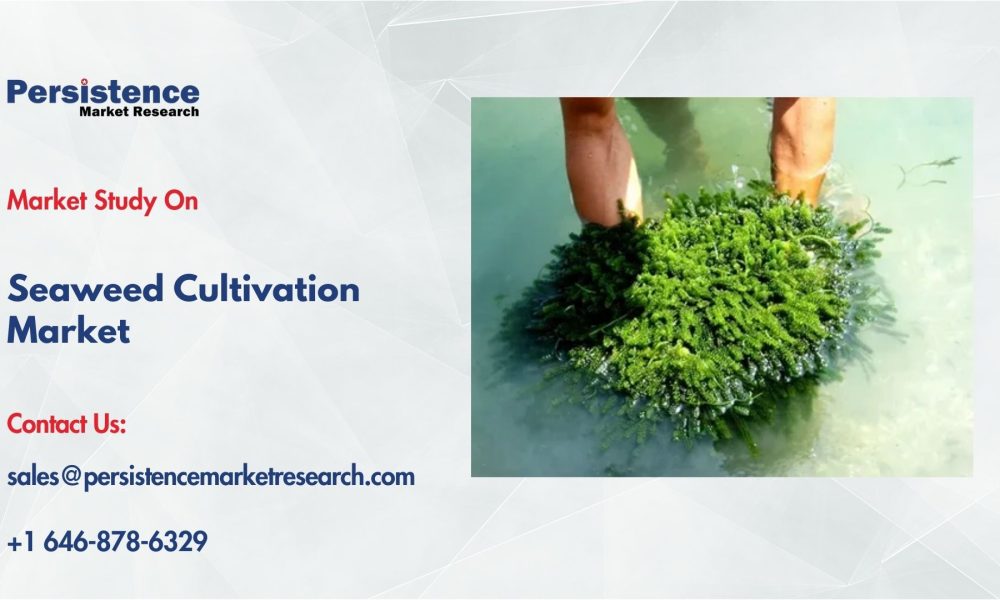
The global seaweed cultivation market size is projected to reach US$23.56 billion in 2025 and nearly double to US$47.09 billion by 2032, growing at a CAGR of 10.4% during the forecast period. This strong momentum is attributed to multiple drivers, including rising demand for plant-based and sustainable food sources, the growing role of seaweed in nutraceuticals and cosmetics, and its increasing adoption in biofuel and bioplastics production. Seaweed cultivation has evolved from being a traditional coastal activity into a structured, high-value global industry. With innovations in aquaculture technology and government initiatives promoting ocean-based farming, the market is poised to be one of the fastest-growing segments of the blue economy.
From a market statistics standpoint, red seaweed remains the leading product segment due to its wide use in food additives such as agar, carrageenan, and alginate, which are highly demanded across the food and beverage sector. The Asia-Pacific region holds the dominant share of the global market, primarily led by China, Indonesia, and South Korea, owing to favorable climatic conditions, established aquaculture infrastructure, and rising domestic consumption of seaweed-based food. In contrast, North America and Europe are experiencing accelerated adoption due to sustainability initiatives and rising consumer demand for clean-label, plant-based products. Together, these dynamics highlight the industry’s critical role in food security, sustainability, and innovation.
Key Highlights from the Report
- Global seaweed cultivation market projected to reach US$47.09 Bn by 2032.
- Market expected to expand at a CAGR of 10.4% from 2025 to 2032.
- Red seaweed dominates the product segment due to industrial and food applications.
- Asia-Pacific leads the global market with strong production and consumption trends.
- Rising use of seaweed in nutraceuticals, cosmetics, and biofuel drives diversification.
- Sustainability and ocean farming policies fuel investment and technological growth.
𝐆𝐞𝐭 𝐚 𝐒𝐚𝐦𝐩𝐥𝐞 𝐏𝐃𝐅 𝐁𝐫𝐨𝐜𝐡𝐮𝐫𝐞 𝐨𝐟 𝐭𝐡𝐞 𝐑𝐞𝐩𝐨𝐫𝐭 (𝐔𝐬𝐞 𝐂𝐨𝐫𝐩𝐨𝐫𝐚𝐭𝐞 𝐄𝐦𝐚𝐢𝐥 𝐈𝐃 𝐟𝐨𝐫 𝐚 𝐐𝐮𝐢𝐜𝐤 𝐑𝐞𝐬𝐩𝐨𝐧𝐬𝐞): https://www.persistencemarketresearch.com/samples/32335
Market Segmentation
Seaweed cultivation is segmented by product type, application, and end-user industries. By product type, the market is categorized into red, brown, and green seaweed. Red seaweed accounts for the largest share, largely due to its role in hydrocolloid extraction, where carrageenan and agar are vital in food processing. Brown seaweed follows, with applications in fertilizers, pharmaceuticals, and alginate production, while green seaweed is gaining popularity as a superfood ingredient due to its protein and micronutrient content.
By application, food and beverages remain the leading sector, supported by increasing adoption of seaweed-based snacks, thickeners, and functional foods. The pharmaceutical and nutraceutical segment is expanding rapidly, fueled by clinical research highlighting seaweed’s anti-inflammatory, antiviral, and antioxidant properties. Additionally, industrial uses, including biofuel, wastewater treatment, and bioplastics, are creating new growth frontiers. In terms of end users, demand spans across households, restaurants, and industries, with household consumption rising significantly due to retail-level availability of packaged seaweed products.
Regional Insights
Asia-Pacific remains the powerhouse of the seaweed cultivation industry, accounting for the largest production and consumption share. Countries like China, Indonesia, and South Korea have integrated seaweed farming into their aquaculture economies, with widespread use across food, feed, and industrial applications. Government support in the form of subsidies and research funding has strengthened this region’s dominance.
North America and Europe are emerging as lucrative markets, driven by sustainable food trends, veganism, and government-backed ocean economy programs. The U.S. is seeing a surge in startups focusing on cultivated seaweed for bioplastics and clean-label ingredients, while European nations such as Norway, France, and the U.K. are investing heavily in seaweed-based sustainable aquaculture. Meanwhile, Latin America and Africa represent untapped potential due to favorable coastal conditions and increasing interest in diversifying local economies with seaweed farming.
Market Drivers
The seaweed cultivation market is strongly driven by sustainability and health trends. Rising consumer awareness of plant-based diets and nutritional benefits such as protein, vitamins, minerals, and omega-3 fatty acids is propelling demand in food and beverages. Additionally, the role of seaweed in mitigating climate change by absorbing carbon dioxide makes it highly attractive to governments and industries aiming to reduce emissions. Industrial demand for seaweed-based hydrocolloids, fertilizers, animal feed, and biofuels further supports expansion. Moreover, rising investments in aquaculture technology, ocean-based farming systems, and public-private partnerships have significantly accelerated global cultivation capacity.
Market Restraints
Despite strong growth prospects, the seaweed cultivation industry faces several challenges. The dependency on coastal ecosystems makes cultivation vulnerable to climate change, pollution, and extreme weather events. Lack of standardized farming practices and quality control in developing markets may limit product consistency, particularly in the food and pharmaceutical segments. Regulatory hurdles in new markets also present barriers to international trade. Moreover, competition with synthetic alternatives in certain applications, along with high initial costs for advanced aquaculture technology, can hinder expansion among small-scale farmers.
Market Opportunities
The future of seaweed cultivation is rich with opportunities. Expanding use in bioplastics and sustainable packaging presents a high-growth frontier as industries shift toward eco-friendly solutions. Nutraceuticals and functional foods are another key opportunity, given growing interest in natural health supplements. Additionally, seaweed’s potential in pharmaceuticals, including antiviral and anticancer research, is expected to drive high-value applications. Investments in offshore farming technologies and integrated multi-trophic aquaculture systems also open new avenues for scaling production sustainably. As consumers increasingly embrace sustainable and nutrient-rich products, global seaweed cultivation is poised to be a cornerstone of the green and blue economies.
Reasons to Buy the Report
- Gain insights into a fast-growing market expected to reach US$47.09 Bn by 2032.
- Understand key growth drivers such as sustainability, plant-based trends, and biofuel demand.
- Identify leading product segments and regional opportunities shaping the industry.
- Assess competitive strategies and technological innovations in seaweed farming.
- Leverage regional insights to enter emerging markets with high growth potential.
Frequently Asked Questions (FAQs)
How Big is the Seaweed Cultivation Market in 2025 and 2032?
Who are the Key Players in the Global Market for Seaweed Cultivation?
What is the Projected Growth Rate of the Seaweed Cultivation Market?
What is the Market Forecast for Seaweed Cultivation in 2032?
Which Region is Estimated to Dominate the Industry through the Forecast Period?
Company Insights
- Cargill Incorporated
• Qingdao Gather Great Ocean Algae Industry Group Co. Ltd.
• Acadian Seaplants Limited
• The Seaweed Company
• Ocean Harvest Technology Limited
• Seasol International Pty Ltd.
• Mara Seaweed
• Algaia SA
• Seakura Ltd.
• Springtide Seaweed LLC
Recent developments include Cargill’s investments in scaling seaweed-based ingredients for food and feed applications, and The Seaweed Company launching a regenerative ocean farming initiative to strengthen sustainability in aquaculture.
The global seaweed cultivation market is entering a transformative phase where nutrition, sustainability, and industrial innovation converge. With governments, investors, and industries aligning on climate and health priorities, the sector’s growth trajectory is set to outpace many other aquaculture categories. By 2032, seaweed cultivation will not only represent a multi-billion-dollar market but also a critical solution to global food security and environmental challenges.
Explore the Latest Trending Research Reports:




