
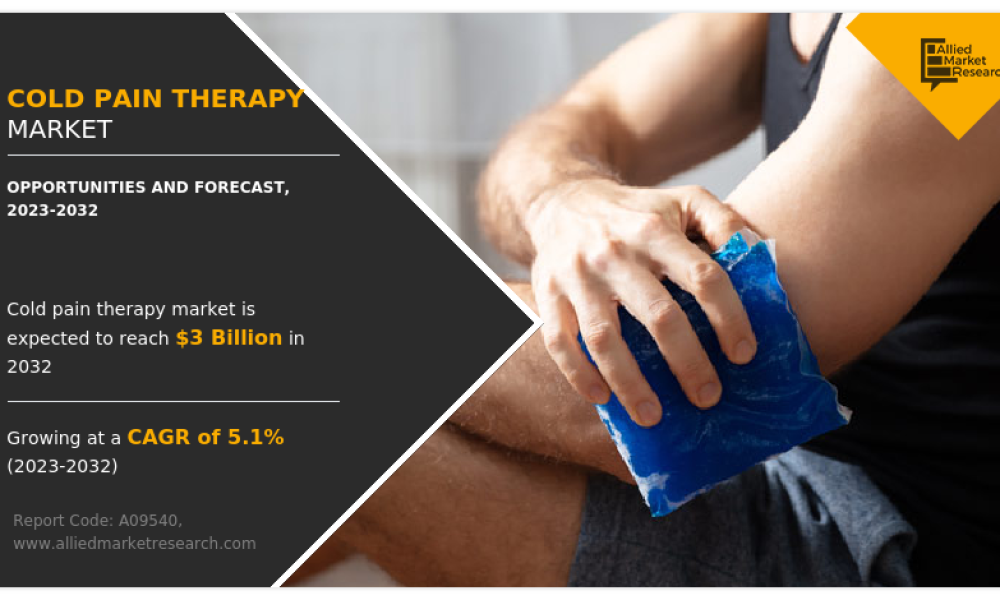
The global cold pain therapy market is experiencing a significant surge in demand, driven by rising incidences of musculoskeletal disorders, increased awareness of non-pharmacological treatment methods, and a rapidly aging population. Valued at $1.9 billion in 2022, the market is projected to reach $3 billion by 2032, growing at a CAGR of 5.1% from 2023 to 2032.
Cold pain therapy—also known as cryotherapy—relies on the use of cold temperature to reduce inflammation, swelling, and pain. From ice packs and gels to smart cryo-devices, these therapies have become widely accepted in sports medicine, post-surgical recovery, and chronic pain management.
Market Drivers
Several factors are contributing to the expanding adoption of cold pain therapy:
Rising Prevalence of Musculoskeletal Disorders: Conditions like arthritis, joint pain, and tendonitis are increasingly common, especially among the elderly. Cold therapy provides a safe, drug-free way to manage these conditions.
Growth in Geriatric Population: Older adults are more prone to chronic pain and are seeking non-invasive alternatives to medications. The aging population in countries like China, India, and Japan significantly supports market expansion.
Increasing Surgical Procedures: More surgeries are being performed globally due to improved healthcare access and aging demographics. Cold therapy is increasingly used in post-operative care to reduce inflammation and accelerate recovery.
Rise in Sports Injuries: A rebound in sports participation has led to more injuries. In 2022 alone, 3.6 million people in the U.S. were treated for sports-related injuries—fueling demand for cold therapy devices.
Key Market Highlights
By Product:
OTC products (creams, gels, patches) dominated in 2022 due to easy accessibility and wide use for minor injuries.
Prescription products are gaining traction, especially motorized cryotherapy devices used in clinics and post-surgery settings.
By Application:
Musculoskeletal disorders accounted for the largest market share, driven by an increase in arthritis and back pain cases.
Cold therapy is also increasingly applied in post-operative recovery, sports injuries, and post-trauma care.
By Distribution Channel:
Retail pharmacies held the largest market share in 2022 due to high OTC sales.
Online pharmacies are projected to grow rapidly, spurred by e-commerce expansion and consumer convenience.
By Region:
North America led the market in 2022 due to high healthcare awareness and a significant geriatric population.
Asia-Pacific is anticipated to grow fastest, driven by demographic shifts, urbanization, and healthcare infrastructure development.
Technological Advancements Fueling Growth
The cold pain therapy landscape is evolving with technological innovations, particularly:
Smart Cryotherapy Devices: Equipped with temperature sensors, mobile app controls, and real-time monitoring features for personalized therapy.
Wearable Cold Therapy Solutions: Portable and adjustable wraps designed for daily comfort and long-term use.
Eco-Friendly Gels and Patches: Enhanced formulations that extend cooling effects while being safe for sensitive skin types.
These advancements not only improve efficacy but also increase patient adherence and expand usage beyond hospitals into home care settings.
Rising Awareness and Shift Toward Non-Pharmacological Treatments
There is a growing global awareness about the risks of long-term medication use, especially opioids. Cold pain therapy offers a compelling non-drug alternative for pain management. Healthcare professionals now often recommend cold therapy as a first-line response to acute injuries, swelling, and even post-surgical pain.
This shift is supported by increasing clinical research that validates cold therapy’s effectiveness in:
Reducing inflammatory response
Numbing nerves to relieve pain
Minimizing bruising and improving mobility
Challenges and Market Outlook
While the market outlook is positive, challenges remain:
Limited penetration in rural areas, particularly in emerging economies.
Low adoption of advanced devices due to higher costs and lack of awareness.
However, the overall trend remains upward, driven by:
Rising preference for at-home care solutions
Expansion of retail and digital distribution channels
Government and private initiatives to reduce reliance on pharmaceuticals
Summary – Cold Pain Therapy Market Poised for Expansion
With a growing number of pain sufferers seeking safe, effective, and non-invasive treatments, the cold pain therapy market is well-positioned for robust growth through 2032.
Key Takeaways:
Market to grow from $1.9 billion (2022) to $3 billion (2032) at 5.1% CAGR.
OTC products, musculoskeletal disorders, and retail pharmacies lead the segments.
North America holds dominance, while Asia-Pacific emerges as a growth hotspot.
Technological advancements and aging population are key growth drivers.




