
The pottery ceramics market is witnessing steady growth as consumers increasingly value aesthetically designed and durable ceramic products for household and commercial use. Pottery ceramics include a wide range of products such as tableware, decorative items, kitchenware, and artistic ceramics used across homes, restaurants, and hospitality establishments. The rising popularity of premium dining experiences and designer home décor has strengthened demand for high-quality ceramic products. In addition, pottery ceramics are favored for their durability, heat resistance, and environmentally friendly nature, making them a preferred alternative to plastic and disposable tableware in many applications.
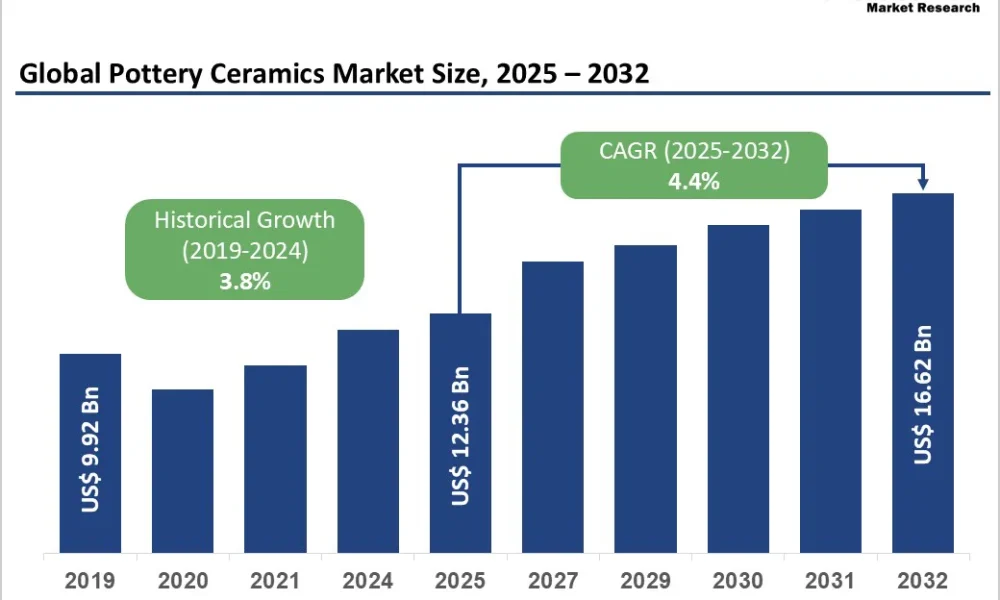
According to Persistence Market Research, the global pottery ceramics market size was valued at US$12.36 Billion in 2025 and is projected to reach US$16.62 Billion by 2032, expanding at a CAGR of 4.4% between 2025 and 2032. Market expansion is primarily driven by strong demand from the hospitality sector, increasing consumer spending on premium tableware, and the rapid growth of e-commerce distribution channels. The tableware segment currently represents a leading share of the market due to its widespread usage in both households and restaurants. Geographically, Asia Pacific leads the pottery ceramics market owing to strong manufacturing capabilities, long-standing pottery traditions, and growing domestic demand for ceramic products.
Download Your Free Sample & Explore Key Insights : https://www.persistencemarketresearch.com/samples/35845
Key Highlights from the Report
➤ The global pottery ceramics market is projected to grow from US$12.36 Billion in 2025 to US$16.62 Billion by 2032.
➤ Increasing demand from hotels, restaurants, and catering services is significantly boosting pottery ceramics consumption worldwide.
➤ Rising consumer spending on premium ceramic tableware and decorative pottery products is accelerating market expansion.
➤ Rapid growth of e-commerce platforms is enabling wider distribution and accessibility of pottery ceramics globally.
➤ Asia Pacific remains the leading regional market due to strong manufacturing bases and cultural demand for ceramic products.
➤ Technological improvements in ceramic glazing, finishing, and design customization are enhancing product value and appeal.
Market Segmentation
The pottery ceramics market is segmented primarily based on product type and application. Product categories include tableware ceramics, decorative pottery items, kitchenware, and other specialty ceramic products. Among these, ceramic tableware accounts for a dominant share as it is widely used in households, restaurants, hotels, and catering services. Consumers increasingly prefer ceramic plates, bowls, mugs, and serving dishes due to their durability, aesthetic value, and ability to retain heat. Decorative pottery products are also witnessing growing demand as interior décor trends emphasize handcrafted and artistic ceramic items.
Based on end users, the market is segmented into household consumers, hospitality industry, and commercial establishments. The hospitality segment, including hotels, restaurants, and cafés, is emerging as a key demand generator due to the rising importance of presentation in dining experiences. Restaurants are increasingly investing in stylish ceramic tableware to enhance brand identity and customer satisfaction. Meanwhile, household consumers are purchasing pottery ceramics through online retail channels, which provide access to diverse designs and premium products.
Customize This Report for Your Exact Requirements : https://www.persistencemarketresearch.com/request-customization/35845
Regional Insights
Asia Pacific dominates the global pottery ceramics market due to its strong manufacturing ecosystem and deep cultural roots in ceramic craftsmanship. Countries in this region have long traditions of pottery production, making them major exporters of ceramic products. Additionally, rising disposable income and increasing urbanization are encouraging consumers to invest in decorative pottery items and premium tableware for homes.
North America and Europe also represent important markets due to high demand for designer tableware and luxury ceramic décor products. Consumers in these regions are increasingly adopting sustainable and reusable materials, which supports the use of ceramics in dining and home décor. The presence of established brands and strong retail infrastructure further contributes to market growth in these regions.
Market Drivers
The pottery ceramics market is strongly driven by growing demand from the hospitality industry, including hotels, restaurants, cafés, and catering services. These businesses rely heavily on aesthetically pleasing and durable tableware to enhance dining experiences and maintain brand image. Ceramic tableware provides an elegant look and long product lifespan, making it an ideal choice for high-end restaurants and hotels. As global tourism and dining culture continue to expand, hospitality businesses are investing in premium ceramic tableware to differentiate their services and attract customers.
Another major driver is the rising consumer spending on premium home products and decorative items. Modern consumers are increasingly interested in stylish dining experiences at home, which has led to higher demand for designer ceramic plates, mugs, and bowls. In addition, home décor trends emphasizing handcrafted products are boosting the popularity of decorative pottery items. As consumers focus more on aesthetics and quality, pottery ceramics are becoming a key component of modern interior design and dining culture.
Market Restraints
Despite steady growth, the pottery ceramics market faces certain challenges, particularly related to fragility and transportation risks. Ceramic products are more delicate compared to materials like metal or plastic, making them susceptible to breakage during handling and shipping. This factor can increase packaging costs and create logistical challenges for manufacturers and retailers, particularly in long-distance trade and e-commerce deliveries.
Another restraint is the availability of alternative materials, including glass, stainless steel, and advanced polymers. These alternatives may offer benefits such as higher durability, lower cost, and lighter weight, which can influence purchasing decisions among price-sensitive consumers. In certain commercial environments, businesses may opt for more durable materials to minimize replacement costs, which can limit the widespread adoption of pottery ceramics.
Market Opportunities
The expansion of e-commerce platforms presents significant opportunities for the pottery ceramics market. Online marketplaces allow manufacturers and artisans to reach a wider global audience without relying solely on traditional retail channels. Consumers can browse a wide variety of designs, compare prices, and purchase ceramic products conveniently from their homes. This digital transformation is especially beneficial for small pottery brands and independent artisans seeking global exposure.
Another major opportunity lies in the growing demand for customized and artistic ceramic products. Consumers increasingly value unique and handcrafted items that reflect personal style and cultural heritage. This trend is encouraging manufacturers to introduce customized pottery designs, limited-edition collections, and artistic collaborations. As personalization becomes an important consumer trend, the pottery ceramics market is expected to benefit from innovative designs and premium product offerings.
Checkout Now & Download Complete Market Report : https://www.persistencemarketresearch.com/checkout/35845
Company Insights
Key players operating in the pottery ceramics market include:
- Villeroy & Boch AG
- Rosenthal GmbH
- Fiskars Group
- Lenox Corporation
- Noritake Co., Limited
- Steelite International
- Libbey Inc.
- Churchill China Plc
Recent Developments
- March 2024 – A leading ceramics manufacturer introduced a new premium tableware collection designed specifically for luxury hospitality establishments.
- October 2023 – A major ceramic brand expanded its e-commerce distribution network to strengthen global online sales of pottery and tableware products.
Future Opportunities and Growth Prospects
The pottery ceramics market is expected to maintain steady growth as demand for premium tableware, decorative ceramics, and sustainable household products continues to rise worldwide. The integration of advanced ceramic manufacturing techniques, innovative glazing technologies, and modern design trends will further enhance product quality and appeal.
Additionally, expanding online retail channels and increasing consumer preference for handcrafted and personalized products will create strong opportunities for manufacturers and artisans. With continuous innovation and expanding applications in hospitality and home décor, the pottery ceramics market is likely to witness sustained development in the coming years.




