
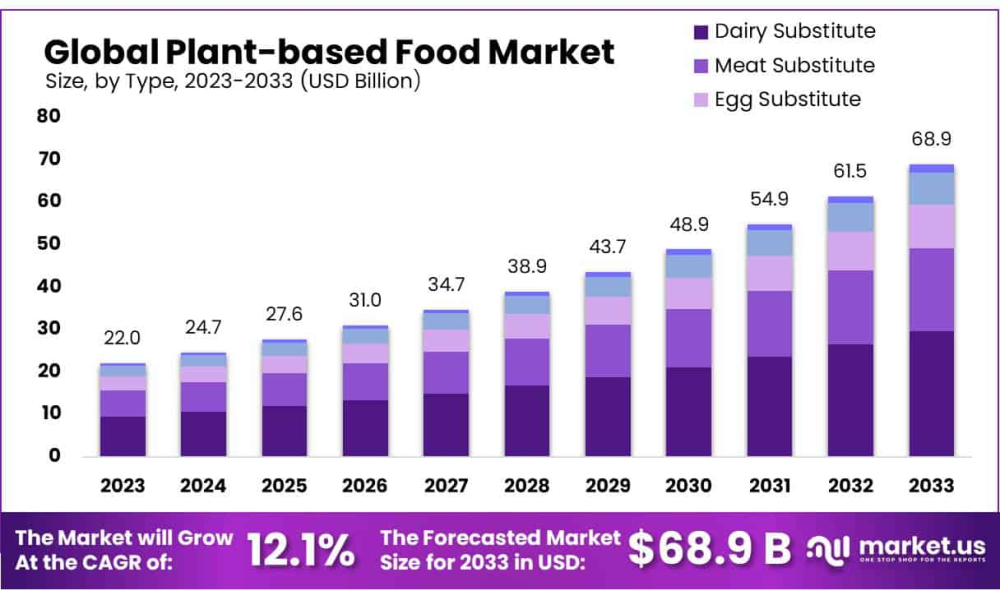
New York, NY – July 09, 2025 – The Global Plant-based Food Market is experiencing rapid growth, driven by increasing consumer demand for healthier and more sustainable food options. In 2023, the market was valued at USD 22.0 billion and is projected to reach USD 68.9 billion by 2033, growing at a strong compound annual growth rate (CAGR) of 12.1% from 2024 to 2033.
This surge is fueled by rising health consciousness, environmental concerns, and the growing popularity of vegan and flexitarian diets. Consumers are actively seeking plant-based alternatives to meat, dairy, and other animal products, creating significant market opportunities for food manufacturers and retailers. Key growth factors include advancements in food technology, which have improved the taste and texture of plant-based products, making them more appealing to a broader audience.
Additionally, expanding retail availability, aggressive marketing by major brands, and increasing investments in plant-based startups are accelerating market expansion. The popularity of plant-based foods is further boosted by endorsements from celebrities and athletes, along with growing awareness of the environmental benefits of reducing meat consumption. With rising disposable incomes and shifting dietary preferences, the plant-based food market is set to witness continued growth, offering lucrative opportunities for businesses to innovate and capture a larger share of this booming industry.
Important Revelation
- Plant-based Food Market size is expected to be worth around USD 68.9 Bn by 2033, from USD 22.0 Bn in 2023, growing at a CAGR of 12.1%.
- Dairy Substitute segment held a dominant market position, capturing more than a 43.2% share.
- Conventional products held a significant market share of over 68.1%.
- Soybean held a dominant market position in the plant-based food sector, capturing more than a 38.1% share.
- Supermarkets/Hypermarkets held a dominant market position in the distribution of plant-based foods, capturing more than a 53.4% share.
- Asia Pacific emerged as the dominating region, holding a 37.7% market share and generating USD 8.3 billion in revenue.
➤ Download Exclusive Sample Of This Premium Report (Including Full TOC, Table & Figures): https://market.us/report/plant-based-food-market/request-sample/
Report Segmentation
By Type
- In 2023, the Dairy Substitute segment emerged as the leading category in the plant-based food market, accounting for over 43.2% of the total share. The segment’s growth has been propelled by the increasing adoption of plant-based alternatives to milk, yogurt, and cheese. These products are favored for their nutritional advantages and growing appeal among consumers with lactose intolerance or dairy allergies. Meat Substitutes followed closely, supported by advancements in flavor and texture that closely replicate conventional meat products.
- The Egg Substitute segment, while still developing, is gaining traction, particularly among vegan consumers and those with egg allergies. Innovations using ingredients like mung beans and aquafaba have made these alternatives more accessible in home cooking and commercial baking. Meanwhile, Seafood Substitutes are emerging as a novel yet fast-growing niche, responding to concerns over marine sustainability and overfishing. Alternatives such as plant-based shrimp, tuna, and fish sticks—produced from seaweed, soy, and pea protein are beginning to establish a presence in retail channels.
By Category
- In 2023, conventional plant-based products retained a substantial lead, representing over 68.1% of the market. This dominance is attributed to their cost-effectiveness, scalability, and widespread availability. Conventional offerings are more commonly found in retail stores and food service channels, allowing a broad consumer base to access plant-based alternatives at an affordable price. In contrast, the Organic segment, although smaller, is experiencing faster growth.
- Increased awareness regarding food safety, pesticide-free cultivation, and non-GMO ingredients has fueled demand for organic plant-based foods. Health-conscious consumers, particularly in higher-income regions, are driving this trend, even with the premium pricing associated with organic labeling. The appeal of environmentally friendly farming practices and the perceived purity of ingredients continue to boost organic consumption, especially among ethical and wellness-driven shoppers.
By Source
- Soybean maintained its dominance in the plant-based food market sector in 2023, capturing over 38.1% of the market share. Its popularity stems from its high protein content, culinary versatility, and deep-rooted presence in vegetarian and vegan diets. Products like tofu, tempeh, and soy milk continue to be widely consumed due to their affordability and ability to fit into various meal types.
- Nuts represent another important source, favored for their rich nutritional content and contribution to texture and flavor in products such as almond and cashew milk, nut-based cheeses, and spreads. Wheat also holds a significant share, particularly through its use in seitan—a wheat gluten-based product known for its meat-like texture. Pea protein, a more recent entrant, is gaining rapid momentum due to its high digestibility and role in innovative meat alternative formulations.
By Distribution Channel
- In 2023, supermarkets and hypermarkets led the plant-based food market distribution landscape, accounting for more than 53.4% of sales. These outlets have leveraged dedicated shelf space and strategic product placement to offer an extensive range of plant-based products, addressing the growing consumer interest in healthier and sustainable food options. Their ability to introduce new brands and promote innovative offerings has significantly contributed to market expansion.
- Departmental stores, although holding a smaller share, cater effectively to urban customers seeking premium and specialty plant-based products. These outlets often stock artisanal or niche offerings not commonly available in mass retail settings. Convenience stores have also begun tapping into the demand for plant-based alternatives, particularly with ready-to-eat snacks and meals. Their popularity has grown in urban centers, driven by the need for quick, nutritious options suitable for busy lifestyles.
Market Key Segmentation
By Type
- Dairy Substitute
- Meat Substitute
- Egg Substitute
- Seafood Substitute
- Others
By Category
- Organic
- Conventional
By Source
- Soybean
- Nuts
- Wheat
- Pea
- Others
By Distribution Channel
- Supermarkets/Hypermarkets
- Departmental Stores
- Convenience Store
- Others
Regional Analysis
The Asia Pacific region led the plant-based food market, capturing a 37.7% share and generating USD 8.3 billion in revenue. Growth in this region is driven by increasing awareness of the health benefits of plant-based diets, rising disposable incomes, and the cultural prominence of vegetarianism in countries like India. The expansion of retail networks and the introduction of locally inspired plant-based products have further fueled this growth.
In contrast, the Middle East & Africa and Latin America exhibited slower growth but hold promising potential. These regions are gradually embracing plant-based diets, driven by an expanding middle class and urbanization. Improved distribution channels and greater product availability are expected to boost future market growth.
Globally, the plant-based food market reflects diverse consumer preferences, economic factors, and market maturity levels. North America, particularly the U.S. and Canada, remains a robust market, propelled by a strong vegan and vegetarian community and growing interest in health and sustainability. Innovation in plant-based dairy and meat alternatives thrives, supported by both startups and established companies.
Europe also demonstrated strong growth, with Germany, the U.K., and the Netherlands leading in market adoption. High consumer acceptance, driven by health and environmental awareness, along with supportive government policies promoting sustainable agriculture, has accelerated the plant-based food sector’s expansion in the region.
Factors Affecting the Growth of the Plant-based Food Market
- Rising Health Awareness: Growing consumer knowledge about health benefits, like lower cholesterol and reduced disease risk, drives demand for plant-based foods. People are choosing these options to improve wellness and prevent chronic illnesses, boosting market growth, especially in regions with strong health trends like North America and Europe.
- Environmental Concerns: Increasing focus on sustainability pushes plant-based food market adoption. Consumers prefer eco-friendly options to reduce their carbon footprint and combat climate change. This trend is strong in Europe, where policies promote sustainable agriculture, encouraging market expansion through environmentally conscious consumer choices.
- Ethical and Animal Welfare: Concerns about animal cruelty fuel demand for plant-based food market. Vegan and vegetarian diets are gaining popularity as consumers avoid animal-derived products. This shift is notable in North America and Asia Pacific, where ethical eating influences market growth significantly.
- Increasing Vegan Population: The rise in vegan and flexitarian diets boosts the plant-based food market. More people, especially millennials, adopt these lifestyles for health and ethical reasons, increasing demand for meat and dairy alternatives, particularly in urban areas like India and China.
- Lactose Intolerance: Growing lactose intolerance globally drives demand for plant-based dairy alternatives. Consumers seek lactose-free options to avoid digestive issues, boosting market growth. This trend is evident in Asia Pacific and North America, where dairy substitutes like almond and oat milk are popular.
Competitive Landscape
- Amy’s Kitchen
- Atlantic Natural Foods LLC
- Beyond Meat Inc
- Daiya Foods Inc.
- Danone S.A.
- Earth’s Own Food Company Inc.
- Eat Just, Inc.
- Garden Protein International, Inc.
- Impossible Foods Inc.
- Lightlife Foods Inc
- Nestlé S.A.
- Nutrisoy Pty Ltd.
- Plamil Foods Ltd.
- Profiled
- Sahmyook Foods
- Sanitarium Health and Wellbeing Company
- Sophie’s Kitchen
- Taifun -Tofu GmbH
- The Hain Celestial Group, Inc.
- Tyson Foods Inc
- Unilever PLC
- Vbite Food Ltd
Get in Touch with Us:
Market.us (Powered By Prudour Pvt. Ltd.)
Address: 420 Lexington Avenue, Suite 300, New York City, NY 10170, United States
Send Email: [email protected]
Refer To More Related Reports:
Natural Gas Generator Market
Biogas Market
Ferroalloys Market



