
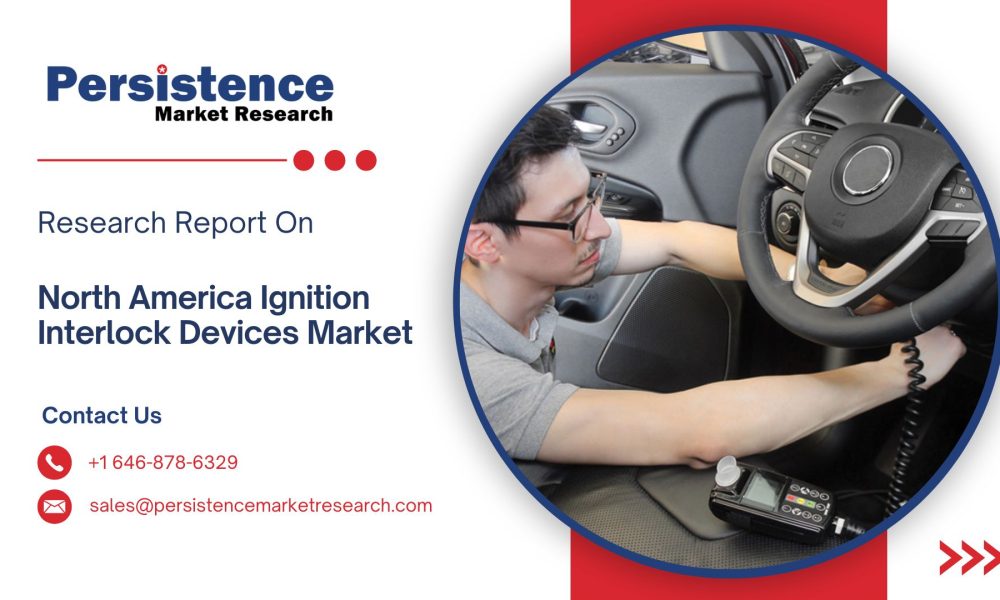
The North America ignition interlock devices market is witnessing robust growth, driven by an increasing focus on road safety, stringent DUI laws, and technological advancements in alcohol detection systems. According to the latest data from Persistence Market Research, the market is projected to reach US$ 668.9 million by 2025. Over the forecast period (2025–2032), the market is expected to rise steadily at a CAGR of 8.1%, ultimately attaining a value of US$ 1,153.8 million by 2032. This impressive growth trajectory reflects a combination of regulatory mandates, awareness campaigns, and demand for innovative, accurate devices across the region.
The U.S. holds the largest market share, accounting for 58.9% in 2024, underscoring its leadership position. This dominance is attributed to aggressive legal enforcement against drunk driving and the widespread implementation of ignition interlock programs across numerous states. The growth in the U.S. is also supported by advanced infrastructure, awareness of alcohol-related accidents, and collaboration between manufacturers and state-level authorities to ensure accessibility and affordability of devices.
Get | Download Sample Copy with TOC, Graphs & List of Figures @ https://www.persistencemarketresearch.com/samples/9170
Key Highlights from the Report
- Market Valuation in 2025: The ignition interlock devices market in North America is forecasted to reach US$ 668.9 million.
- Market Forecast for 2032: The industry is anticipated to grow significantly, touching US$ 1,153.8 million by 2032.
- Compound Annual Growth Rate: The market is set to grow at a CAGR of 8.1% from 2025 to 2032.
- Leading Country Share: The U.S. accounted for 58.9% of the market share in 2024, indicating its strong regulatory enforcement and awareness levels.
- Technology Innovations Driving Growth: Manufacturers are integrating biometric and wireless technology into devices to enhance safety and usability.
- Legislative Influence: State-mandated programs and repeat DUI offender laws are significantly contributing to steady and sustained device installations.
Market Segmentation
By Product Type
The market is segmented based on the types of ignition interlock devices available, including standard breath-based systems, advanced biometric-enabled devices, and real-time reporting systems. Among these, breath-based interlock devices dominate due to their affordability and proven effectiveness. These systems are integrated with sensors that measure a driver’s blood alcohol content (BAC) before enabling ignition. Meanwhile, biometric-enabled systems are gaining traction in both private and public sectors due to enhanced security and user authentication, helping to eliminate fraudulent circumvention of tests.
Real-time monitoring features with GPS and data logging capabilities are increasingly sought after by government agencies and private fleet owners. These smart devices allow authorities to track violations and BAC levels instantly. As legislation across North America evolves, demand for tamper-proof and technologically advanced interlocks is expected to grow significantly over the next decade.
By End-User
End-user segmentation in the North America ignition interlock devices market includes government agencies, law enforcement departments, private sector fleets, and individual DUI offenders. Government and law enforcement agencies form the largest end-user segment, driven by legal mandates requiring ignition interlocks for first-time and repeat DUI offenders. These devices are installed as part of rehabilitation or probation programs to prevent repeat offenses and reduce alcohol-related road incidents.
Private fleet operators are also increasingly implementing these systems to ensure driver accountability and minimize legal and financial liabilities. Moreover, individual consumers, especially those required by court orders, represent a steady demand pool. With the increased availability of flexible leasing options and more affordable models, individual adoption is expected to grow throughout the forecast period.
Regional Insights
United States
The U.S. leads the North American ignition interlock devices market, with a market share of 58.9% as of 2024. Strong legal enforcement, state-level mandates for DUI offenders, and public awareness initiatives have fueled demand. Many U.S. states have implemented mandatory ignition interlock laws for all DUI convictions, further accelerating device installations. Additionally, continuous efforts by safety organizations and federal transportation bodies are influencing policy reforms and funding for DUI prevention programs.
Canada and Emerging Areas
While the U.S. remains dominant, Canada is experiencing a growing interest in ignition interlock programs. Provincial governments are increasingly aligning their DUI laws with international best practices, introducing stricter penalties and mandatory interlock installations for repeat offenders. This legislative evolution, coupled with a rising number of DUI incidents, is expected to contribute to steady market growth in Canada. Partnerships between device manufacturers and provincial road safety programs are expected to facilitate market penetration.
Market Drivers
Stringent Drunk Driving Laws
One of the most powerful market drivers is the growing enforcement of DUI laws across North America. States in the U.S. have adopted rigorous ignition interlock mandates for DUI offenders, especially repeat offenders. As a part of offender rehabilitation programs, these devices are now a legal requirement in several jurisdictions, prompting mandatory installation post-conviction. This regulatory environment ensures a consistent demand for devices, particularly in high-population states with elevated DUI rates.
Legislative support is further bolstered by insurance companies and safety organizations advocating for safer road practices. Lawmakers are also pushing for nationwide standardization of interlock device mandates, which would result in uniform adoption and open doors for wider device deployment. These legal dynamics make regulatory frameworks one of the most crucial growth engines in the market.
Public Safety Awareness and Technological Integration
With rising awareness about the consequences of impaired driving, public demand for preventive measures is increasing. Interlock devices are not just seen as punitive tools but also as life-saving technologies. Educational campaigns, statistics highlighting DUI fatalities, and media coverage have created a societal push toward zero-tolerance policies, indirectly benefiting device manufacturers.
Simultaneously, advancements in technology, including biometric identification, mobile app integrations, and wireless connectivity, are revolutionizing the usability and monitoring capabilities of interlock devices. These upgrades reduce device tampering and improve data transparency for both authorities and users, resulting in greater acceptance and reliability.
For customization options before purchasing: https://www.persistencemarketresearch.com/request-customization/9170
Market Restraints
High Cost of Installation and Maintenance
Despite their effectiveness, ignition interlock devices come with a considerable cost burden, especially for individual offenders. While some states offer subsidies or assistance programs, many users face out-of-pocket expenses for installation, monthly leasing, calibration, and maintenance. These costs often range from US$ 70 to US$ 150 per month, which can be prohibitive for lower-income offenders.
The lack of standardized pricing and limited access to subsidies can discourage users from complying with mandates or lead to delays in device installation. This financial barrier remains a significant constraint, particularly in rural areas or among economically disadvantaged populations.
User Resistance and Privacy Concerns
Another major restraint is the social stigma and resistance associated with using interlock devices. Offenders often see these devices as intrusive, uncomfortable, or embarrassing. Furthermore, the perception of constant surveillance and the requirement to regularly submit breath samples can create reluctance, especially among first-time offenders.
In addition, there are growing concerns about data privacy. With advanced systems tracking location and storing user data, individuals and advocacy groups have raised concerns regarding how the data is stored, accessed, and shared. Without clear regulations around data handling and user consent, privacy issues could hinder broader acceptance of newer device models.
Market Opportunities
Expansion of Mandates to First-Time Offenders
Currently, many jurisdictions require ignition interlock devices only for repeat or high-BAC offenders. However, there is growing support to extend these mandates to all DUI convictions, including first-time offenders. This shift in legal framework can create a massive new demand segment, significantly increasing the install base.
Public policy advocates and safety watchdogs are lobbying for uniform national mandates, which could standardize adoption and make devices a fixture in all DUI sentencing. This policy change represents a significant market opportunity for both established players and new entrants looking to scale.
Innovation in Smart and Biometric Devices
Manufacturers that invest in R&D and product innovation stand to benefit enormously. The demand for smart interlock devices with biometric verification, AI-powered analysis, and real-time reporting capabilities is rising. These features are especially attractive to law enforcement agencies and fleet operators, enabling enhanced monitoring, fraud detection, and instant reporting.
Additionally, mobile compatibility and remote servicing reduce the need for in-person calibration visits, expanding device access even in remote or underserved regions. As devices become smarter and more integrated, they become more attractive not only for compliance but also as preventive tools for employers and families, creating untapped market segments.
Company Insights
Major players operating in the North America ignition interlock devices market include:
- SmartStart Inc.
- Lifesafer Inc.
- Alcohol Countermeasure Systems, Inc.
- Intoxalock (Consumer Safety Technology)
- Drägerwerk AG & Co. KGaA
- Monitech, LLC
- Alcohol Detection Systems, Inc.
- Others
Buy Now: https://www.persistencemarketresearch.com/checkout/9170
Frequently Asked Questions
- What are the main factors influencing the North America Ignition Interlock Devices Market 2025–2032?
- Which companies dominate and lead in the North America Ignition Interlock Devices market?
- What are the market’s opportunities, risks, and general structure over the forecast period?
- How do the top North America Ignition Interlock Devices companies compare in terms of sales, revenue, and pricing?
- How are market types (technology, end-use) and applications explored in terms of deals, revenue, and market value?
Future Opportunities and Growth Prospects
Looking ahead, the North America ignition interlock devices market offers sustained potential, anchored by a synergy of regulation, technology, and stakeholder incentives. Continued pressure to reduce alcohol-related traffic fatalities and injuries will likely push more jurisdictions to mandate or incentivize IID installation. At the same time, as device costs decline and smart integration becomes standard, adoption becomes more palatable for both compliance users and commercial fleets.
On the technology front, the merging of IIDs with telematics, in-vehicle diagnostics, and predictive analytics opens new business models (e.g. subscription or as-a-service models). Insurance tie-ups or performance-based rebates could further accelerate uptake. In addition, new features like non-invasive sobriety detection (e.g. sensor-based systems on steering wheels or pads) may complement or gradually augment traditional breath-based systems, broadening application scope.
Geographically, growth may emanate from provinces or states with weaker current mandates but strong public safety advocacy. For players in the ecosystem, strategic partnerships with government bodies, courts, and insurance firms will be critical to scale. Ultimately, the confluence of regulatory momentum, technological evolution, and stakeholder alignment augurs a promising trajectory for the North America ignition interlock devices market through 2032 and beyond.




