
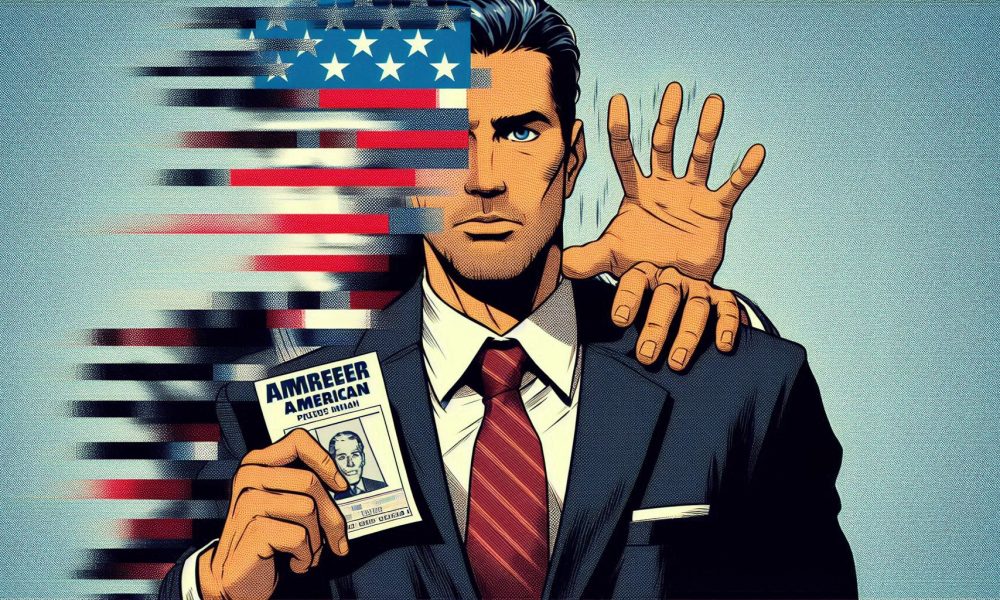
How Modern Identity Forgers Are Exploiting AI and Optical Tricks to Evade Detection
VANCOUVER, British Columbia — In an era dominated by biometric security—from airport checkpoints to cryptocurrency exchanges—the human body has become the ultimate password. Governments and private enterprises alike have invested heavily in biometric systems, particularly iris scanning and facial recognition, to secure borders, protect data, and verify identities. However, by 2025, these very systems are under siege from a new breed of forgers who are leveraging artificial intelligence and digital subterfuge.
With biometric security increasingly replacing physical documents and PIN codes, adversaries have shifted focus from hacking databases to deceiving sensors. Iris spoofing and face morphing are now key tactics in biometric circumvention, used not only by fraudsters, but by political dissidents, fugitives, and privacy advocates seeking to evade authoritarian surveillance or legal capture.
Amicus International Consulting, a firm specializing in legal identity change and travel security solutions, warns that while biometrics offer strong protections, they are not foolproof. Understanding their vulnerabilities is essential for both governments and individuals navigating the global surveillance landscape.
The Illusion of Infallibility: How Iris Scans Are Being Tricked
Iris recognition was once considered virtually unbreakable. Unique to every person, even between twins, the iris was viewed as a gold standard of biometric accuracy. However, researchers and threat actors have demonstrated a range of spoofing techniques now available to bad actors.
Iris spoofing involves presenting fake or altered iris images to biometric scanners. Techniques include:
High-resolution printed contact lenses replicating legitimate iris patterns
Synthetic iris images generated by AI trained on publicly available datasets
Infrared-matching overlays that deceive sensors into reading a match
Dead-eye replicas used in high-security spoof attempts
These attacks have been successful against some legacy systems and even newer models that lack robust liveness detection protocols.
Case Study: Airport Iris Scanner Defeated in Doha
In 2023, a man travelling under a false identity successfully passed iris verification at Hamad International Airport in Qatar using a sophisticated eye mask embedded with a near-infrared iris overlay. The mask was designed using AI-enhanced images based on publicly leaked passport databases.
While the traveler was later caught due to facial mismatch in secondary screening, the iris system failed to flag the discrepancy—marking one of the first confirmed biometric failures at a major international airport.
The breach prompted a regional overhaul of scanner calibration and authentication procedures.
Face Morphing: The Trojan Horse of Facial Recognition
Face morphing, a technique originally used for art and entertainment, is now one of the most effective tools in biometric subversion. The process involves blending two facial images into a single synthetic photo that carries elements of both individuals.
Used in passport fraud and border evasion, a morph can trick facial recognition software into matching multiple people to a single identity. Criminal groups and dark web vendors now sell morph-passports that can be used interchangeably by two or more individuals.
Facial recognition systems, especially those used by border control agencies and fintech platforms, are vulnerable if they lack morph-detection algorithms or cannot cross-reference facial dynamics (like blinking patterns or subtle muscle movement).
Case Study: European Identity Ring Exploits Morphing Loophole
A 2024 Europol investigation uncovered a Bulgarian-led identity ring that used face morphing to exploit EU e-passport systems. Individuals would apply for legal passports using morphed photos that matched both their facial structure and that of another person. Both could travel under the same document in different regions without raising alarms.
The group issued over 100 dual-use travel documents before the ring was dismantled. Authorities admitted that their facial recognition systems had no built-in morph detection and relied solely on photo-matching algorithms.
Biometric Spoofing Is Now a Service
Like any underground trade, biometric subversion has become commoditized. On the dark web and encrypted platforms, vendors now offer spoofing kits, including:
3D-printed face masks
AI-generated faces with customizable ethnic features
Dynamic morph engines for creating facial videos with blinking and mouth movements
Iris pattern generators that mirror legitimate user datasets
Virtual webcam overlays for fooling online verification tools
Prices vary, with complete kits ranging from $3,000 to $20,000, depending on the biometric type and target system.
The Role of Amicus: Legal Identity, Not Deception
Amicus International Consulting does not participate in biometric manipulation or support the use of spoofing tactics. However, it offers legal solutions for individuals facing wrongful surveillance, mistaken identity, or the need for lawful identity protection.
Services include:
Second citizenship acquisition in jurisdictions offering biometric privacy
Name and legal gender changes compliant with global standards
Anonymous travel strategies for whistleblowers and at-risk individuals
Digital fingerprint erasure and identity cleansing consulting
Relocation planning to countries without aggressive biometric enforcement
Amicus also educates clients on biometric vulnerabilities and how to legally navigate border regimes without triggering alarms or engaging in deception.
Ethics vs. Exploits: Why People Use Spoofing Tactics
Not all biometric spoofing is done for crime. Common users include:
Political dissidents avoiding arrest at international borders
Journalists and activists in repressive regimes
Survivors of human trafficking fleeing their abusers
Whistleblowers protecting their real identities after exposure
Refugees denied status under existing identity data
For these individuals, spoofing isn’t about fraud—it’s about survival in a world where biometrics are increasingly tied to surveillance and control.
Where Biometrics Are Being Weaponized
Countries with authoritarian governments have weaponized biometric systems to:
Track political opponents
Block access to public transportation
Deny bank access to dissidents
Arrest individuals based on real-time CCTV facial scans
Exclude refugees from basic services
These actions are driving demand for privacy, spoofing technology, and legal off-ramps, such as second citizenship and new identities.
What Governments Are Doing About It
Agencies worldwide are developing countermeasures to spoofing, such as:
Liveness detection protocols (eye movement, blinking, micro-expressions)
Multi-modal biometrics (combining iris, facial, voice, and gait analysis)
Challenge-response authentication
Behavioural tracking (typing cadence, location consistency, device history)
AI-based anomaly detection in real-time scans
However, experts caution that detection often lags behind innovation in the detection of attacks. For every new safeguard, a workaround follows.
Legal Consequences of Biometric Forgery
The use of spoofing tools to bypass biometric systems is illegal under national and international law. Criminal penalties can include:
Identity fraud charges
Immigration bans
Asset seizure
Jail time
Lifetime biometric flagging across international databases
Even in humanitarian cases, using spoofing technology carries legal and moral risk. Amicus strongly advises clients to seek lawful paths of identity protection rather than shortcuts that could endanger their future.
Future-Proofing Identity in 2026 and Beyond
Biometric systems will continue to evolve. The future likely includes:
Genetic authentication via blood or saliva samples
Emotion recognition at checkpoints
Voice sentiment analysis during calls
Drone-based biometric collection in conflict zones
Full-body behavioural analytics tied to wearable devices
Amicus continues to develop privacy-first legal frameworks to help clients navigate this environment without resorting to illegal methods or digital camouflage.
Conclusion: Cracking the Code, Legally
Iris spoofing and face morphing highlight one central truth: even the strongest digital security can be deceived. In a world where your eyes and face are your passport, the threat of misidentification, abuse, or overreach is a genuine concern.
But deception is not the only answer. Amicus International Consulting offers lawful and ethical alternatives for individuals seeking to protect themselves in a biometric-first world.
In the battle between visibility and anonymity, the future belongs to those who understand the system and know how to navigate it legally.
Contact Information
Phone: +1 (604) 200-5402
Email: [email protected]
Website: www.amicusint.ca




