
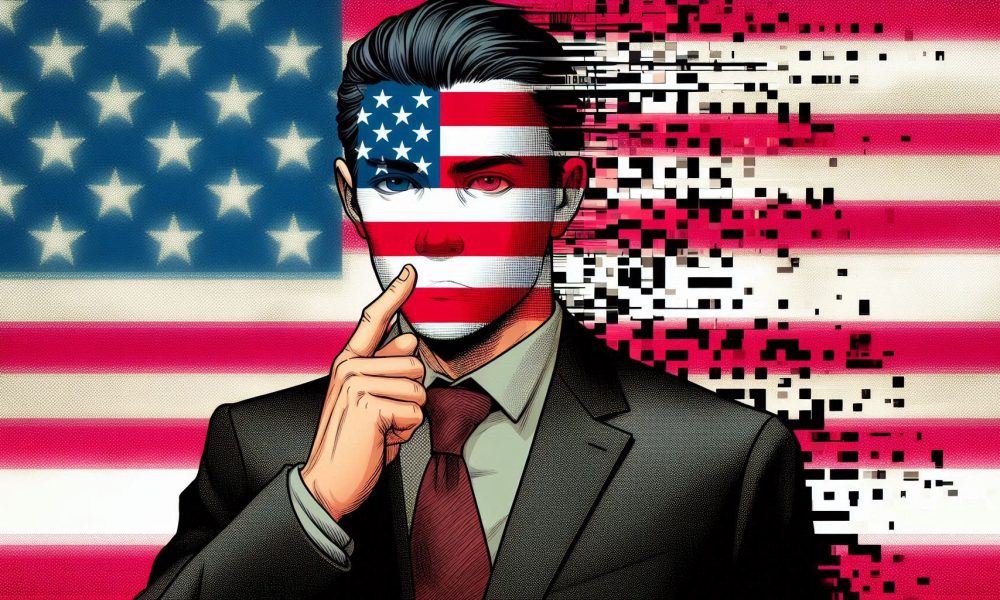
How the Art of Disappearing Has Evolved from Ink to Algorithms—and Why It Still Matters
VANCOUVER, British Columbia — Identity forgery is as old as identity itself. For centuries, individuals have altered, borrowed, or reinvented themselves to escape persecution, cross borders, commit fraud, or simply survive. From ancient travel permits written in Latin to biometric spoofing and AI-generated avatars, the practice of crafting alternate selves has undergone a dramatic—and dangerous—evolution.
In 2025, the stakes are higher than ever. Governments are digitizing citizenship, borders are hardened with biometric gates, and surveillance technologies now identify not only who you are, but where you’ve been, who you’re with, and what your intentions might be. But even amid all this, identity forgery persists—adapting to every system meant to suppress it.
This press release from Amicus International Consulting, a global authority on legal identity change and privacy-driven migration, examines the history of identity forgery, the methods employed across centuries, and the implications for a future where facial recognition, deepfake avatars, and digital passports prevail.
The Ancient Origins: Identity in the Age of Empires
In the ancient world, identity was defined by tribe, language, or land, but early states began to document citizens using clay tablets, scrolls, and seals. In Egypt, Mesopotamia, and Rome, individuals used forged seals or cursive handwriting to present themselves as authorized envoys, soldiers, or officials.
The Roman “diploma”—a bronze military pass—granted privileges such as land ownership or travel. Forging such documents became a criminal enterprise even in antiquity, punishable by death. Medieval Europe had handwritten charters and letters of safe passage, often sealed with wax. These seals were easily copied, making forgery both common and profitable.
18th and 19th Centuries: Forging for Survival and Subversion
As nation-states formed, governments introduced official passports, census rolls, and birth registries. But enforcement was patchy. During the Napoleonic Wars, spies often travelled on forged documents. Jewish families in 19th-century Eastern Europe bribed clerks to record false ages or professions to avoid military conscription or deportation.
In the American South, enslaved people used forged manumission documents or copied travel passes to escape bondage. Many abolitionist networks supported these forgeries as acts of moral resistance.
By the 1800s, identity forgery wasn’t just a crime—it became a form of civil disobedience and a means of survival.
World War II: The Golden Age of Paper Forgery
Nowhere was the art of identity forgery more vital—or widespread—than during World War II. As Nazi Germany expanded its reach, underground networks across Europe forged thousands of passports, baptismal certificates, military IDs, and travel permits.
The French Resistance, Polish Underground, and Dutch resistance famously built entire counterfeiting labs. Many used stolen official papers and rubber stamps to replicate state documents. A common trick was to “age” paper with tea and cigarette smoke.
Case Study: The Jewish Boy Who Became a Catholic Choirboy
In 1943, a Jewish boy in Belgium survived the Holocaust by using a forged baptismal certificate and enrollment papers for a Catholic boarding school. His new name, religion, and background were entirely fictitious—crafted by local forgers. He lived under this identity until liberation.
The forgers who saved him were later honoured as Righteous Among the Nations. Their acts demonstrate how forgery, when used ethically, can save lives.
The Cold War: Identity as a Weapon
In the postwar years, identity forgery became a geopolitical weapon. Intelligence agencies, including the CIA, KGB, MI6, and Mossad, operated black sites for document fabrication. Agents travelled with multiple passports, often under alias personas that included complete biographical backstories.
Notably, the KGB’s “illegals” program created identities from scratch, often by finding dead infants and assuming their identities. These agents lived as citizens of other nations for decades, gathering intelligence undetected.
Case Study: The Spy Who Wasn’t There
In 1985, a Canadian man named Paul Hampel was revealed to be a Russian spy operating under a forged Canadian identity. His passport, banking records, and university credentials were authentic because they had been meticulously maintained for over 20 years. His deep-cover operation highlighted how long-term identity forgery had become a strategic tool in statecraft.
The Digital Revolution: Forgery Goes Online
By the 1990s, digitization changed the game. Identity documents became harder to forge thanks to embedded chips, machine-readable zones (MRZs), and holograms. But this also created new attack surfaces:
Stolen Social Security numbers
Database hacks
Fake email and domain records
Digital certificate forgery
False online resumes and credentials
Meanwhile, online personas—such as LinkedIn profiles, e-commerce buyer accounts, or online education certificates—have become just as important as physical documents. Forgers began building entire “fake lives” online to support real-world identities.
9/11 and the Rise of Biometric Identity
The September 11 attacks exposed weaknesses in global identity systems—most of the hijackers travelled using valid but fraudulently obtained passports. In response, countries accelerated biometric adoption:
Facial recognition
Fingerprinting
Iris scans
Voiceprint authentication
DNA matching
Biometric passports (e-passports) have become the standard in the EU, the U.S., and many nations in the Asia-Pacific region. Identity forgery had to evolve again—this time from ink and paper to algorithms and synthetic data.
Deepfakes, Avatars, and AI-Enhanced Forgery (2020s–Present)
Today’s most advanced identity forgers don’t use ink or stolen stamps. They use:
AI-generated facial images that pass facial recognition
Deepfake videos for remote identity verification
Synthetic voice overlays to fool voiceprint security
Spoofed iris patterns and facial morphing
“Digital twins” or avatars built to mimic real humans
Social media automation to simulate years of activity
Forged identities in 2025 can now pass automated Know Your Customer (KYC) checks at banks, register for international services, and even qualify for residency programs—all without a living human being involved.
Case Study: The AI Professor Who Never Existed
In 2023, a well-known journal published several research articles by a fictional academic. The individual had a LinkedIn profile, a photo created via GAN technology, and even fake citations. Eventually, whistleblowers discovered that the “professor” never existed—her identity had been entirely fabricated to boost the reputation of a foreign university.
This case illustrates how even academic institutions can fall victim to identity fabrications enhanced by AI.
The Dark Web and the Identity Supermarket
Today, identity forgery is a global commercial enterprise. On the dark web, vendors offer:
Forged passports and ID cards from 50+ nations
Biometric spoofing kits
Aged social media profiles
Fake utility bills and rental agreements
Synthetic fingerprint models
Deepfaked video verification services
Prices range from $1,000 to $25,000, depending on the country and the complexity of the project. Some vendors offer “subscription services” that allow clients to update or replace documents every 6–12 months.
The Legal Response and Its Gaps
Governments have responded with harsh penalties:
Interpol Red Notices for forged identity travel
Extradition agreements targeting forgers
Advanced border control systems using AI and behavioural biometrics
Blockchain-based ID verification trials
Still, enforcement lags behind innovation. Many forged or synthetic identities go undetected, especially in failed states, conflict zones, or regions with weak digital infrastructure.
Amicus International Consulting: Legal Alternatives to Forgery
While identity forgery remains widespread, Amicus International Consulting offers legal and ethical alternatives for those who need to disappear, relocate, or protect themselves without breaking the law.
Services include:
Second citizenship acquisition (via investment or ancestral ties)
Court-validated legal name and gender changes
Extradition risk planning
Anonymous banking and offshore TIN setup
Reputation cleansing and online persona reconstruction
Amicus specializes in assisting journalists, political refugees, digital security clients, and individuals trapped by geopolitics, not criminals seeking deception.
Why Legal Identity Change Still Matters
The world is becoming more transparent, but also more oppressive. Biometric borders, mass surveillance, and digital databases can entrap people for things they’ve said, written, or even thought. For many, the only way forward is through a lawful reset—a new name, a new passport, a new start.
Amicus helps these individuals legally change their lives without falsification, building sustainable, verifiable, and protected futures in a world that increasingly tracks everything.
Final Thoughts: From Scrolls to Simulations
The history of identity forgery is a mirror of history itself, reflecting war, escape, espionage, and rebellion. Today, it continues not because people want to deceive, but because the systems meant to protect identities are often the very systems used to control, exclude, or endanger them.
In 2025, you won’t need to forge a passport to change your life. But you do need help, expertise, and a strategy. Amicus International Consulting stands ready to provide legal identity change solutions for a complex world.
Because sometimes, starting over is the only way to stay safe.
Contact Information
Phone: +1 (604) 200-5402
Email: [email protected]
Website: www.amicusint.ca




