
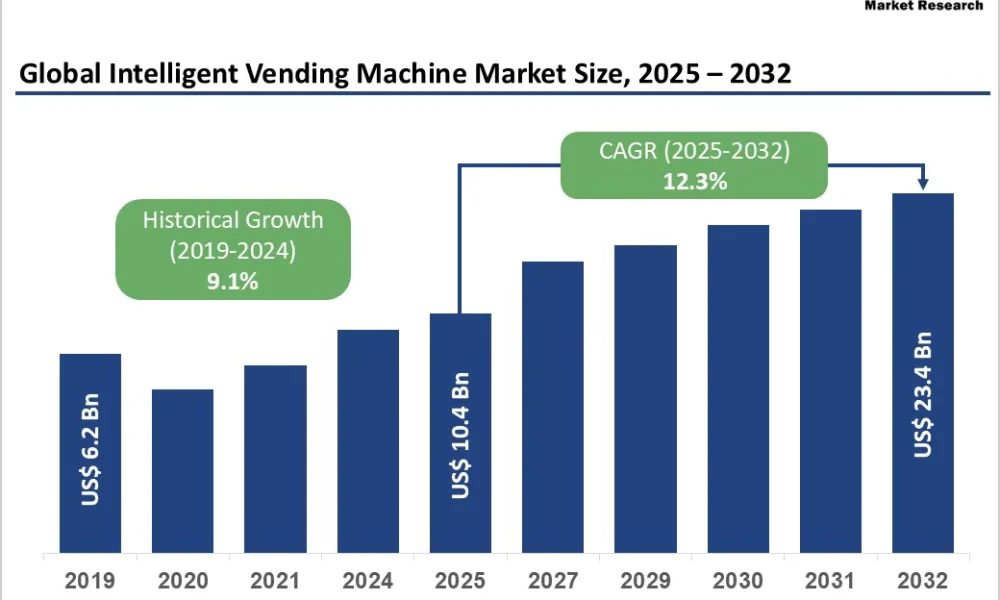
The global intelligent vending machine market is entering a dynamic growth phase as automation, AI integration, and digital payments redefine retail convenience. Valued at US$10.4 billion in 2025, the market is projected to reach US$23.4 billion by 2032, expanding at a strong 12.3% CAGR between 2025 and 2032.
This rapid expansion reflects more than just increased machine installations. It signals a broader transformation in how consumers interact with unattended retail systems. Intelligent vending machines are evolving into connected, data-driven retail hubs powered by artificial intelligence (AI), Internet of Things (IoT), cloud platforms, and advanced payment ecosystems.
As consumer lifestyles become more time-sensitive and digitally driven, intelligent vending machines are positioned at the intersection of automation, personalization, and real-time commerce.
Understanding Intelligent Vending Machines
Traditional vending machines offered limited functionality—dispense products upon coin insertion. Intelligent vending machines, by contrast, are digitally connected, AI-enabled retail units that deliver data-driven insights and interactive consumer experiences.
These machines feature:
- AI-powered product recommendations
- IoT-enabled inventory monitoring
- Cloud-based analytics dashboards
- Cashless and contactless payment integration
- Remote diagnostics and predictive maintenance
- Digital touchscreen interfaces
By combining automation with analytics, operators can optimize stock levels, reduce downtime, and improve customer engagement.
The transformation from mechanical dispensers to smart retail endpoints is reshaping the unattended retail ecosystem globally.
Market Growth Drivers
- AI and IoT Integration
One of the strongest growth catalysts in the intelligent vending machine market is the integration of AI and IoT technologies. Connected machines collect real-time data on sales, consumer preferences, peak usage times, and inventory levels.
Operators use this data to:
- Forecast demand patterns
- Automate restocking schedules
- Optimize product placement
- Implement dynamic pricing strategies
AI algorithms also enable personalized experiences. For instance, machines can suggest complementary products or adjust promotional content based on time of day or location.
The result is improved operational efficiency and higher per-unit revenue.
- Rise of Cashless and Contactless Payments
The global shift toward digital payments is significantly accelerating vending modernization. Consumers increasingly prefer:
- Mobile wallets
- QR code payments
- NFC-based contactless cards
- UPI and digital banking systems
Intelligent vending machines equipped with secure payment gateways offer seamless transactions while minimizing physical contact—an important factor in the post-pandemic environment.
For operators, digital payment integration reduces cash handling risks and improves revenue tracking transparency.
- Demand for 24/7 Convenience
Modern consumers prioritize speed and accessibility. Intelligent vending machines provide round-the-clock access to products in:
- Corporate offices
- Airports and transit hubs
- Hospitals
- Universities
- Residential complexes
- Smart city environments
This 24/7 availability aligns with changing work patterns, urban lifestyles, and on-the-go consumption habits.
As urban density increases globally, automated retail solutions become essential infrastructure components.
- Cloud-Based Remote Management
Cloud platforms enable centralized monitoring of thousands of vending units across geographies. Operators can track:
- Real-time stock levels
- Machine health diagnostics
- Sales performance analytics
- Energy consumption
Predictive maintenance reduces downtime by identifying technical issues before they escalate. This enhances reliability and strengthens consumer trust.
Cloud connectivity is transforming vending from a reactive business model to a proactive, data-driven one.
Market Segmentation Insights
Dominant Segment: Combination Food and Beverage Machines
Combination machines account for 42% of the market share in 2025, making them the dominant offering segment.
Consumers prefer access to diverse product categories within a single machine. These units typically offer:
- Snacks
- Cold beverages
- Ready-to-eat meals
- Health bars
- Bottled drinks
For operators, combination machines maximize revenue per installation point. Cross-selling opportunities increase average transaction value, improving return on investment.
Their flexibility makes them suitable for high-traffic environments such as airports, malls, and office complexes.
Fastest Growing Segment: Hot Beverage Machines
Hot beverage vending machines are projected to grow at a 12.1% CAGR through 2032.
The global expansion of coffee culture, premium tea consumption, and workplace refreshment demand is fueling growth. Advanced dispensing systems now deliver:
- Barista-style coffee
- Specialty teas
- Hot chocolate
- Customized strength and flavor options
High margins on hot beverages make this segment attractive to operators. Integration with touchscreen interfaces enhances customization, elevating consumer satisfaction.
Regional Market Analysis
North America Leads the Market
North America holds a 40% market share in 2025, positioning it as the leading region.
Several factors support its dominance:
- Advanced digital infrastructure
- High penetration of cashless payment systems
- Mature AI and IoT ecosystems
- Strong corporate adoption of workplace vending solutions
Corporate campuses increasingly deploy intelligent vending machines to improve employee convenience and reduce cafeteria overhead costs.
Additionally, healthcare facilities in the U.S. and Canada are expanding vending solutions for medical supplies and healthy snacks.
Asia Pacific: Fastest Growing Region
Asia Pacific is the fastest-growing region, registering a 14.5% CAGR through 2032.
Growth drivers include:
- Rapid urbanization
- Expanding middle-class consumption
- Smart city initiatives
- Growth of digital payment ecosystems
- Increasing adoption of automated retail in densely populated cities
Countries such as China, Japan, South Korea, and India are investing heavily in smart infrastructure. Japan, historically known for its vending culture, is transitioning toward AI-enabled next-generation machines.
Meanwhile, India’s rapid adoption of UPI and QR-based transactions is accelerating modernization of vending systems in urban centers.
Emerging Opportunity: Healthcare and Medical-Supplies Vending
Healthcare vending is emerging as a high-potential opportunity, projected to grow at a 13.5% CAGR.
Hospitals and clinics are deploying intelligent vending machines to provide:
- PPE kits
- Sanitizers
- Masks
- Over-the-counter medications
- Wellness products
Post-pandemic hygiene awareness and the need for 24/7 medical access are key growth factors.
Corporate wellness initiatives are also driving installations in workplaces, offering employees easy access to health essentials.
This segment combines convenience, automation, and public health infrastructure expansion.
Technology Trends Shaping the Market
- Computer Vision and Facial Recognition
Advanced machines now incorporate computer vision to detect product selection and reduce theft. Some systems integrate facial recognition for age verification in restricted product sales.
These features enhance security while maintaining seamless user experiences.
- Touchless Interfaces
Gesture-based controls and smartphone app integrations are reducing reliance on physical touchscreens.
Consumers can browse product catalogs and complete payments through their mobile devices.
This innovation aligns with hygiene-conscious consumer behavior.
- Sustainable and Energy-Efficient Designs
Sustainability is becoming central to vending innovation. Manufacturers are introducing:
- Energy-efficient cooling systems
- LED lighting
- Eco-friendly refrigerants
- Smart power management
These features reduce operational costs while supporting corporate sustainability goals.
- Dynamic Advertising Integration
Intelligent vending machines now function as digital advertising platforms. Interactive screens display targeted advertisements based on location, time, and consumer demographics.
This creates additional revenue streams for operators beyond product sales.
Elevate your business strategy with comprehensive market data. Request a sample report now: https://www.persistencemarketresearch.com/samples/20221
Competitive Landscape
The intelligent vending machine market is becoming increasingly competitive as technology providers, payment solution companies, and vending manufacturers collaborate.
Key players are focusing on:
- Strategic partnerships with fintech firms
- Expansion into emerging markets
- Product portfolio diversification
- AI-powered software development
- Subscription-based vending models
Customization and modular designs are becoming differentiators in competitive bidding processes.
Operators that integrate analytics with customer experience optimization are gaining market share.
Challenges in the Market
Despite strong growth, the market faces several challenges:
High Initial Investment
Smart vending machines require significant upfront costs due to advanced hardware and software integration.
Smaller operators may struggle with capital expenditure.
Cybersecurity Concerns
As machines become connected devices, they are vulnerable to cyber threats.
Secure payment gateways, encrypted cloud systems, and robust authentication protocols are critical to maintaining consumer trust.
Maintenance Complexity
Advanced systems require technical expertise for installation and maintenance.
Training and skilled workforce availability can impact deployment speed.
Historical Growth Perspective
Between 2019 and 2024, the intelligent vending machine market grew at a 9.1% CAGR, driven primarily by early digital payment adoption and pilot smart vending initiatives.
The post-pandemic period accelerated demand due to reduced human interaction and increased automation acceptance.
The shift from experimental installations to large-scale deployments is now fueling double-digit growth projections.
Future Outlook: Toward Autonomous Retail Ecosystems
The next phase of growth will likely see intelligent vending machines integrated into broader autonomous retail ecosystems.
Future developments may include:
- Integration with smart city data networks
- AI-driven hyper-personalization
- Blockchain-based payment systems
- Robotics-assisted restocking
- Integration with e-commerce platforms
Vending machines could evolve into micro-fulfillment nodes within urban supply chains.
As consumer expectations for instant access rise, intelligent vending will serve as a decentralized retail extension.
Strategic Recommendations for Stakeholders
For investors and operators, the most promising strategies include:
- Targeting high-footfall smart city projects
- Expanding into healthcare and wellness vending
- Investing in AI analytics platforms
- Leveraging advertising monetization opportunities
- Partnering with digital payment providers
Regional expansion into Asia Pacific offers strong long-term potential due to urban growth and digital adoption.
Conclusion
The intelligent vending machine market is no longer a niche automation segment—it is becoming a core component of the smart retail revolution.
With market value expected to more than double from US$10.4 billion in 2025 to US$23.4 billion by 2032, the industry is poised for sustained double-digit growth.
Driven by AI integration, IoT connectivity, digital payments, and evolving consumer lifestyles, intelligent vending machines are transforming unattended retail into an interactive, data-powered ecosystem.
North America continues to lead in adoption, while Asia Pacific emerges as the fastest-growing frontier. Combination food-and-beverage machines dominate installations, and healthcare vending presents a compelling new opportunity.
As technology advances and smart infrastructure expands globally, intelligent vending machines will play a central role in delivering convenient, personalized, and efficient retail experiences for the modern world.
Related Reports:




