
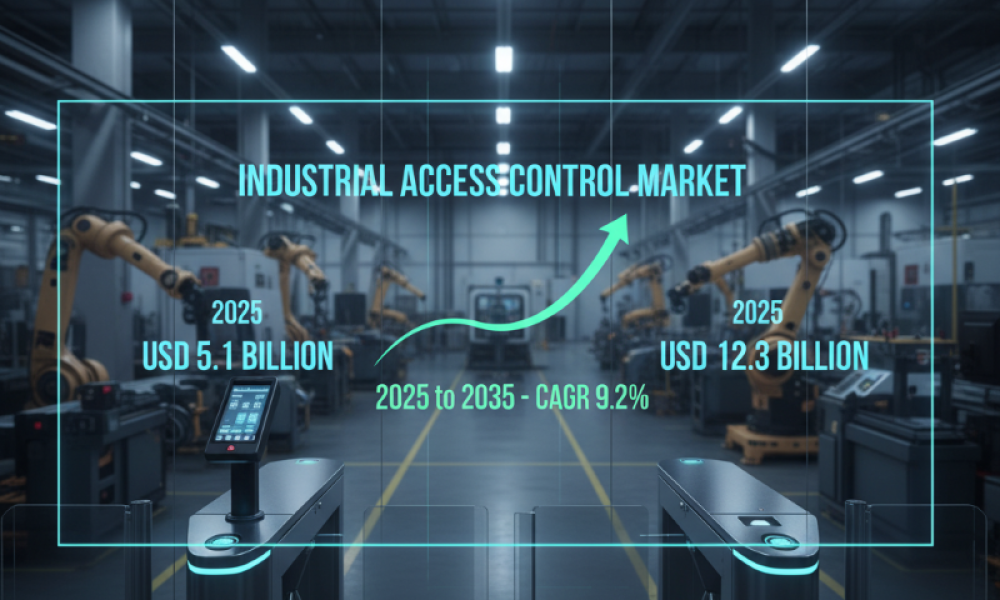
The global Industrial Access Control Market is on track for substantial growth, projected to reach a value of USD 12.3 billion by 2035, up from an estimated USD 5.1 billion in 2025. This growth is fueled by rising security concerns, regulatory pressures, and the ongoing digital transformation in industries worldwide. With a compound annual growth rate (CAGR) of 9.2%, industrial access control systems are rapidly evolving to meet the demands of enhanced security, efficient operations, and robust cybersecurity protection.
Unlock detailed analytics – Request your personalized report now! https://www.futuremarketinsights.com/reports/sample/rep-gb-4726
Market Drivers and Technology Advancements
The increasing adoption of advanced access control systems is driven by the need to secure critical infrastructure, protect assets, and ensure regulatory compliance. In an era where both physical and cyber threats are on the rise, industries are focusing on integrating biometric technologies, IoT connectivity, and AI-powered analytics into their access control systems.
Technological advancements are significantly improving the reliability and efficiency of these systems. In particular, biometric solutions such as fingerprint recognition are becoming increasingly popular for their superior security, ease of use, and ability to prevent unauthorized access. These systems reduce risks associated with lost or stolen credentials while offering fast, secure authentication, which is crucial in sectors like manufacturing, energy, and utilities.
Segmental Analysis
Fingerprint Access Control Systems: Market Leader
Fingerprint access control systems are expected to dominate the market, accounting for 42.7% of the total revenue in 2025. Their superior reliability and ability to provide accurate identification make them the preferred choice for industries with high security requirements. As biometric technology continues to evolve, fingerprint access systems are becoming more cost-effective, scalable, and easier to integrate into existing infrastructures.
Hardware Segment: The Backbone of Security Solutions
The hardware component segment, which includes biometric scanners, card readers, and control panels, will account for 54.3% of the market revenue in 2025. Hardware remains an essential pillar in industrial access control, with companies continually innovating to improve sensor technology, durability, and system compatibility. The demand for physical access points, along with the need for upgraded security infrastructure, will drive the continued growth of this segment.
Energy & Utilities: Leading Industry Vertical
The energy and utilities industry is projected to lead the market in 2025, accounting for 37.5% of the total revenue. This sector’s reliance on securing critical infrastructure from both physical and cyber threats is accelerating the adoption of biometric and smart card-based access control systems. Power plants, substations, and utility facilities are increasingly adopting these technologies to safeguard sensitive areas from unauthorized access, protecting against threats like terrorism and sabotage.
Regional Growth Outlook
The Industrial Access Control Market is witnessing robust growth across several regions, with North America, Asia-Pacific, and Europe leading the way. In North America, the United States is the dominant player, projected to account for over 29.4% of the market share in 2035. The U.S. government’s initiatives to improve national security and the growing focus on securing critical infrastructure are driving the demand for advanced access control solutions.
Asia-Pacific, particularly India and China, is expected to exhibit the fastest growth in the coming years. As digital transformation accelerates in industries like energy, manufacturing, and healthcare, the need for secure access management systems is becoming critical. India’s rapid industrialization and growing concerns over cybersecurity are contributing to the rising demand for advanced access control solutions in the region.
Competitive Landscape
The competitive landscape of the industrial access control market features both established players and emerging innovators. Key industry giants like Honeywell International Inc., Bosch Security and Safety Systems, and Johnson Controls dominate the market, thanks to their vast portfolios, technological expertise, and global presence.
Emerging players are carving out niche markets by offering specialized solutions tailored to specific industries. These players are leveraging cutting-edge technologies such as AI, machine learning, and cloud-based systems to offer scalable, integrated access control solutions that address the evolving security needs of industrial environments.
Download Brochure for Full Insights: https://www.futuremarketinsights.com/reports/brochure/rep-gb-4726
Recent Industry Developments
In May 2025, Johnson Controls introduced its Ducted Systems Solutions App, enhancing installation and maintenance processes with real-time access to equipment data. Meanwhile, Bosch is showcasing AI-driven innovations at industry events, including remote management services and mobile access solutions that streamline configuration and improve user experience.
About Future Market Insights (FMI)
Future Market Insights, Inc. (ESOMAR certified, recipient of the Stevie Award, and a member of the Greater New York Chamber of Commerce) offers profound insights into the driving factors that are boosting demand in the market. FMI stands as the leading global provider of market intelligence, advisory services, consulting, and events for the Packaging, Food and Beverage, Consumer Technology, Healthcare, Industrial, and Chemicals markets. With a vast team of over 400 analysts worldwide, FMI provides global, regional, and local expertise on diverse domains and industry trends across more than 110 countries.



