
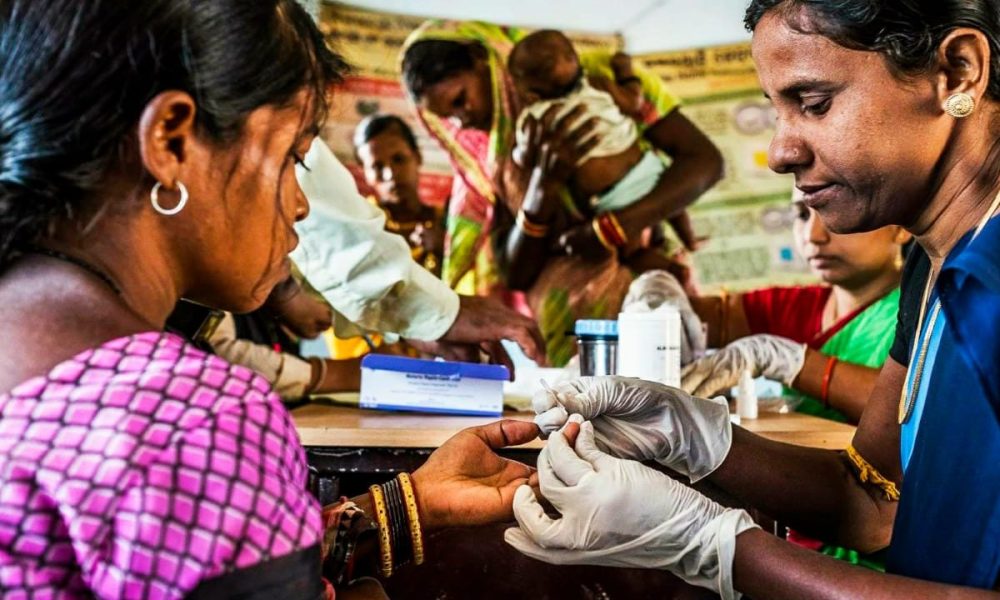
The India malaria diagnostics market plays a critical role in the country’s broader public health ecosystem, especially as India advances toward its malaria elimination goals. Malaria continues to pose a significant disease burden, particularly in tribal, forested, and rural belts where access to healthcare infrastructure remains uneven. Diagnostic tools are the first and most essential step in effective malaria management, enabling early detection, timely treatment, and disease surveillance. The market has evolved considerably over the last decade, moving beyond conventional microscopy toward rapid diagnostic tests (RDTs) and advanced molecular diagnostic technologies. Strong government interventions, international funding support, and rising awareness among healthcare providers have collectively strengthened diagnostic penetration across endemic regions.
From a market size perspective, the India malaria diagnostics market is projected to grow from US$ 61.6 Mn in 2025 to nearly US$ 81.6 Mn by 2032, registering a CAGR of around 4.1% during the forecast period. This steady expansion reflects sustained investments in disease control programs, technological innovation, and public–private partnerships. Rapid Diagnostic Tests currently represent the leading segment due to their speed, affordability, and ease of use, while hospitals and clinics dominate end-use owing to their central role in disease surveillance and reporting. Geographically, East India stands out as the leading regional market, driven by persistently high malaria prevalence in states such as Odisha, Jharkhand, Assam, and Meghalaya, where climatic conditions and socio-economic factors continue to fuel transmission.
Download Your Free Sample & Explore Key Insights: https://www.persistencemarketresearch.com/samples/35426
Key Highlights from the India Malaria Diagnostics Market Report
• Rapid Diagnostic Tests are expected to account for over half of the market share due to their suitability for low-resource settings.
• East India remains the most significant regional contributor, driven by high disease prevalence in tribal and forested zones.
• Molecular diagnostics such as PCR and RT-qPCR are gaining momentum for detecting asymptomatic and low-parasitemia infections.
• Government-led malaria elimination initiatives are expanding diagnostic access across rural and underserved areas.
• Hospitals and clinics play a pivotal role in malaria surveillance through systematic case reporting.
• International organizations continue to provide technical and financial support to strengthen diagnostic capabilities.
Market Segmentation Analysis
The India malaria diagnostics market is segmented based on technology type and end-use, reflecting the diversity of diagnostic needs across healthcare settings. By technology, the market includes microscopy, Rapid Diagnostic Tests, and molecular diagnostic tests. Microscopy has historically been the backbone of malaria diagnosis in India due to its low cost and widespread availability. However, its dependence on skilled technicians and limited sensitivity in detecting low parasite densities have constrained its effectiveness in low-endemic and elimination-phase regions.
Rapid Diagnostic Tests have emerged as the most widely adopted technology segment, largely because they deliver results within 15 to 30 minutes without requiring advanced laboratory infrastructure. These tests are especially valuable in remote and tribal areas where laboratory facilities are scarce. Their ease of deployment and minimal training requirements make them ideal for large-scale screening programs conducted by public health workers. As a result, RDTs are projected to hold approximately 54.2% of the market share in 2025.
Molecular diagnostic tests, including PCR and RT-qPCR, represent the fastest-growing segment. These technologies offer superior sensitivity and specificity, enabling detection of submicroscopic and asymptomatic infections that often escape traditional diagnostic methods. Although currently concentrated in urban hospitals, diagnostic laboratories, and research institutions, molecular diagnostics are increasingly being scaled to support elimination efforts in low-transmission zones. Their ability to identify parasitemia levels as low as 1 parasite per microliter positions them as critical tools in advanced surveillance strategies.
Based on end-use, the market is segmented into hospitals and clinics, diagnostic centers, and academic and research institutions. Hospitals and clinics dominate the segment with nearly 45.6% market share, driven by their capacity to manage severe malaria cases and integrate diagnostic testing into routine clinical workflows. Diagnostic centers are gaining traction due to their specialized infrastructure and expanding presence in infectious disease testing, while academic and research institutions primarily support epidemiological studies and technology validation.
Get Custom Insights Designed for Your Business: https://www.persistencemarketresearch.com/request-customization/35426
Regional Insights into the India Malaria Diagnostics Market
Regional dynamics significantly shape the demand for malaria diagnostic solutions across India. East India remains the epicenter of malaria prevalence, with states such as Odisha, Chhattisgarh, Jharkhand, West Bengal, Assam, and Meghalaya accounting for a substantial share of national cases. Climatic conditions, dense forest cover, and socio-economic vulnerabilities contribute to persistent transmission in these regions. Government-led initiatives like Odisha’s DAMaN program have intensified active surveillance and rapid testing, driving consistent demand for RDTs and molecular diagnostic tools. However, limitations in microscopy sensitivity have highlighted the need for integrating more advanced diagnostic technologies.
In North India, malaria transmission has declined significantly in states like Punjab and Haryana, placing the region in a low-endemic or near-elimination phase. Here, the focus has shifted toward identifying submicroscopic infections that can sustain residual transmission. Studies comparing microscopy with nested PCR have revealed a considerable proportion of infections missed by conventional methods, underscoring the growing importance of molecular diagnostics. Surveillance challenges persist due to fragmented reporting systems and limited integration of private healthcare data, which restrict accurate disease burden estimation.
West India, comprising Maharashtra, Gujarat, Rajasthan, and Goa, exhibits a mixed diagnostic landscape. Urban areas benefit from advanced healthcare infrastructure and private diagnostic laboratories, while rural regions rely heavily on public health centers and outreach programs. Blood smear examinations remain common, but delays in results have historically led to presumptive treatment practices. The increasing adoption of RDTs is improving diagnostic turnaround times and treatment accuracy, particularly in urban slums and peri-urban settings where malaria transmission remains localized but persistent.
Market Drivers
Government interventions and technological innovation are the primary drivers accelerating growth in the India malaria diagnostics market. A large proportion of the population lives in malaria-endemic areas, with a significant concentration of cases in hilly and tribal regions where healthcare access is limited. To address delayed diagnosis and underreporting, national initiatives such as the National Strategic Plan for Malaria Elimination have prioritized the distribution of accessible diagnostic tools. Rapid Diagnostic Tests have gained prominence because they can be used by frontline health workers in resource-constrained environments. Additionally, innovations such as AI-enabled portable microscopes are enhancing diagnostic accuracy in remote areas, further supporting market expansion.
Market Restraints
Despite progress, diagnostic limitations associated with traditional microscopy remain a key restraint for the market. Microscopy struggles to detect low parasite densities and mixed-species infections, which are increasingly common in low-transmission and elimination-phase settings. Sensitivity levels can drop sharply in these regions, leading to underdiagnosis and continued transmission. The requirement for skilled technicians and quality-controlled laboratory environments further restricts microscopy’s scalability. These gaps undermine elimination efforts and highlight the need for broader adoption of more sensitive diagnostic technologies.
Market Opportunities
Advancements in genomic surveillance present significant opportunities for the India malaria diagnostics market. Next-Generation Sequencing technologies enable high-resolution analysis of parasite genetics, supporting targeted treatment strategies and resistance monitoring. Studies analyzing antimalarial resistance genes across different regions have revealed distinct geographic patterns, emphasizing the value of region-specific interventions. Collaborative initiatives involving research institutions and international partners are leveraging NGS to strengthen surveillance frameworks. As costs decline and technical expertise expands, genomic diagnostics are expected to play an increasingly important role in shaping future malaria control strategies.
Checkout Now & Download Complete Market Report: https://www.persistencemarketresearch.com/checkout/35426
Company Insights
The India malaria diagnostics market features a competitive mix of multinational corporations, established diagnostic brands, and domestic manufacturers. These companies focus on innovation, affordability, and scalability to meet India’s diverse diagnostic needs.
• Bio-Rad Laboratories Inc.
• Access Bio Inc.
• Abbott India Limited
• Hologic, Inc.
• Roche Diagnostics India Pvt. Ltd.
• Sysmex India Private Limited
• Becton Dickinson India Private Limited
• Siemens Healthineers AG
• Meridian Bioscience, Inc.
• Olympus Corporation
• Nikon India Pvt Ltd
• Beckman Coulter, Inc.
• MicroGene Diagnostic Systems (P) Ltd
• Premier Medical
• BIOMÉRIEUX
• Others
Recent developments highlight the dynamic nature of the market. In April 2025, health officials under the National Vector Borne Disease Control Program emphasized intensified source reduction strategies in Mizoram, a state with the highest malaria prevalence based on API figures. Earlier, in May 2024, the Serum Institute of India achieved a milestone by shipping its first batch of the R21/Matrix-M malaria vaccine to African nations, underscoring India’s growing role in the global malaria response ecosystem.
Market Segmentation
By Technology
- Microscopy
- Rapid Diagnostic Tests (RDTs)
- Molecular Diagnostic Tests
- Conventional PCR
- Modernized PCR
By End-use
- Hospitals and Clinics
- Diagnostic Centers
- Academic and Research Institutions
By Region
- North India
- West India
- South India
- East India
Conclusion
The India malaria diagnostics market is on a steady growth trajectory, driven by strong government commitment, technological progress, and sustained international collaboration. While Rapid Diagnostic Tests continue to dominate due to their accessibility and speed, molecular diagnostics are emerging as indispensable tools for elimination-phase surveillance. Regional disparities in disease burden and healthcare infrastructure shape diagnostic demand, with East India remaining the most significant market contributor. Addressing diagnostic gaps, particularly in low-density and asymptomatic infections, will be crucial for achieving national malaria elimination targets. As innovation, genomic surveillance, and public–private partnerships gain momentum, the market is well positioned to support India’s long-term malaria control and elimination ambitions.




