
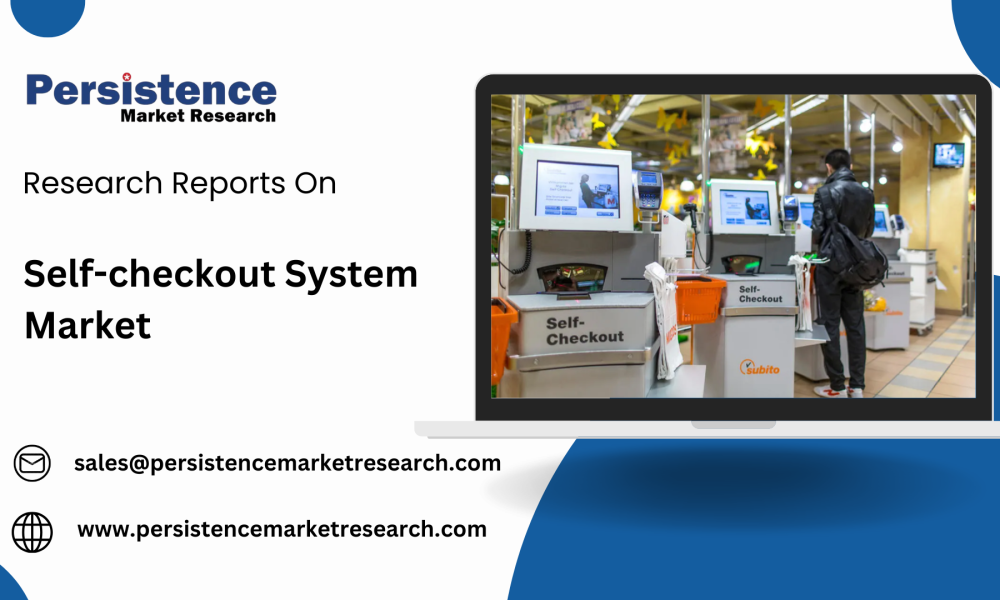
The global self-checkout system market is set to witness unprecedented growth in the coming years, projected to rise from US$ 5,612.0 Mn in 2025 to US$ 14,307.0 Mn by 2032, at a robust CAGR of 14.5% during the forecast period. This expansion underscores the transformative impact self-checkout technologies are having on retail and related industries, reshaping how consumers interact with physical stores.
Self-checkout systems allow customers to independently scan, pay for, and bag items without the need for direct cashier interaction. With consumers increasingly valuing speed, autonomy, and convenience in their shopping journeys, the adoption of these systems has surged globally.
A recent survey conducted by Zebra Technologies revealed that 61% of shoppers prefer self-checkout lanes over conventional cashier-based checkouts, showcasing the rising shift toward self-service retailing. This preference is driving retailers to upgrade store formats, integrate advanced automation, and deliver enhanced shopping experiences.
Market Growth Drivers
- Consumer Demand for Convenience and Speed
Modern consumers are busier than ever, expecting seamless and efficient retail experiences. Self-checkout systems enable shorter queues, quicker payment processing, and reduced dependence on staff, aligning with evolving shopper expectations.
- Technological Advancements in Retail Automation
The integration of AI, computer vision, and IoT-enabled sensors is making self-checkout smarter and more intuitive. Features like automatic item recognition, contactless payments, and theft-prevention mechanisms are enhancing both retailer and customer trust.
- Labor Cost Optimization
Global retail chains face increasing challenges in managing labor costs. Self-checkout systems help reduce the reliance on large cashier teams, allowing retailers to reallocate human resources toward customer engagement, stock management, and value-added services.
- Post-Pandemic Shifts to Contactless Transactions
COVID-19 significantly accelerated the adoption of touchless and contact-free shopping experiences. Consumers became accustomed to minimizing direct contact, making self-checkout systems a natural progression in maintaining hygiene and safety while shopping.
Elevate your business strategy with comprehensive market data. Request a sample report now: https://www.persistencemarketresearch.com/samples/35335
Market Challenges
While growth prospects are strong, the self-checkout market faces a few notable challenges:
- Theft and Shrinkage Risks: Shoplifting and accidental non-scanning remain concerns for retailers. Advanced security solutions are being developed to mitigate these risks.
- High Initial Costs: Smaller retailers may find upfront investment in self-checkout kiosks prohibitive, slowing adoption rates in certain regions.
- Customer Adaptation: While many shoppers embrace self-checkout, some demographics still prefer traditional cashier lanes, requiring a hybrid approach.
Opportunities in the Market
Despite challenges, opportunities abound for stakeholders:
- Integration with Mobile Apps: Linking self-checkout kiosks with mobile-based payment and loyalty applications will foster customer engagement and brand loyalty.
- AI-Powered Theft Prevention: Next-generation AI tools are expected to reduce shrinkage by monitoring transactions more effectively.
- Expansion Beyond Retail: Sectors such as airports, quick-service restaurants, and libraries are adopting self-checkout solutions, broadening the market landscape.
Market Segmentation Insights
By Solution Type:
- Systems (Hardware) – Includes kiosks, scanners, and touchscreen displays.
- Software – AI-powered interfaces, cloud integration, and theft-prevention solutions.
- Services – Maintenance, training, and support offerings.
By Transaction Type:
- Cash-based Self-Checkout
- Cashless/Contactless Self-Checkout
The cashless segment is projected to expand at a faster rate due to the surge in digital wallets, NFC payments, and contactless credit cards.
By End User:
- Retail Stores (Hypermarkets, Supermarkets, Convenience Stores, Specialty Stores)
- Hospitality (Hotels, QSRs)
- Healthcare and Public Sector
- Airports and Transportation Hubs
Retail continues to dominate, but airports and QSRs are emerging as fast-growing segments.
Regional Outlook
North America
North America remains the leading region in self-checkout adoption, supported by tech-savvy consumers, a highly developed retail infrastructure, and major retail chains like Walmart, Kroger, and Target investing heavily in automation.
Europe
European nations such as the UK, Germany, and France are also adopting self-checkout rapidly, driven by high labor costs and consumer openness to automated solutions. Retailers like Tesco and Carrefour are at the forefront of this shift.
Asia-Pacific
The fastest-growing region, Asia-Pacific is witnessing a boom in smart retail technologies due to urbanization, rising middle-class incomes, and government support for digital transformation. Countries like China, Japan, and South Korea are leading innovators in AI-powered checkout solutions.
Latin America and Middle East & Africa
These regions are in early adoption phases but are projected to see significant growth as modern retail formats expand and investments in digital infrastructure increase.
Competitive Landscape
The global self-checkout system market is highly competitive, with leading players focusing on product innovation, AI integration, and geographic expansion. Key strategies include mergers, partnerships, and acquisitions.
Prominent Players:
- NCR Corporation
- Diebold Nixdorf, Incorporated
- Toshiba Global Commerce Solutions
- Fujitsu Limited
- ITAB Shop Concept AB
- Pan-Oston
- ECR Software Corporation
- Mashgin, Inc. (AI-powered visual recognition checkouts)
These companies are pioneering next-generation checkout solutions designed to minimize theft, accelerate payments, and improve user experiences.
Recent Developments
- AI-Powered Scanless Checkout: Companies are testing scanless solutions where cameras and sensors automatically detect items without the need for manual barcode scanning.
- Partnerships with Payment Providers: Collaborations with fintech companies are enabling smooth integration of contactless payments and loyalty programs.
- Expansion of Hybrid Checkout Models: Many retailers are offering both staffed and self-service lanes to cater to diverse customer preferences.
Future Outlook
The future of the self-checkout market lies in smart automation, AI integration, and frictionless shopping. Over the next decade, the industry is expected to witness the rise of fully automated stores, where customers can walk in, pick up items, and walk out, with payments processed automatically.
Persistence Market Research predicts that by 2032, nearly all large-scale retailers and supermarkets will integrate self-checkout systems as standard practice, while smaller retailers will increasingly adopt compact, cost-effective versions.
Expert Insights
Commenting on the findings, a Persistence Market Research analyst said:
“Self-checkout systems are no longer a luxury feature but a necessity for retailers seeking to stay competitive. Consumers want speed, autonomy, and safety in their shopping experience. As technology advances, these systems will evolve into highly intelligent, seamless solutions that not only reduce labor costs but also deliver unmatched customer satisfaction.”
Conclusion
The global self-checkout system market is poised for rapid expansion, reaching US$ 14,307.0 Mn by 2032 at a CAGR of 14.5%. With consumer preferences shifting toward convenience, automation, and contactless shopping, the market presents lucrative opportunities for technology providers, retailers, and investors alike.
Retailers that embrace self-checkout today will not only streamline operations but also strengthen customer loyalty, positioning themselves as leaders in the evolving retail landscape.
Related Reports:




