
Definition
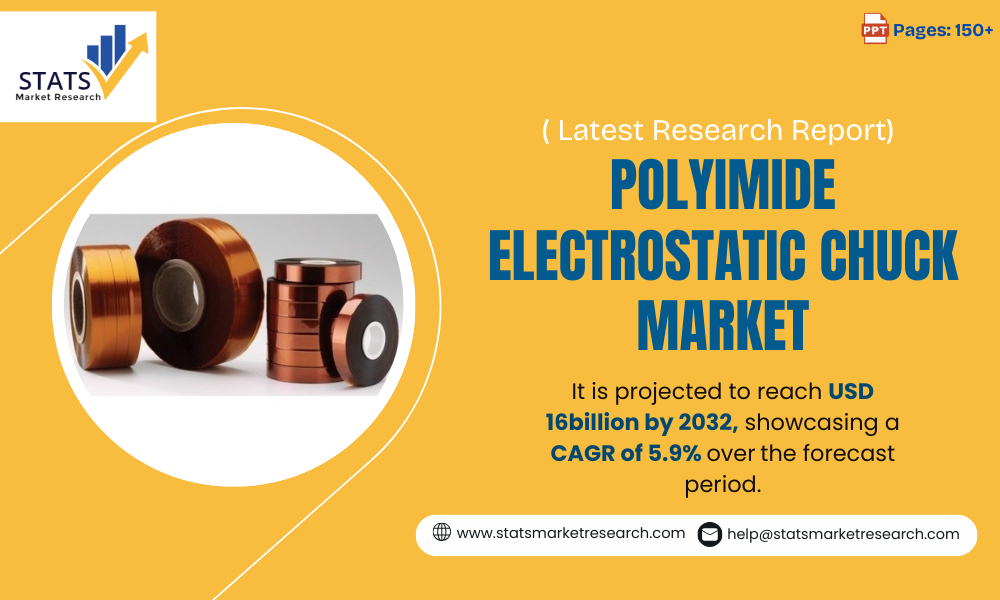
Polyimide Electrostatic Chucks (ESCs) are high-performance wafer holding devices used in semiconductor manufacturing to securely position wafers or substrates during precision processing. Unlike conventional ceramic ESCs that utilize alumina or aluminum nitride, polyimide ESCs leverage polyimide, a high-performance polymer with exceptional thermal stability, dielectric properties, and corrosion resistance.
Polyimide ESCs are engineered for extreme precision in semiconductor fabs, ensuring stable clamping across 200mm, 300mm, and emerging 450mm wafers. Their lightweight construction reduces inertial forces during high-speed wafer transfer, while superior heat resistance (withstanding temperatures up to 400°C) ensures consistent performance in advanced lithography, etching, and deposition processes.
These devices are particularly critical for next-generation semiconductor manufacturing, including extreme ultraviolet (EUV) lithography and advanced packaging applications. They are increasingly preferred over ceramic alternatives due to flatness retention (±0.5μm uniformity for 300mm wafers), lower mass, and long-term operational reliability.
Polyimide ESCs serve multiple industries including semiconductors, LCD/OLED flat panel displays, MEMS devices, and research institutions, with a specialized market dominated by Japanese and South Korean manufacturers.
Recent Developments in the Polyimide Electrostatic Chuck Market
The Polyimide Electrostatic Chuck (ESC) market is undergoing rapid evolution, primarily driven by the relentless demand for higher precision and efficiency in semiconductor manufacturing. Recent developments are centered on improving the performance and durability of these critical components. Manufacturers are now focusing on creating ESCs with enhanced thermal management capabilities to handle the extreme temperatures of advanced processes like etching and plasma deposition. There is also a strong push towards miniaturization and greater temperature uniformity, which are essential for producing smaller and more complex integrated circuits. Additionally, the market is seeing a rise in the use of more advanced materials and manufacturing processes to reduce defects and increase the lifespan of the chucks, ensuring higher yields and lower downtime in fabrication facilities.
Major Distribution Channels
The distribution of Polyimide Electrostatic Chucks is a highly specialized and concentrated business-to-business (B2B) model. The primary channel is the direct sales relationship between ESC manufacturers and major semiconductor equipment manufacturers (OEMs). These OEMs, such as Applied Materials and Lam Research, integrate the chucks directly into their advanced wafer processing tools. The market is highly concentrated, with a small number of key players dominating the supply chain and maintaining long-term contracts. The distribution is heavily skewed toward Asia-Pacific, particularly in countries with major semiconductor fabrication hubs like Taiwan, South Korea, Japan, and China. While direct sales to OEMs form the core of the market, a smaller but important channel includes specialized distributors and value-added resellers who supply replacement parts and maintenance services to end-users and smaller-scale fabrication plants.
Market Size
Global Polyimide Electrostatic Chuck (ESC) market was valued at USD 11.6 million in 2023 and is projected to grow from USD 12.2 million in 2024 to USD 16 million by 2030, registering a CAGR of 5.9%.
Download FREE Sample of this Report @ https://www.statsmarketresearch.com/download-free-sample/8059681/global-polyimide-electrostatic-chuck-forecast-market
The market’s growth is driven by the expanding semiconductor industry, which is projected to reach USD 1 trillion by 2030, and the shift to larger wafer diameters (300mm and 450mm) that require highly uniform, lightweight ESCs. Polyimide ESCs offer 40-50% lower mass than ceramic alternatives, enabling faster wafer handling and improved fab throughput.
Japan dominates both production and consumption, with TOMOEGAWA controlling 70.1% of global revenue share in 2023. South Korea and China are emerging markets where Creative Technology Corporation, MiCo, and AEGISCO are driving adoption through cost-effective and customized solutions.
Market projections indicate that the dual-electrode ESC segment captured 86.38% of demand in 2023, reflecting their superior performance characteristics for high-volume semiconductor fabrication. Advanced packaging and flat panel display applications are expected to significantly expand market demand through 2030.
Market Dynamics (Drivers, Restraints, Opportunities, and Challenges)
Drivers
Expanding Semiconductor Industry Driving Polyimide ESC Demand
The global semiconductor industry’s growth fuels the demand for polyimide ESCs. Advanced nodes and high-volume wafer fabrication require precision wafer handling solutions capable of maintaining operational stability at elevated temperatures (up to 400°C). Polyimide ESCs provide high throughput, reduced wafer breakage, and improved yield rates, positioning them as a critical component for modern fabs.
Transition to Larger Wafer Sizes Creating New Application Opportunities
The adoption of 300mm and emerging 450mm wafers necessitates ESCs with uniform clamping across large diameters. Polyimide ESCs’ lower mass and superior thermal stability allow for easier integration in high-speed wafer transfer systems. Data shows that every 1% increase in wafer size adoption drives ~2.3% growth in the polyimide ESC market.
Advanced Lithography and EUV Applications
Next-generation lithography processes demand high flatness retention, precision dielectric properties, and heat resistance. Polyimide ESCs excel under these requirements, supporting nanometer-scale accuracy for critical patterning operations.
Geographic Expansion in North America and Europe
Increasing domestic semiconductor manufacturing investments are driving demand for polyimide ESCs in new fab construction projects, especially in North America and Europe. These regions are specifying polyimide ESCs for cutting-edge semiconductor process tools, reinforcing market growth.
Restraints
High Production Costs and Manufacturing Complexity
Polyimide ESCs require specialized polymer formulations, precision machining, and stringent quality controls, resulting in 20-30% higher production costs compared to ceramic alternatives. These higher costs can slow adoption among cost-sensitive foundries and memory manufacturers.
Integration Challenges in Legacy Fabs
Older semiconductor tools require retrofits costing $150,000-$500,000 per tool to accommodate polyimide ESCs’ thermal and electrical properties. Maintenance protocols and staff training requirements further increase operational complexity.
Material Degradation Concerns
Extended exposure to plasma environments may degrade polyimide over 2-3 years, necessitating replacements and creating ongoing operational costs. Coating technologies are under development to extend service life.
Supply Chain Vulnerabilities
Over 85% of polyimide material is sourced from just three global suppliers. Geopolitical tensions and trade restrictions pose potential risks for uninterrupted ESC supply.
Opportunities
Advanced Packaging Applications
2.5D/3D IC integration and heterogeneous packaging require precise, low-stress wafer handling. Polyimide ESCs’ superior thermal and dielectric properties make them ideal for these processes. By 2026, advanced packaging is expected to account for 22% of ESC demand, up from 11% in 2021.
Flat Panel Display Manufacturing
Polyimide ESCs are gaining traction in OLED and flexible display fabrication due to their ability to maintain uniform clamping over large substrates. The display segment is projected to grow at 7.5% CAGR through 2030.
Smart Monitoring and Industry 4.0 Integration
Collaborations between ESC manufacturers and OEMs are integrating real-time monitoring and predictive maintenance into polyimide chucks, enhancing operational efficiency and reducing downtime.
Challenges
Production Scalability
Precision polymer formulation and machining requirements complicate large-scale manufacturing. Maintaining ±0.1% performance consistency across batches remains challenging.
Operational and Maintenance Complexity
Polyimide ESCs require specialized cleaning, handling, and staff training, limiting adoption in regions with underdeveloped technical infrastructure.
Competitive Pressure
While TOMOEGAWA dominates, competitors must innovate in thermal management, dielectric materials, and surface patterning to differentiate their offerings beyond pricing.
Regional Analysis
Asia-Pacific dominates the global polyimide ESC market, led by Japan, South Korea, and China, due to the concentration of semiconductor fabs and OEMs. Japan is home to TOMOEGAWA, the market leader.
North America is growing due to new fab construction and advanced packaging investment, with strong demand from the U.S. semiconductor industry.
Europe is emerging, particularly in Germany and the Netherlands, as semiconductor manufacturing investments increase.
Other Regions, including the Middle East and South America, rely on imported ESCs, and adoption is limited by legacy equipment and infrastructure.
Get the Complete Report & TOC @ https://www.statsmarketresearch.com/global-polyimide-electrostatic-chuck-forecast-market-8059681
Competitor Analysis
The polyimide ESC market is highly concentrated, with TOMOEGAWA controlling 70.1% of global revenue. Market leaders focus on dual-electrode designs, proprietary polymer formulations, and decades of experience servicing fabs.
Notable competitors:
- Creative Technology Corporation (South Korea) – Focus on cost-optimized, localized solutions.
- MiCo (South Korea) – Rapid customization for emerging semiconductor applications.
- AEGISCO (China) – Specializes in LCD/OLED display applications.
Competition revolves around enhanced thermal management, improved dielectric materials, advanced surface patterning, and predictive monitoring technologies.
Global Polyimide Electrostatic Chuck: Market Segmentation Analysis
This report provides a deep insight into the global Polyimide Electrostatic Chuck (ESC), covering all its essential aspects. This ranges from a macro overview of the market to micro details of the market size, competitive landscape, development trend, niche market, key market drivers and challenges, SWOT analysis, value chain analysis, etc. The analysis helps the reader to shape the competition within the industries and strategies for the competitive environment to enhance the potential profit. Furthermore, it provides a simple framework for evaluating and assessing the position of the business organization. The report structure also focuses on the competitive landscape of the Global Polyimide Electrostatic Chuck (ESC). This report introduces in detail the market share, market performance, product situation, operation situation, etc., of the main players, which helps the readers in the industry to identify the main competitors and deeply understand the competition pattern of the market. In a word, this report is a must-read for industry players, investors, researchers, consultants, business strategists, and all those who have any kind of stake or are planning to foray into the Polyimide Electrostatic Chuck (ESC) in any manner.
Market Segmentation (by Application)
- Semiconductor
- 300mm wafers
- 200mm wafers
- Others
- LCD/OLED Display
- Others
Market Segmentation (by Type)
- Dual Electrode
- Bipolar
- Multilayer
- Others
- Single Electrode
Key Company
- TOMOEGAWA (Japan) – Market leader with 70.1% revenue share
- Creative Technology Corporation (South Korea)
- MiCo (South Korea)
- AEGISCO (China)
Geographic Segmentation
- Asia-Pacific
- North America
- Europe
- Middle East & Africa
- South America
FAQ
Q1: What is the current market size of the Global Polyimide Electrostatic Chuck Market?
A1: The market was valued at USD 11.6 million in 2023 and is projected to reach USD 16 million by 2030, growing at a CAGR of 5.9%.
Q2: Which are the key companies operating in the Global Polyimide ESC Market?
A2: Key companies include TOMOEGAWA, Creative Technology Corporation, MiCo, and AEGISCO.
Q3: What are the key growth drivers in the Global Polyimide ESC Market?
A3: Growth is driven by the expanding semiconductor industry, transition to larger wafer sizes, EUV lithography adoption, and advanced packaging applications.
Q4: Which regions dominate the Global Polyimide ESC Market?
A4: Asia-Pacific, led by Japan, South Korea, and China, dominates production and consumption.
Q5: What are the emerging trends in the Global Polyimide ESC Market?
A5: Emerging trends include advanced packaging adoption, smart monitoring integration, OLED display manufacturing, and dual-electrode ESC designs.
About Us
☎️ International: +1 (332) 2424 294
📄 Website: www.statsmarketresearch.com
Join us on LinkedIn:- https://www.linkedin.com/company/statsmarketresearch




