
Definition
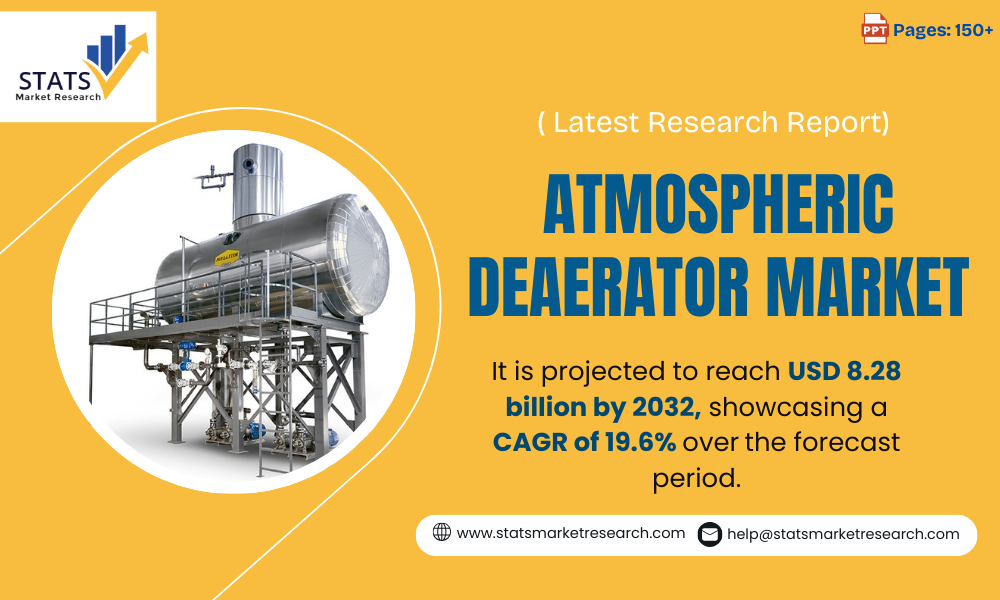
Atmospheric deaerators are specialized industrial systems designed to eliminate dissolved gases—mainly oxygen (O₂) and carbon dioxide (CO₂)—from boiler feedwater. The presence of these gases in industrial boilers leads to corrosion, pitting, and reduced system lifespan. Atmospheric deaerators work by combining steam heating with mechanical scrubbing inside a pressurized vessel, ensuring gas concentrations fall to parts-per-billion (ppb) levels.
These systems are vital in power generation, chemical processing, food & beverage manufacturing, and paper industries, where water purity is directly linked to operational efficiency, safety, and compliance. Deaerators not only improve system longevity but also enhance thermal efficiency, reduce maintenance costs, and support sustainability initiatives.
Recent Developments
The atmospheric deaerator market is experiencing a shift toward more compact, energy-efficient, and customized solutions to meet the diverse needs of various industries. A major trend is the integration of advanced control systems and automation, allowing for more precise monitoring and management of dissolved gas levels in feedwater, which is crucial for preventing corrosion in boilers and industrial systems. Manufacturers are also developing systems that use a combination of technologies, such as vacuum and thermal deaeration, to achieve even lower oxygen levels. The use of new materials like stainless steel is also growing, particularly in the food and beverage and pharmaceutical sectors, where hygiene and product purity are of the utmost importance. These developments are driven by a need for improved operational efficiency, lower maintenance costs, and compliance with increasingly stringent environmental and safety regulations.
Major Distribution
The distribution of atmospheric deaerators is highly specialized and primarily follows a B2B (business-to-business) model. Original Equipment Manufacturers (OEMs) often sell their deaerator systems directly to large-scale industrial clients, such as power plants, petrochemical facilities, and large manufacturing plants. These direct relationships are essential for providing technical expertise, customization, and after-sales support for complex installations. In addition, manufacturers rely on a network of independent distributors, engineering firms, and value-added resellers to reach a wider range of customers, including smaller industrial facilities and commercial operations. These partners often provide localized sales, installation services, and maintenance support. The market also sees a presence of specialized online platforms and marketplaces that cater to industrial equipment, providing a channel for a broader reach, particularly for standard or modular units.
Market Size
Global atmospheric deaerator market size was valued at USD 2.43 billion in 2024. It is projected to expand to USD 2.61 billion in 2025 and reach USD 8.28 billion by 2032, growing at a CAGR of 19.6% during the forecast period.
This rapid growth is fueled by increasing industrialization, stricter water treatment regulations, and the global focus on energy efficiency. The adoption of automated and IoT-enabled deaeration systems is further accelerating market penetration.
Historically, the market has seen steady demand from power plants and process industries, but the digital transformation of industrial water treatment is now opening new opportunities. The integration of smart monitoring systems, predictive analytics, and energy recovery solutions positions atmospheric deaerators as a core element of modern industrial infrastructure.
Download FREE Sample of this Report @ https://www.statsmarketresearch.com/download-free-sample/8061256/global-atmospheric-deaerator-forecast-market
Market Dynamics (Drivers, Restraints, Opportunities, and Challenges)
Drivers
- Stringent Industrial Water Regulations: Regulatory mandates limiting oxygen levels in feedwater (often <5 ppb) are driving global adoption.
- Energy Efficiency Goals: Modern atmospheric deaerators help reduce steam energy consumption by 12–18%, enabling quick payback periods.
- Growth of District Heating Systems: European investments in centralized heating networks are fueling demand for high-performance deaerators.
Restraints
- High Capital Costs: Installation costs range from $150,000 to $500,000, posing barriers for SMEs.
- Operational Complexities: Low-pressure operations require advanced auxiliary systems, adding to cost and maintenance burdens.
Opportunities
- Smart Deaerators: IoT-enabled units with predictive analytics reduce chemical use by up to 25% while offering compliance monitoring.
- Asian Industrial Growth: Rising demand in China, India, and Southeast Asia with government-backed incentives for water treatment technologies.
Challenges
- Competition from Alternatives: Membrane-based oxygen removal systems are growing at ~15% annually.
- Supply Chain Risks: Delays in stainless steel procurement can push project timelines by 4–6 months.
- Workforce Skill Gaps: Lack of trained personnel reduces system efficiency and leads to premature failures.
Regional Analysis
- North America: Strong demand from power generation and petrochemicals; strict EPA regulations support market growth.
- Europe: Leading in district heating systems adoption, with Germany, UK, and Nordic countries as frontrunners.
- Asia-Pacific: Fastest-growing market; China accounts for 35% of global industrial water use, while India is experiencing strong growth in power and food processing sectors.
- Latin America: Growth driven by expanding paper and food industries; Brazil and Mexico are key contributors.
- Middle East & Africa: Investments in oil & gas and power plants are boosting demand, though adoption is slowed by cost barriers.
Get the Complete Report & TOC @ https://www.statsmarketresearch.com/global-atmospheric-deaerator-forecast-market-8061256
Competitor Analysis
The competitive landscape is moderately fragmented, with both global giants and regional specialists. Companies are focusing on IoT integration, hybrid technologies, and regional manufacturing expansion to strengthen market positioning.
- Spirax Sarco (UK) – Vertically integrated, strong presence in Europe & North America.
- GESTRA (Germany) – Known for patented valve technologies and energy recovery systems.
- Cochrane Engineering (South Africa) – Strong emerging market presence with cost-effective solutions.
- Industrial Steam (USA) – Focused on high-performance deaerators for power & chemical sectors.
- Shipco Pumps (India) – Expanding in Asia with competitive pricing.
Global Atmospheric Deaerator Market: Segmentation Analysis
This report provides a deep insight into the global Atmospheric Deaerator market, covering all its essential aspects. This ranges from a macro overview of the market to micro details of the market size, competitive landscape, development trend, niche market, key market drivers and challenges, SWOT analysis, value chain analysis, etc.
The analysis helps the reader to shape the competition within the industries and strategies for the competitive environment to enhance the potential profit. Furthermore, it provides a simple framework for evaluating and assessing the position of the business organization. The report structure also focuses on the competitive landscape of the Global Atmospheric Deaerator Market. This report introduces in detail the market share, market performance, product situation, operation situation, etc., of the main players, which helps the readers in the industry to identify the main competitors and deeply understand the competition pattern of the market.
In a word, this report is a must-read for industry players, investors, researchers, consultants, business strategists, and all those who have any kind of stake or are planning to foray into the Atmospheric Deaerator Market in any manner.
Market Segmentation (by Application)
- Chemical Industry
- Food Processing
- Papermaking
- Power Generation
- Others
Market Segmentation (by Type)
- Manual Operation Mode
- Automatic Operation Mode
- PLC-based Systems
- IoT-enabled Systems
Key Company
- Spirax Sarco (UK)
- GESTRA (Germany)
- Cochrane Engineering (South Africa)
- Industrial Steam (USA)
- Shipco Pumps (India)
- Sprayflo (Australia)
- American Water Chemicals, Inc. (USA)
- Ravi Industries (India)
- Teploterm (Russia)
- Lockwood Products (USA)
Geographic Segmentation
- North America
- Europe
- Asia-Pacific
- Latin America
- Middle East & Africa
Frequently Asked Questions (FAQs)
Q1. What is the current market size of the Atmospheric Deaerator Market?
The global market was valued at USD 2.43 billion in 2024 and is expected to reach USD 8.28 billion by 2032 at a CAGR of 19.6%.
Q2. Which are the key companies operating in the Atmospheric Deaerator Market?
Key players include Spirax Sarco, GESTRA, Cochrane Engineering, Industrial Steam, Shipco Pumps, Sprayflo, American Water Chemicals, Ravi Industries, Teploterm, and Lockwood Products.
Q3. What are the key growth drivers in the Atmospheric Deaerator Market?
The market is driven by stringent water treatment regulations, energy efficiency goals, and rising demand in district heating and industrial expansions in Asia.
Q4. Which regions dominate the Atmospheric Deaerator Market?
Asia-Pacific is the fastest-growing, while Europe leads in district heating applications and North America remains strong in power generation and petrochemicals.
Q5. What are the emerging trends in the Atmospheric Deaerator Market?
Key trends include IoT-enabled smart deaerators, predictive maintenance, hybrid systems, and localized manufacturing to overcome supply chain disruptions.
About Us
☎️ International: +1 (332) 2424 294
📄 Website: www.statsmarketresearch.com
Join us on LinkedIn:- https://www.linkedin.com/company/statsmarketresearch




