Authored by: Shweta R., Business Development Specialist at Prophecy Market Insights
Accident Recorders Market Overview:
The Global Accident Recorders Market is experiencing significant growth, driven by the increasing focus on road safety, insurance claim transparency, and regulatory requirements mandating in-vehicle recording devices. These devices, often referred to as “dash cams” or “event data recorders,” help record real-time data before and during a collision or traffic event, aiding investigations and liability assessment.
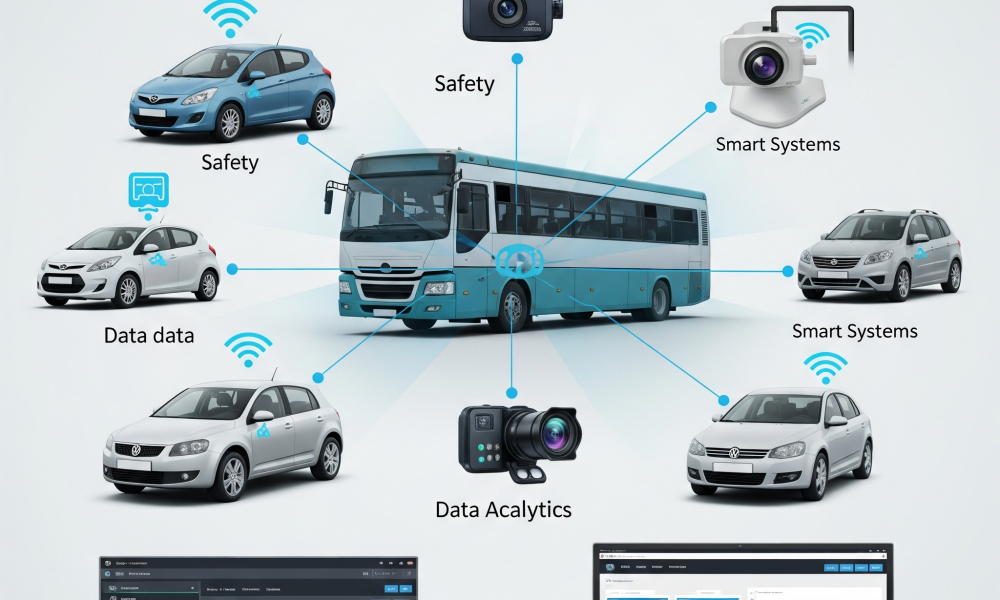
With technological advancements, modern accident recorders now offer features such as GPS tracking, real-time video streaming, AI-based alerts, and data encryption for secure storage. As automotive safety becomes more data-driven, accident recorders are evolving into essential components in both personal and commercial vehicle fleets.
Accident Recorders Market Segmentation:
By Type:
Single Channel
These recorders focus primarily on front-facing footage and are generally used in passenger cars for basic recording needs.Dual Channel
Dual-channel devices provide front and rear recording capabilities, enhancing situational awareness and offering complete footage in case of accidents, especially for commercial vehicles.
By Application:
Passenger Car (PC)
Rising consumer demand for safety features and decreasing costs of recording devices are encouraging installation in personal vehicles.Light Commercial Vehicle (LCV)
LCV fleet operators are adopting recorders to monitor driver behavior, reduce accident liability, and improve insurance claim processes.Heavy Commercial Vehicle (HCV)
In the logistics and freight industry, accident recorders help manage legal risks, monitor cargo safety, and improve operational transparency.
Regional Insights:
While North America currently dominates the market due to high adoption rates and regulatory support, the Asia-Pacific region is projected to witness the fastest growth, driven by increasing vehicle sales, rising awareness of road safety, and growing insurance fraud cases. Europe follows closely with strict safety norms and a mature automotive ecosystem.
Accident Recorders Market Drivers:
Rising Concerns Over Road Safety:
Governments and organizations are increasingly focusing on reducing road fatalities. Accident recorders are being adopted as evidence tools in the aftermath of collisions.Insurance Industry Push:
Insurance providers encourage or mandate dash cams for high-risk drivers or fleets, ensuring transparent and faster claim settlements.Fleet Management Needs:
Transport and logistics firms leverage recorders to improve driver performance, enhance route planning, and protect against fraudulent claims.Technological Advancements:
Integration of AI, cloud storage, night vision, and real-time streaming makes modern devices more effective and user-friendly.
Accident Recorders Market Challenges:
Privacy Concerns:
The recording of audio and video in private vehicles may lead to regulatory or ethical challenges, especially in regions with strict data protection laws.Installation and Maintenance Costs:
While prices have declined, the initial cost and technical know-how required for installation may limit adoption in cost-sensitive markets.Data Storage & Management:
High-resolution video and constant recording lead to large amounts of data. Secure, scalable storage remains a challenge for some businesses.
Competitive Landscape:
The global accident recorders market is fragmented with both multinational corporations and regional players competing on innovation, cost, and distribution. Key players include:
Continental
Blackbox Guard Inc.
Delphi Technologies
BlackVue
Papago Inc.
Spy Tec
Thinkware
WickedHD
Garmin International, Inc.
Valeo
These companies focus on integrating advanced technologies such as AI-driven event detection, voice control, and enhanced connectivity features to stay ahead in the market.
Strategic Insights:
OEM Partnerships:
Collaborations between accident recorder manufacturers and automotive OEMs can drive factory-level integration, improving device adoption and performance.Subscription-Based Services:
Vendors are exploring SaaS (Software-as-a-Service) models for fleet tracking and incident management, generating recurring revenue.AI & Machine Learning:
Next-gen recorders are expected to integrate ML algorithms to analyze driving behavior, detect risks, and deliver proactive alerts.Integration with ADAS:
Combining recorders with Advanced Driver Assistance Systems (ADAS) helps create a holistic safety net, offering real-time incident prevention and evidence-based analytics.
Future Outlook (2024–2034):
The accident recorders market is poised to expand significantly in the coming years. Increasing adoption in ride-sharing, logistics, public transport, and private vehicles will fuel the demand. Integration with autonomous and semi-autonomous vehicle platforms is also expected to open new frontiers for innovation.
As smart cities evolve and data becomes a core asset in transportation systems, accident recorders will play a vital role in making roads safer and insurance more transparent.
Conclusion:
The global accident recorders market reflects a convergence of technology, policy, and safety concerns. As drivers, fleet operators, and governments recognize the value of real-time incident recording, demand for sophisticated, integrated solutions will rise. Companies that focus on innovation, affordability, and compliance will emerge as leaders in this rapidly evolving domain.
Author: Shweta R., Business Development Specialist at Prophecy Market Insights
This research combines primary interviews and secondary data analysis, offering actionable insights into the global accident recorders market.