
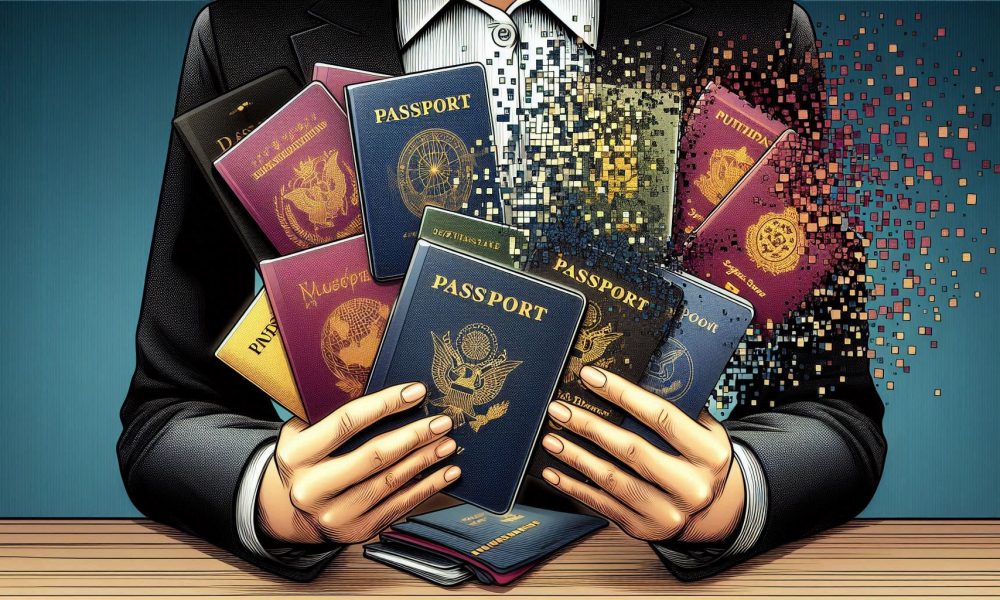
VANCOUVER, British Columbia — July 26, 2025 — In a world where data has become a commodity, the paper trail we leave behind—birth certificates, school records, medical files, and public archives—can become a liability for those seeking to reset their lives. Whether for privacy, safety, or a lawful second chance, individuals around the world are increasingly exploring how to legally erase or disassociate from their records, especially when relocating internationally.
Amicus International Consulting, a global leader in identity transformation, provides strategic, legal, and ethical solutions for individuals seeking to transition from an exposed identity to one protected by sovereign privacy laws abroad.
The Global Problem With Permanent Records
In the digital era, paper is not just physical; it is digitized, searchable, and increasingly permanent. Identity records are linked across agencies, private companies, international databases, and public registries. A single mistake, traumatic event, or reputational crisis can follow someone for decades. Public marriage licenses, court proceedings, bankruptcies, property transfers, or even school yearbooks can be accessed by employers, government agencies, or bad actors with minimal effort.
This visibility is especially dangerous for:
Whistleblowers or political dissidents
Victims of stalking, abuse, or doxxing
Former inmates or those with sealed but traceable criminal histories
Individuals exiting cults, extremist groups, or witness protection
Public figures seeking anonymity post-scandal
For these groups, conventional data deletion is insufficient. The goal is to achieve functional privacy abroad—removing, de-indexing, or legally dissociating identity from records.
What Is International Record Erasure?
International record erasure is a lawful, jurisdiction-specific process to minimize or eliminate accessible records about a person. It involves:
Record suppression or sealing
Apostille-based identity reassociation
Government-authorized data deletions or redactions
Removal from searchable databases and institutional archives
Strategic relocation to privacy-protective countries
This process does not mean destroying government records illegally. Instead, it focuses on identity disconnection, de-indexing, and controlled reinvention through proper legal channels.
Case Study: Erasing a Criminal Record for International Freedom
A U.K. national served a brief sentence for financial misconduct a decade ago, but the record continued to prevent him from opening foreign bank accounts and applying for overseas visas. With assistance from Amicus, the client completed a legal name change, obtained dual citizenship through Investment in Saint Kitts and Nevis, and successfully suppressed search engine results related to the conviction. He relocated to Uruguay, where his new identity was used to open accounts, register property, and start a business. His record was neither destroyed nor hidden—but was legally disconnected from his current documentation under a new jurisdiction.
Case Study: Academic and Work History Rebuild After Harassment
A woman from the United States faced reputational collapse after false harassment allegations were posted online, affecting her career in education. Though exonerated legally, her name remained associated with the incident in public school board archives and teacher certification platforms. Amicus coordinated with her attorneys to update court records on databases, facilitated a legal name change and relocation to Georgia, and helped her requalify for international teaching roles under her new credentials. Within eight months, her paper trail had been segmented and restructured legally in a new jurisdiction.
How Governments Handle Foreign Requests for Record Changes
Legal erasure abroad depends on local privacy laws, data sovereignty principles, and the government’s attitude toward international requests. Examples include:
Uruguay: Allows name changes and data privacy under Habeas Data laws. Public records can be shielded or anonymized if privacy risks are demonstrated.
Paraguay: Does not participate in global biometric sharing or CRS systems, allowing foreign-born residents to create new residency files without linking to previous records.
Georgia: Offers high privacy for civil documentation, and local courts can approve new legal identities without cross-checking prior foreign status.
Thailand: There is no centralized criminal database for foreigners; records from other countries are rarely verified unless voluntarily disclosed.
Dominica and Saint Lucia: Citizenship by Investment programs create new citizenship files from scratch with no requirement to disclose former names once naturalized.
These countries, among others, allow Amicus clients to legally establish a sovereign identity with minimal links to their previous paper trail.
How to Start: Steps Toward Record Erasure Abroad
Digital and Paper Trail Audit
Amicus begins by scanning all public, institutional, and commercial references to the client’s identity—court documents, credit reports, school records, social media, registry entries, etc.Jurisdictional Strategy Design
Clients are matched with countries offering favorable laws for privacy, residency, and disconnection from international data-sharing networks. Legal pathways for name changes, second passports, and document replacements are established.Name Change and New Documentation
A new legal name is secured through a court petition or a local civil registry process. Birth certificates, driver’s licenses, passports, and banking IDs are updated accordingly.Apostille and Notarization
All new documents are apostilled or notarized to ensure recognition by international institutions, allowing lawful usage across jurisdictions.Record Suppression or Sealing
Amicus works with attorneys to seal criminal, family, or administrative records in the country of origin where possible. If sealing is unavailable, de-indexing and redaction strategies are used.Relocation and Infrastructure Setup
Clients are guided through the visa process, residency acquisition, and integration into the new country, including banking, schooling, and healthcare systems, based on their new legal identity.Reputation Management and Digital Cleanup
Search engine removal, content takedown requests, and news suppression techniques are applied to align online visibility with the new paper trail.
Navigating the International Legal Landscape
Not all countries cooperate with privacy transformations. Amicus carefully avoids:
Countries bound by extensive biometric-sharing agreements (e.g., U.S., U.K., Australia, EU)
Jurisdictions with centralized global database participation (e.g., INTERPOL, Five Eyes)
Nations with limited digital rights or censorship-driven data retention
Instead, it targets:Non-CRS countries
States outside Schengen or INTERPOL enforcement
Microstates and neutral jurisdictions with high privacy tolerance
This positioning enables Amicus clients to establish defensible, lawful privacy protection while maintaining compliance with all relevant international norms.
Ethical and Legal Safeguards
Amicus only works with clients whose goals align with lawful privacy —not those involving criminal evasion or deception. Legal record erasure is performed under strict ethical review and includes:
Due diligence to screen for red flags
Verification that the client is not under active prosecution
Certification that all new documents are lawfully issued
Confirmation that international treaties use new identities
Amicus maintains legal advisory boards in Canada, Switzerland, Uruguay, and Georgia to ensure that all solutions meet both domestic and cross-border legal requirements.
Children, Dependents, and Joint Records
Erasing records becomes more complex when dependents are involved. School transcripts, medical records, and family court orders may follow minors even after they have changed their name. Amicus handles this by:
Filing parallel record changes for children
Coordinating education and medical record transfers
Re-registering guardianship documentation under new credentials
Updating immunization and visa files to match the new legal structure
Families that move together must erase and rebuild their documentation cohesively to avoid mismatches in legal identity verification abroad.
Financial History and Credit Bureau Disconnection
One of the most sensitive aspects of record erasure involves banking and credit history. Amicus provides:
Credit report segmentation or freezing in the country of origin
Establishment of new financial profiles abroad with new identification numbers
International banking with second passports and privacy trusts
Taxpayer ID acquisition under new citizenship or residency
This helps clients legally disentangle themselves from damaged financial histories while complying with FATCA, CRS, and AML regulations through lawful offshore structuring.
Rebuilding With Confidence: Life After Erasure
Once clients have completed the process, they experience measurable benefits:
No traceable links to previous lawsuits, family disputes, or scandals
Clean new name with supporting documentation in internationally recognized formats
Ability to open foreign bank accounts, lease property, and work abroad without background interference
Improved mental health, safety, and social reintegration opportunities
Clients receive a digital and physical portfolio of their new identity assets, supported by notarized affidavits, certificates, and legal opinions as needed.
Why Amicus Leads in International Identity Reinvention
With a global presence and a multi-disciplinary team, Amicus International Consulting stands out through:
In-house legal experts fluent in international privacy, immigration, and document law
A network of over 60 country-specific relocation partners
A database of over 1,200 successful identity reinventions since 2017
Proprietary tools for digital record auditing, name matching, and data mapping
Confidential client service with no exposure in marketing or public domains
Amicus has helped former executives, domestic violence survivors, political refugees, and persecuted individuals regain control of their lives through legal reinvention.
Conclusion: The Right to Privacy. Public records should not immortalize a Right to rebuild life’s mistakes, misunderstandings, or media distortions. Every person has the right to reclaim their privacy, start anew, and build a future unburdened by a paper trail of the past. With lawful, ethical, and globally recognized solutions, Amicus International Consulting empowers individuals and families to move from exposure to discretion—and from their old records into a new life.
To initiate the process of erasing legal records and reconstructing your identity abroad, please contact Amicus International Consulting for a private and confidential consultation.
Contact Information
Phone: +1 (604) 200-5402
Email: [email protected]
Website: www.amicusint.ca




