
Definition
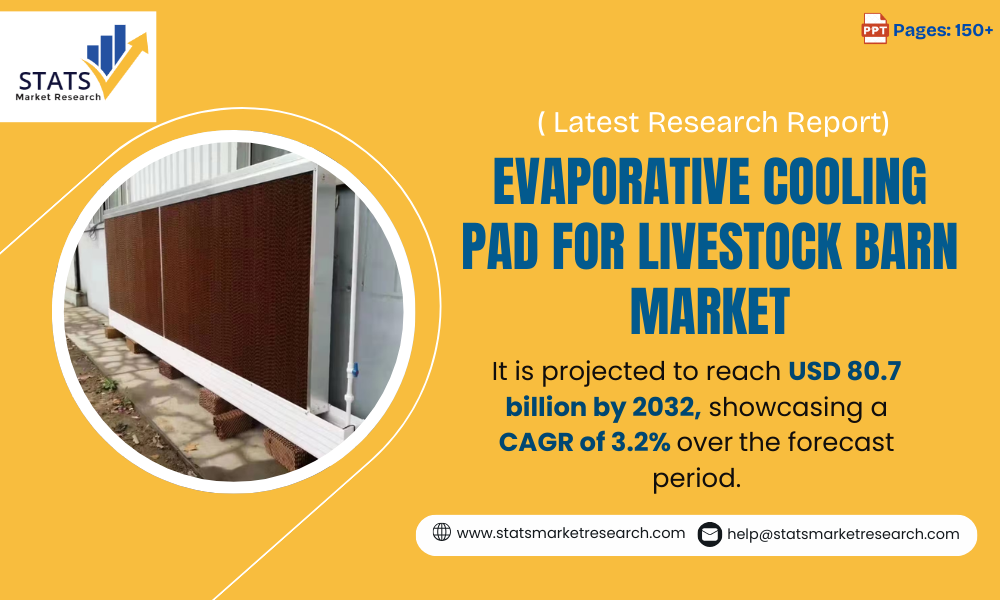
Evaporative cooling pads for livestock barns are high-efficiency cooling media designed to regulate temperature and humidity in animal housing systems. These pads are primarily constructed from cellulose Kraft paper treated with wetting additives and anti-rot agents, ensuring enhanced absorption, durability, and low maintenance.
The primary function of these pads is to mitigate heat stress in livestock, which is critical in poultry and swine operations where elevated temperatures can severely affect animal welfare and productivity. By facilitating evaporative cooling, these pads reduce barn temperatures by 5-15°F, improving feed conversion rates, growth performance, and mortality rates.
The system works by drawing hot air through the cellulose pads while water is circulated over the surface. As water evaporates, it absorbs heat from the air, reducing temperature and increasing humidity to create a controlled microclimate. This method is energy-efficient, consuming up to 75% less energy than conventional air conditioning systems, making it economically viable for large-scale livestock operations.
Leading manufacturers, such as Munters, Portacool, and SKOV A/S, dominate this market, providing innovative cellulose-based pads and hybrid materials for enhanced longevity and performance. The technology aligns with animal welfare regulations, sustainable farming practices, and the increasing global emphasis on climate-controlled livestock environments.
Recent Developments in the Evaporative Cooling Pad for Livestock Barns Market
The market for evaporative cooling pads in livestock barns is evolving with a focus on improving efficiency, durability, and hygiene. A major development is the introduction of pads with enhanced material science, including those treated with antimicrobial agents. These treatments help to prevent the growth of algae, mold, and bacteria, which can be a biosecurity concern and also reduce the cooling efficiency of the pads. Manufacturers are also developing more durable cellulose and composite materials that are more resistant to degradation from harsh water conditions and frequent use, extending the product lifespan. Furthermore, there’s a growing trend towards integrating these pads into smart barn management systems. This integration allows farmers to monitor and control cooling systems remotely, using real-time data to optimize temperature, humidity, and water usage, leading to greater energy efficiency and improved animal welfare.
Major Distribution Channels
Distribution of evaporative cooling pads for livestock barns typically follows a multi-tiered approach, connecting manufacturers to a wide range of agricultural customers. The primary channels include direct sales from large, established manufacturers to major commercial farms and agricultural construction companies, especially for large-scale, customized projects. A significant portion of the market is also served by a network of specialized agricultural equipment dealers and distributors. These intermediaries often have a local presence and provide installation services, technical support, and a broader range of products to smaller and medium-sized farms. Online marketplaces and e-commerce platforms are also becoming increasingly important, offering a convenient way for farmers to purchase replacement pads and other components directly, bypassing traditional brick-and-mortar stores. This blend of direct sales, specialized distributors, and online channels ensures that products are accessible to a diverse customer base.
Market Size
Global evaporative cooling pad for livestock barn market was valued at USD 64.9 million in 2024. It is projected to grow to USD 67.3 million in 2025, reaching USD 80.7 million by 2032, representing a CAGR of 3.2% during the forecast period.
Download FREE Sample of this Report @ https://www.statsmarketresearch.com/download-free-sample/8056480/global-evaporative-cooling-pad-for-livestock-barn-forecast-market
Historical Trends and Key Statistics
- China leads the market with nearly 30% of global sales, followed by North America and Europe, each contributing roughly 20%.
- The growth trajectory is supported by rising global temperatures, intensive livestock farming, and stricter animal welfare regulations.
- Adoption is strongest in poultry farms, which account for the largest segment due to high-density production and sensitivity to heat stress.
Market Insights
- Feed conversion improvement: Installation of evaporative cooling pads can enhance feed efficiency by 8-12% in poultry and 5-9% in swine operations.
- Operational costs: Climate control can account for 40-60% of total energy expenses in intensive livestock production, highlighting the importance of energy-efficient solutions.
- Maintenance cycles: Cellulose-based pads typically require replacement every 3-5 years, depending on water quality and operational conditions.
The market size is expected to increase steadily as livestock farming intensifies globally, particularly in developing regions where modern climate control adoption is still limited.
Market Dynamics (Drivers, Restraints, Opportunities, and Challenges)
Drivers
- Rising Global Temperatures and Climate Change:
With projected temperature increases of 1.5–2°C in key agricultural regions over the next decade, heat stress has become a major concern. Evaporative cooling pads help maintain animal health and productivity, preventing mortality spikes of 5–15% in poultry during extreme heat events. - Intensification of Livestock Production:
Higher stocking densities in modern poultry and swine facilities require uniform cooling across barns. Evaporative cooling pads provide consistent temperature and humidity regulation, supporting optimal growth conditions. - Energy Efficiency and Cost Savings:
These systems reduce energy usage by up to 75% compared to conventional AC, making them attractive for large-scale operations where climate control can be a significant operational cost.
Restraints
- High Water Requirements:
Traditional cellulose pad systems can consume 3–10 gallons of water per minute per unit, creating challenges in water-scarce regions like the American Southwest or Southern Europe. Rising water costs, regulatory restrictions, and salt buildup in recirculating systems limit adoption in arid areas. - Maintenance and Replacement Costs:
Pads degrade over time and may require replacement every 3–5 years. In hard water conditions, effectiveness can drop by 30–50% in two years. Microbial growth in moist pads also requires regular cleaning, adding operational complexity.
Opportunities
- Technological Advancements in Material Science:
Hybrid pads with synthetic fibers extend lifespan by 30–40% while maintaining cooling efficiency. Antimicrobial treatments reduce biofilm formation by up to 60%, lowering maintenance needs and improving total cost of ownership. - Emerging Markets:
Regions such as Southeast Asia, Latin America, and Africa have untapped potential. Countries like Brazil, India, and Vietnam have intensive poultry and swine operations but limited adoption of evaporative cooling pads (<15%). Local manufacturing partnerships and simplified installation can accelerate market penetration.
Challenges
- Energy Price Volatility:
Though more energy-efficient than AC, systems require continuous fan operation, making them sensitive to electricity price fluctuations. Rising energy costs have led some producers to defer upgrades or install partial systems. - Integration with Existing Infrastructure:
Retrofitting older barns may require structural modifications to manage air pressure differentials and humidity. Incorrect implementation can lead to mold growth or ammonia volatility, requiring technical expertise for precise system balancing.
Regional Analysis
- North America: High adoption due to advanced livestock facilities and supportive government policies.
- Europe: Focus on regulatory compliance and animal welfare standards drives demand.
- Asia-Pacific: Fastest-growing region with large-scale poultry and swine expansion in China, India, and Vietnam.
- Latin America: Moderate growth, with Brazil leading commercial poultry adoption.
- Middle East & Africa: Emerging markets with water availability challenges affecting adoption.
Competitor Analysis (in brief)
- Munters (Sweden): Dominates with ~20% market share; extensive climate control solutions and strong distribution networks.
- Portacool (U.S.): Focuses on innovative cooling technologies for intensive operations.
- SKOV A/S (Denmark): Known for high-efficiency cellulose pads with durability and maintenance advantages.
- Roxell (Belgium): Strengthened presence in Asia via local distribution partnerships.
- AGCO Corporation (U.S.): Integrates smart cooling systems with barn automation platforms.
- Emerging Players: Termotecnica Pericoli (Italy) and GOFEE (Turkey) provide cost-effective alternatives in developing markets.
Get the Complete Report & TOC @ https://www.statsmarketresearch.com/global-evaporative-cooling-pad-for-livestock-barn-forecast-market-8056480
Global Evaporative Cooling Pad for Livestock Barn Market: Market Segmentation Analysis
This report provides a deep insight into the global Evaporative Cooling Pad for Livestock Barn Market, covering all its essential aspects. This ranges from a macro overview of the market to micro details of the market size, competitive landscape, development trend, niche market, key market drivers and challenges, SWOT analysis, value chain analysis, etc.
The analysis helps the reader to shape the competition within the industries and strategies for the competitive environment to enhance the potential profit. Furthermore, it provides a simple framework for evaluating and assessing the position of the business organization. The report structure also focuses on the competitive landscape of the Global Evaporative Cooling Pad for Livestock Barn Market. This report introduces in detail the market share, market performance, product situation, operation situation, etc., of the main players, which helps the readers in the industry to identify the main competitors and deeply understand the competition pattern of the market.
In a word, this report is a must-read for industry players, investors, researchers, consultants, business strategists, and all those who have any kind of stake or are planning to foray into the Evaporative Cooling Pad for Livestock Barn Market in any manner.
Market Segmentation (by Application)
- Poultry
- Pigs
- Others
Market Segmentation (by Type)
- Cellulose Paper Pad
- Others
Key Company
- Munters (Sweden)
- Portacool, LLC (U.S.)
- SKOV A/S (Denmark)
- Roxell (Belgium)
- AGCO Corporation (U.S.)
- Termotecnica Pericoli (Italy)
- GOFEE (Turkey)
- Abbi-Aerotech (India)
- Aytav Poultry Equipment (Turkey)
Geographic Segmentation
- North America
- Europe
- Asia-Pacific
- Latin America
- Middle East & Africa
FAQ Section
- What is the current market size of the Evaporative Cooling Pad for Livestock Barn Market?
The market was valued at USD 64.9 million in 2024 and is projected to reach USD 80.7 million by 2032, growing at a CAGR of 3.2%. - Which are the key companies operating in the Evaporative Cooling Pad Market?
Key players include Munters, Portacool, SKOV A/S, Roxell, AGCO Corporation, Termotecnica Pericoli, GOFEE, Abbi-Aerotech, and Aytav Poultry Equipment. - What are the key growth drivers in the Evaporative Cooling Pad Market?
Drivers include rising global temperatures, livestock intensification, energy efficiency, and increasing focus on animal welfare. - Which regions dominate the Evaporative Cooling Pad Market?
China, North America, and Europe are the dominant regions, with China holding nearly 30% market share. - What are the emerging trends in the Evaporative Cooling Pad Market?
Emerging trends include hybrid cellulose-synthetic pads, antimicrobial treatments, smart barn integration, and expansion in developing markets.
About Us
☎️ International: +1 (332) 2424 294
📄 Website: www.statsmarketresearch.com
Join us on LinkedIn:- https://www.linkedin.com/company/statsmarketresearch




