
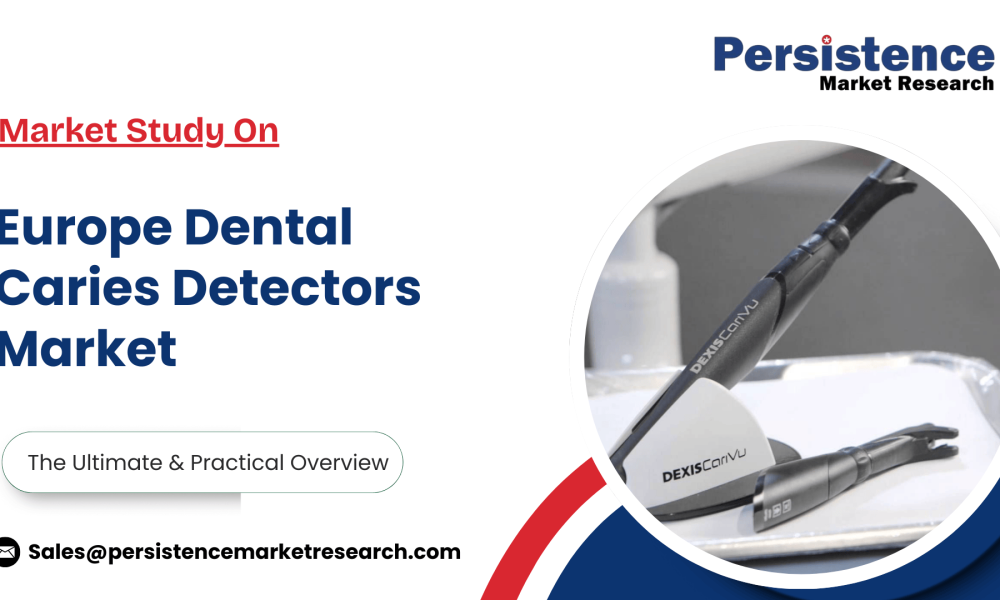
Dental caries, commonly known as tooth decay or cavities, remain a significant oral health challenge across Europe. Early detection and management of caries are critical for preventing advanced dental complications. The Europe dental caries detectors market is experiencing rapid growth driven by technological innovations, rising awareness of oral health, and an aging population demanding improved dental care. According to Persistence Market Research, the market is anticipated to reach a valuation of approximately US$342.2 million by 2025, growing at a robust compound annual growth rate (CAGR) of 9.1% from 2025 to 2032. By the end of the forecast period in 2032, the market is expected to surge to US$629.7 million.
This article presents a comprehensive overview of the Europe dental caries detectors market, highlighting key statistics, growth drivers, segmentation, regional trends, challenges, opportunities, and competitive insights to help stakeholders make informed decisions.
Market Overview and Statistics
The Europe dental caries detectors market is undergoing transformative growth. The expanding elderly population, increasing prevalence of oral diseases, and rising investments in preventive dentistry are the primary forces propelling market demand. Technological advancements such as laser fluorescence detection, AI-enabled diagnostics, and digital imaging have enhanced the accuracy and ease of early caries detection.
Market data from Persistence Market Research indicates a valuation of US$342.2 million in 2025, with a projected CAGR of 9.1% leading to a market size of US$629.7 million by 2032. This growth reflects heightened consumer awareness, government initiatives promoting early dental disease detection, and increased dental insurance coverage facilitating access to advanced diagnostics.
Among product types, laser fluorescence caries detectors dominate with an estimated 69% market share in 2025, largely due to their superior diagnostic precision. From an end-user perspective, solo dental practices represent the leading segment, holding approximately 70% market share, driven by the significant number of independent dental practitioners across Europe who adopt innovative diagnostic tools to meet patient demand.
Geographically, Western Europe-especially countries like Germany, France, and Italy-holds a leadership position in the market. This dominance is attributed to high healthcare spending, advanced dental infrastructure, and early adoption of cutting-edge technologies in these regions.
Key Highlights from the Report
➤ Laser fluorescence technology remains the leading product segment with 69% market share in 2025.
➤ Solo practices dominate the end-user segment with 70% market share due to independent dentists’ prevalence.
➤ Rising elderly population significantly boosts demand for advanced caries detection tools.
➤ Innovations such as AI integration and digital imaging drive market growth and product adoption.
➤ Emerging Eastern European markets present significant growth opportunities for market players.
➤ Government policies promoting preventive dental care and expanded insurance coverage support market expansion.
Get a Sample Copy of Research Report (Use Corporate Mail id for Quick Response): https://www.persistencemarketresearch.com/samples/34827
Market Segmentation
The Europe dental caries detectors market is broadly segmented based on product type and end-user. In terms of product type, the market is divided into laser fluorescence caries detectors and trans-illumination caries detectors. Laser fluorescence devices lead the market due to their enhanced sensitivity, precision, and ability to detect early-stage proximal caries that are difficult to diagnose with conventional methods. Products like KaVo Dental’s DIAGNOdent exemplify the laser fluorescence category’s strong market presence in Europe. Trans-illumination devices, although growing, currently hold a smaller market share but are valued for their non-invasive and radiation-free diagnostic capabilities.
On the end-user front, the market is segmented into solo practices and Dental Support Organizations (DSO) practices. Solo practices dominate the market due to the high number of independent dental practitioners in Europe who prefer integrating innovative detection technologies to improve patient outcomes. DSO practices are also expanding their adoption rates by leveraging technology partnerships to cater to large patient bases efficiently. The increasing number of patients seeking routine dental check-ups and preventive care in solo practices strongly supports this trend.
Regional Insights
Western Europe remains the most significant market for dental caries detectors due to superior healthcare infrastructure, high dental care expenditure, and rapid adoption of advanced diagnostic technologies. Countries such as Germany, France, and Italy lead in market penetration thanks to strong dental insurance policies and proactive government health campaigns promoting early detection.
Meanwhile, Eastern Europe is emerging as a promising growth region driven by increasing healthcare investments, rising awareness of oral health, and gradual adoption of advanced dental diagnostic devices. Markets in Poland, Czech Republic, and Hungary are witnessing rising demand, presenting lucrative opportunities for manufacturers and distributors aiming to expand their regional footprint.
Market Drivers
The primary growth driver for the Europe dental caries detectors market is the rising awareness of oral health and preventive care. Public health campaigns and educational programs have emphasized early caries detection, making consumers more proactive about dental check-ups. This increased awareness encourages dental professionals to adopt precise, non-invasive technologies like laser fluorescence detectors that facilitate early diagnosis, thereby reducing the cost and complexity of later-stage treatments.
Another major driver is technological advancements. The introduction of AI-assisted diagnostic tools, digital imaging, and laser fluorescence technology has revolutionized caries detection by improving accuracy, sensitivity, and ease of use. These technological innovations allow dental practitioners to identify cavities at their earliest stages and personalize treatment plans, enhancing patient outcomes and satisfaction.
Market Restraints
Despite promising growth, the market faces some challenges. One significant restraint is the high cost of advanced caries detection devices. Laser fluorescence and AI-enabled technologies often require substantial capital investment, which may deter small dental clinics and solo practitioners from adopting them, especially in economically weaker regions. The return on investment can be slow, limiting rapid market penetration.
Another barrier is the limited integration of these technologies into public healthcare systems. Many European countries’ public dental care programs rely heavily on traditional diagnostic methods due to budget constraints and regulatory frameworks. This limits the accessibility and widespread adoption of advanced caries detectors in publicly funded dental care, restricting market growth to largely private dental practices.
Market Opportunities
The Europe dental caries detectors market holds several significant opportunities, particularly in the integration of AI and digital health solutions. AI-powered detection systems can provide faster, more accurate diagnoses, reduce human error, and enable predictive analysis for caries risk. These benefits appeal to tech-savvy dental practitioners and enhance operational efficiency.
Additionally, the growing focus on preventive dentistry offers vast market potential. As dental healthcare shifts from treatment to prevention, dental professionals are increasingly incorporating advanced caries detectors into routine examinations. This trend is bolstered by government policies advocating early diagnosis and preventive care, expanding dental insurance coverage, and consumer preference for minimally invasive treatments.
Request for Customization of the Research Report: https://www.persistencemarketresearch.com/request-customization/34827
Reasons to Buy the Report
✔ Comprehensive analysis of the Europe dental caries detectors market with detailed forecasts until 2032.
✔ In-depth segmentation insights by product type and end-user for strategic planning.
✔ Examination of key market drivers, restraints, and growth opportunities to identify potential areas of investment.
✔ Regional market intelligence highlighting trends and emerging growth pockets across Europe.
✔ Competitive landscape and recent developments analysis, helping stakeholders track leading players and innovations.
Frequently Asked Questions (FAQs):
How Big is the Europe Dental Caries Detectors Market in 2025?
Who are the Key Players in the Europe Dental Caries Detectors Market?
What is the Projected Growth Rate of the Market from 2025 to 2032?
What is the Market Forecast for Europe Dental Caries Detectors for 2032?
Which Region in Europe is Estimated to Dominate the Market through the Forecast Period?
Company Insights and Recent Developments:
The Europe dental caries detectors market is highly competitive with key players focusing on innovation and geographic expansion. Leading companies include:
✦ Acteon Group
✦ KaVo Dental (notably for DIAGNOdent)
✦ DEXIS
✦ Dentsply Sirona
✦ VideaHealth
✦ Incisive Technology
Recent notable developments include:
In January 2025, VideaHealth launched the Caries 3.0 model, an advanced diagnostic tool delivering enhanced accuracy and reliability in caries detection.
In June 2023, Incisive Technology introduced BlueCheck, a novel preventive care solution aimed at improving the precision and monitoring of dental caries, reinforcing the trend toward minimally invasive diagnostics.
Conclusion
The Europe dental caries detectors market is poised for substantial growth fueled by demographic trends, rising oral health awareness, technological innovation, and supportive government policies. Laser fluorescence devices and solo dental practices currently lead the market, supported by strong regional adoption in Western Europe. While challenges such as high device costs and limited public healthcare integration remain, advancements in AI and digital diagnostics coupled with the preventive dentistry shift provide promising avenues for expansion.
For dental practitioners, technology manufacturers, and investors, understanding these dynamics through detailed market insights, such as those provided by Persistence Market Research, will be critical to navigating this evolving landscape and capitalizing on emerging opportunities through 2032.