
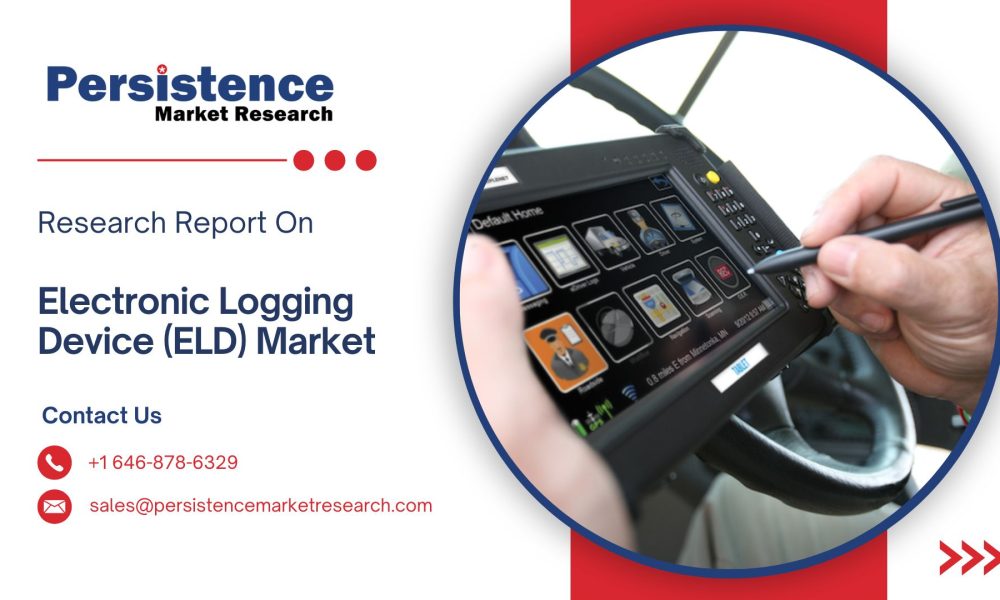
The global electronic logging device (ELD) market is witnessing steady growth as governments across the world mandate digital compliance solutions for the transportation and logistics sector. According to Persistence Market Research, the market is expected to be valued at US$ 15.2 Bn in 2025, and it is projected to expand to US$ 20.3 Bn by 2032, registering a CAGR of 4.2% between 2025 and 2032. This upward trajectory is attributed to the rising adoption of ELDs for real-time tracking, monitoring of driver hours, and enhancing road safety standards. The increasing need to reduce paperwork, streamline fleet management, and improve productivity are also reinforcing demand.
The ELD market has a wide array of growth drivers, including strict regulatory requirements, technological advancements in telematics, and the rising penetration of IoT in commercial vehicles. Trucking fleets remain the leading segment, with compliance-driven deployments ensuring dominance. Regionally, North America is expected to remain the leading market, largely due to the Federal Motor Carrier Safety Administration (FMCSA) mandate in the U.S., which enforces electronic logging compliance. This regulatory push, combined with the maturity of telematics adoption in the region, positions North America as the central hub of growth, while Asia-Pacific and Europe follow with growing investments in logistics digitalization.
Get a Sample Copy of Research Report (Use Corporate Mail id for Quick Response): https://www.persistencemarketresearch.com/samples/32846
Key Highlights from the Report
➤ The global electronic logging device (ELD) market is projected to grow from US$ 15.2 Bn in 2025 to US$ 20.3 Bn by 2032.
➤ The industry is set to record a steady CAGR of 4.2% between 2025 and 2032, driven by regulatory compliance and fleet digitalization.
➤ North America dominates the ELD market due to mandatory government regulations and widespread telematics adoption.
➤ Trucking fleets represent the leading segment owing to extensive demand for compliance solutions and improved productivity.
➤ Technological integration of IoT and telematics solutions into ELDs is shaping the future of fleet management.
➤ Increasing focus on driver safety, real-time monitoring, and reduced administrative workload is fueling global adoption.
Market Segmentation
The electronic logging device market can be segmented on the basis of product type, deployment mode, and end-use industry. Product types include basic ELD units designed for regulatory compliance, and advanced integrated solutions offering features such as GPS tracking, driver behavior analysis, and predictive maintenance. While compliance remains the core function, demand for multifunctional ELDs with telematics features is increasing, as businesses look to optimize operations beyond regulatory needs. Cloud-based ELD solutions are gaining traction over on-premises systems, offering scalability and ease of updates for larger fleets.
In terms of end-user segmentation, the market primarily serves long-haul trucking companies, logistics service providers, and delivery fleets. Long-haul fleets dominate the market due to mandatory compliance requirements and the need for monitoring driver hours. However, last-mile delivery fleets are becoming a fast-growing end-user group, fueled by the surge in e-commerce and urban logistics. This shift demonstrates that while compliance drives adoption in one segment, operational efficiency and cost-saving features drive growth in another, leading to a more diversified customer base.
Regional Insights
North America remains the frontrunner in the global ELD market, largely due to strict regulations like the FMCSA’s ELD mandate in the United States. The region also benefits from high penetration of digital technologies, established telematics infrastructure, and a strong ecosystem of fleet operators who prioritize compliance and efficiency. These factors make North America a consistent revenue generator and innovation leader in the ELD space.
Meanwhile, Europe and Asia-Pacific represent emerging growth territories. Europe’s market is strengthened by cross-border logistics requirements and increasing adoption of smart fleet technologies. In Asia-Pacific, rapid expansion of e-commerce, a rising number of commercial vehicles, and government initiatives supporting digital logistics management are fueling demand for ELDs. Countries like China and India are expected to become high-potential growth centers over the forecast period.
Market Drivers
One of the primary market drivers is the growing stringency of government regulations related to hours-of-service compliance. These laws ensure that drivers adhere to safety norms, thereby reducing fatigue-related accidents. Additionally, increasing pressure on logistics operators to enhance operational efficiency is driving demand for integrated ELD systems that combine compliance with telematics and fleet management features. The digital transformation of the transportation sector, supported by IoT integration and advanced data analytics, further bolsters adoption rates. Fleet owners are increasingly recognizing the benefits of reduced paperwork, real-time insights, and cost savings through optimized fuel usage and route planning.
Market Restraints
Despite strong growth prospects, the ELD market faces several challenges. One restraint is the significant upfront cost of ELD devices and associated installation expenses, which can be a barrier for small fleet operators with limited budgets. Furthermore, data privacy and cybersecurity concerns remain a challenge, as ELDs collect and transmit sensitive driver and fleet information. Technical complexities, interoperability issues, and resistance from some drivers and operators who view ELDs as intrusive also act as roadblocks. These factors collectively slow down adoption rates, particularly in regions where enforcement mechanisms are less stringent.
Market Opportunities
On the opportunity front, increasing digitalization of fleet operations and the rising demand for integrated telematics present strong growth avenues. Companies that provide advanced ELD solutions with added features like driver performance monitoring, predictive analytics, and vehicle health tracking are likely to gain a competitive advantage. Additionally, emerging economies represent untapped markets where rapid expansion of logistics and transportation infrastructure is creating favorable conditions for adoption. The integration of artificial intelligence and machine learning into ELDs also opens opportunities for smarter fleet operations, predictive maintenance, and real-time risk management.
Reasons to Buy the Report
- Provides comprehensive insights into the global electronic logging device (ELD) market with accurate forecasts through 2032.
- Identifies leading market segments and geographical regions driving growth opportunities.
- Offers analysis of key drivers, restraints, and opportunities shaping the competitive landscape.
- Presents actionable intelligence on technological advancements and their impact on market dynamics.
- Delivers an overview of major players and recent developments influencing the market outlook.
Company Insights
Key players operating in the global electronic logging device (ELD) market include:
- Omnitracs LLC
- Trimble Inc.
- Geotab Inc.
- Garmin Ltd.
- KeepTruckin Inc.
- BigRoad Inc.
- Teletrac Navman
- Continental AG
- Verizon Connect
Recent Developments:
- Leading players have introduced AI-powered ELD solutions integrated with predictive analytics to enhance fleet productivity.
- Companies are expanding partnerships with logistics service providers to deliver scalable, cloud-based ELD platforms across North America and Europe.
Explore more related market insights and reports by visiting our website.




